
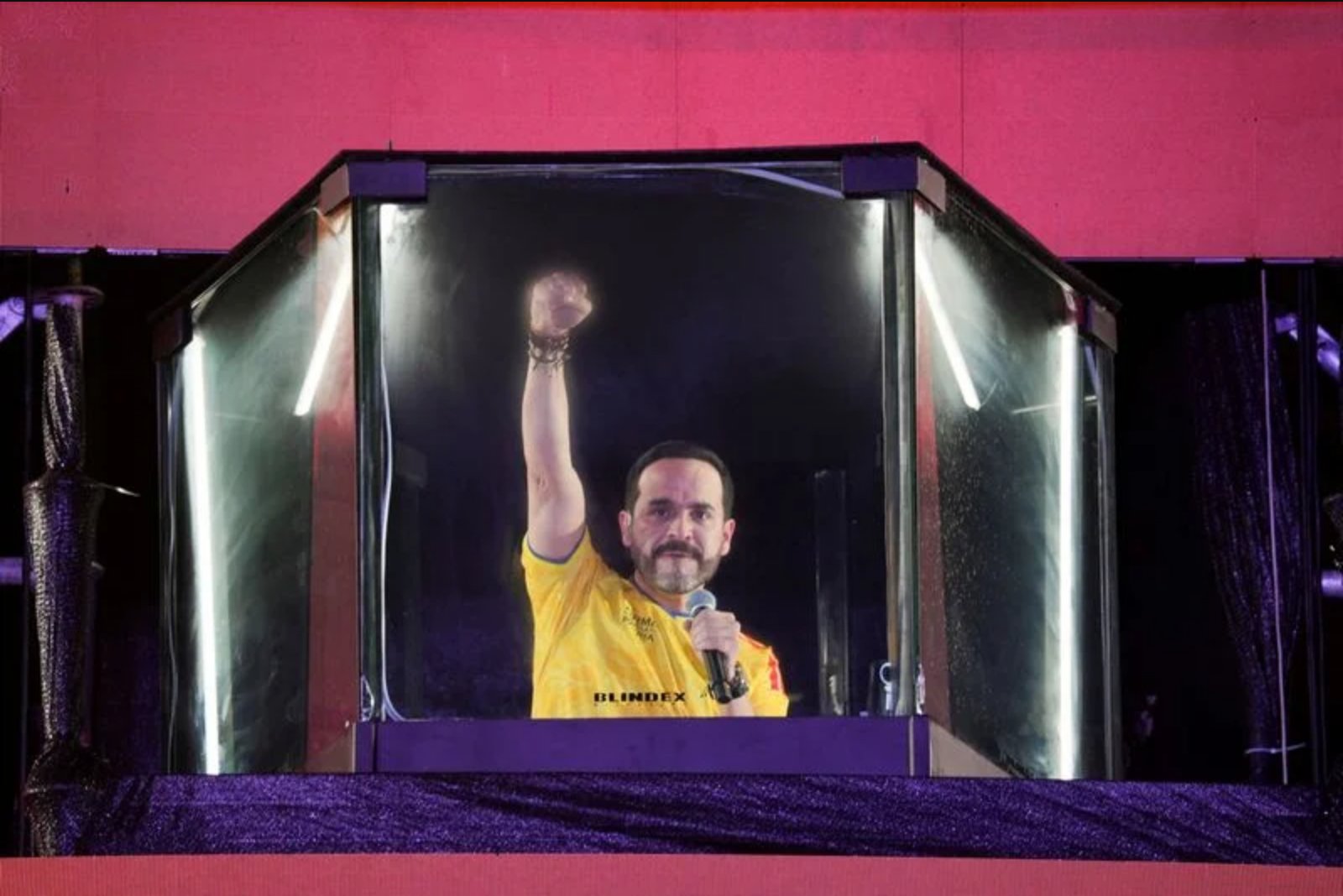
Abelardo De La Espriella, the right-wing contender in Colombia's presidential runoff, emerged with a narrow lead in initial results late on Sunday, securing 49.66% of the vote to Senator Ivan Cepeda’s 48.70% according to the national registrar’s tally of just under 100% of ballots.
The difference between the two candidates is roughly 250,000 votes. A final, legally required verification - performed ballot by ballot under the supervision of notaries and judges - was nearly complete late on Sunday night, but it remained unclear whether the certified outcome would precisely mirror the initial count.
De La Espriella thanked supporters and promised an inclusive mandate at a celebration in the coastal city of Barranquilla, saying, "I will govern for all Colombians, for those who voted for me and for those who chose the other candidate," and pledging to respect citizens' rights. He also acknowledged receiving a congratulatory call from U.S. President Donald Trump, who had publicly endorsed him during the campaign.
Policies and the political divide
The two candidates presented sharply different agendas. Cepeda, 63, ran on a platform of maintaining the policies of outgoing President Gustavo Petro, promising to continue state pension payments for the poor, uphold union-supported labor reforms, keep a moratorium on new oil projects, and pursue ongoing peace talks with armed groups.
De La Espriella cast himself as a candidate who would reverse what he describes as economic and security mismanagement under Petro. He has vowed to end negotiations with rebels and criminal networks, accelerate activity in the oil and gas sector, reduce taxes, and shrink the size of the state by up to 40%. At the same time, he has said he will preserve Petro’s 23% increase in the minimum wage and other popular social measures.
Domestic reaction and the role of Congress
Support for De La Espriella was visible in upper- and middle-class neighborhoods of Bogota and Medellin, where flag-waving crowds cheered, sounded car horns and set off fireworks. Viviana Olivos, a 46-year-old mechanical engineer who attended a celebration, said, "It is a victory for Colombia - a change after four lost years with no clear direction." Those scenes were echoed by statements of congratulation from several major business guilds, including the Colombo-American Chamber of Commerce, the mining association and the banking association.
Yet the tightness of the result highlights the limits of the new president’s immediate political leverage. Cepeda’s Historic Pact party holds more seats than any other single party in both the Senate and the lower chamber, though no party commands a majority. Given that distribution, De La Espriella will likely need to temper some elements of his program to build coalitions in a fragmented Congress.
Outstanding challenges and legal scrutiny
Cepeda’s campaign said it would await the final certified results and is contesting outcomes from about 33,000 ballot boxes out of 122,000 in total. Cepeda told supporters in Bogota that his team was seeking a full, ballot-by-ballot check of the initial count. He underscored that his political base represents a substantial force that must be included in governing arrangements, adding, "We are open to dialogue; we are willing to reach agreements as long as they are respectful, genuine, and reflected in political actions that benefit the nation and preserve the historical progress we have already achieved."
Some citizens expressed frustration at the election’s tenor. Margarita Restrepo, a Cepeda supporter whose daughter disappeared in 2002, said, "Rancor has won again. Unfortunately we are in a country where differences continue." Restrepo’s remarks highlighted the depth of emotions among voters wary of a return to more confrontational rhetoric in security policy.
Security, conflict and public sentiment
Security concerns were paramount for many De La Espriella backers, particularly in regions where extortion and drug trafficking have reportedly increased. De La Espriella has blamed Petro for an expansion of armed groups and pledged a sterner approach. Cepeda and his supporters, however, cautioned that more bellicose language and escalated operations could risk a deterioration of the country’s fragile peace dynamics, where leftist guerrillas and criminal gangs founded by former right-wing paramilitaries have long clashed with one another and with the state.
Governance and financial questions
De La Espriella, a lawyer with no prior elected office experience, has presented himself as a businessman. Reporting by a local outlet found many of his enterprises had been dissolved, were in debt, or lost money overall in 2024, with his law firm noted as his most profitable operation. De La Espriella is also recorded as holding citizenship in the United States and Italy and as owning homes in multiple countries.
The president-elect will also confront elevated public debt when formulating fiscal policy. His stated priorities - including tax cuts, a possible sizeable reduction in the role of the state, and an expansion of oil and gas activity - will intersect with budgetary constraints and with the need to negotiate with a legislature in which his allies are not dominant.
Electoral participation and formalities
Turnout figures and voting behavior underscored the engagement of Colombia’s electorate. More than 26.3 million Colombians cast ballots from a pool of 41.4 million eligible voters. The registrar’s figures showed that some 427,000 voters submitted blank ballots, a form of protest vote that has become a recurrent feature of recent contests.
As the country awaited the final, certified tally, both the narrowness of the margin and the outstanding legal challenges suggested a period of political negotiation and scrutiny ahead. De La Espriella’s early gestures of inclusion and the conciliatory language from Cepeda bear on how Congress and the executive may navigate policy trade-offs in coming months.
Regional political currents
The outcome in Colombia arrives amid a broader regional context in which several neighboring countries have recently elected right-leaning presidents. Observers have noted conservative gains in Chile, Argentina, Costa Rica, Bolivia and Ecuador, and the race in neighboring Peru remains in a state of counting and uncertainty. Within the campaign dynamic, De La Espriella sought to align himself with a tougher stance on drug trafficking and regional security, while critics warned against potential escalation of armed confrontation.
As Colombia moves toward final certification, markets and policy actors will be watching how the new administration balances its security, fiscal, and energy priorities against the constraints of a divided legislature and ongoing legal verification of the vote.