
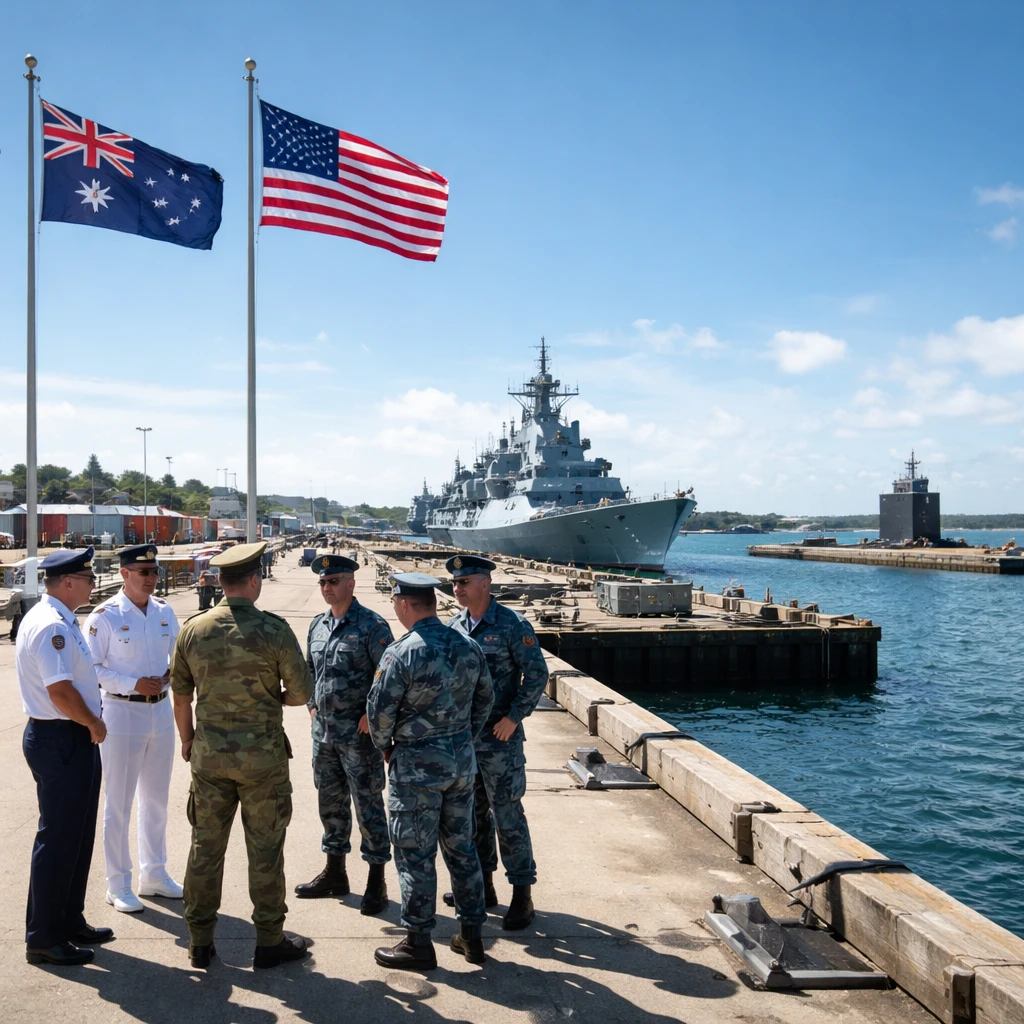
Australian and U.S. defence officials said this week they will deepen bilateral military cooperation in a move that could expand the U.S. military footprint in Australia and strengthen deterrence across the Pacific, where China has been increasing its presence.
Speaking after meeting U.S. Defence Secretary Pete Hegseth in Washington D.C., Australian Defence Minister Richard Marles told reporters that "American force posture in Australia is growing" and that the presence was rising "across every domain."
The officials reiterated that the U.S.-Australia Force Posture Initiatives permit U.S. military forces to train in Australia and to store equipment there. That framework also allows for the rotational deployment of aircraft and for provision of logistics support to U.S. vessels operating in and around the region.
Marles framed the expanding cooperation as central to deterrence. "We think that’s really important in terms of providing deterrence in the Indo-Pacific, providing for stability and peace in the Indo-Pacific, and that’s very much in Australia’s national interest," he said.
He did not confirm whether the increased level of cooperation would translate into a larger number of U.S. troops being permanently stationed in Australia, noting that further specifics would be released at the next meeting of Australian and U.S. defence ministers later this year.
Australia-U.S. defence work also sits alongside the AUKUS defence pact that includes the United States, Britain and Australia. The agreement has drawn criticism from China, which has described AUKUS as dangerous and warned it could prompt a regional arms race.
Some U.S. defence personnel are already posted to HMAS Stirling, a naval base on Australia’s west coast, which is slated to host four U.S.-commanded Virginia-class submarines from 2027.
Hegseth said in a statement there was "strong alignment" between the national defence strategies of both countries and emphasized the need for allies to invest in their own sovereign security so they can contribute to collective defence. "We share a common (understanding) of the complex threat picture in the world today and the need for allies to, both plan together but also ensure our capabilities match and are complementary," he said.
The announcement came as the Pacific Islands Forum entered its final day in Palau. The summit was marked by the absence of several leaders and by a diplomatic dispute after China protested the presence of Taiwan’s foreign minister.
In parallel to the defence developments, Australia and the United States announced combined funding of $580 million for Pacific Island nations. The funding was presented against a backdrop of China expanding its influence in the Pacific through grants, infrastructure projects and aid.
The discussions in Washington underscore a coordinated push by Canberra and Washington to reinforce regional security arrangements and logistical networks in the Indo-Pacific, while leaving some operational details to be clarified at future ministerial meetings.