
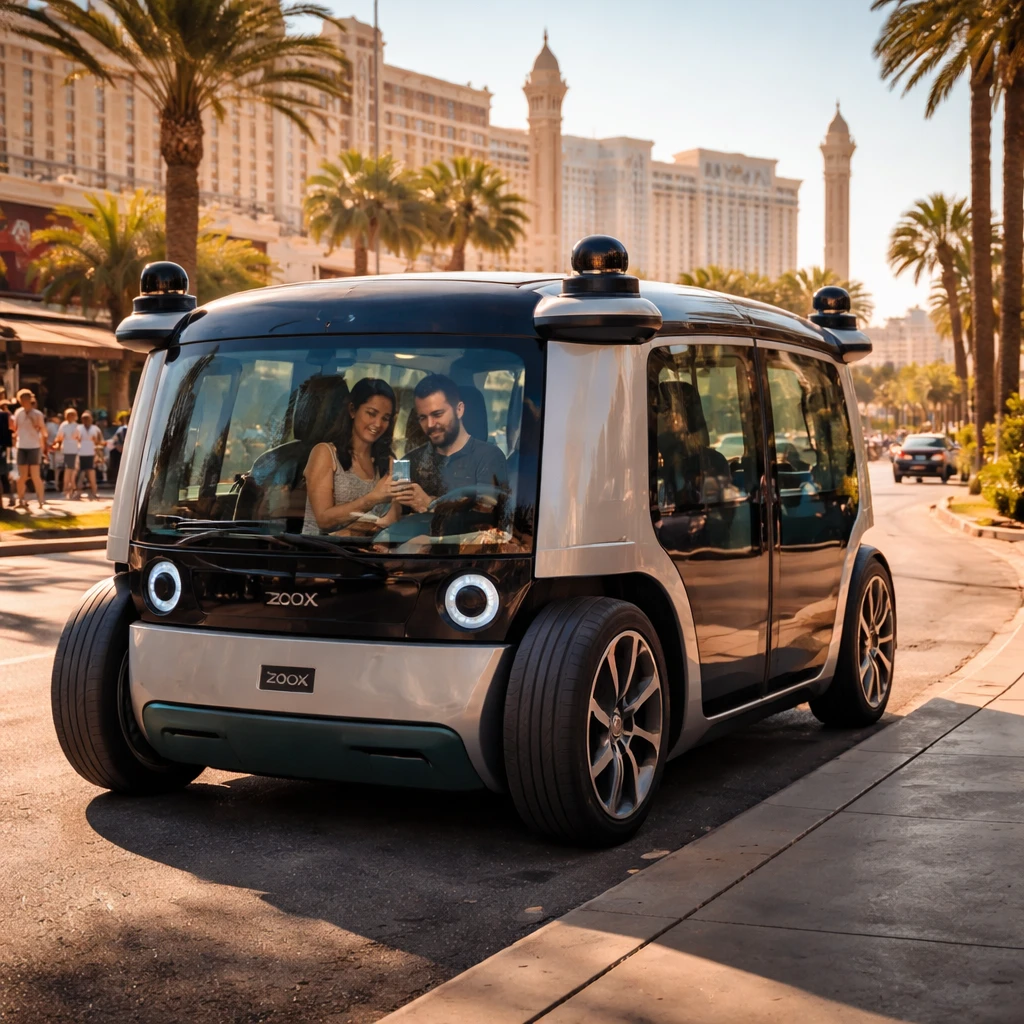
Zoox, the autonomous vehicle arm of Amazon.com Inc., will begin charging riders for trips in Las Vegas starting August 10, the company said. The rollout will mark a first in the United States: a commercial driverless ride service operating without traditional driver controls while taking fares.
Under the pricing structure Zoox described, fares will be computed from a base rate plus additional charges tied to distance traveled and the duration of the trip. The company did not provide exact fare levels, but it said the final price for each journey will be presented to passengers before they confirm a booking.
Regulatory clearance paved the way for the launch. In July the National Highway Traffic Safety Administration granted Zoox a temporary exemption that allows the company to deploy as many as 5,000 of its robotaxis on U.S. roads during the next two years. That exemption explicitly permits Zoox to charge riders for individual trips.
Zoox’s technology has accumulated substantial road time in advance of commercial service. The company reports its robotaxi platform has driven more than 3 million miles on public streets. In addition, prior to the start of paid service Zoox transported roughly 1 million riders across multiple markets, including Las Vegas, San Francisco, Austin and Miami.
The U.S. driverless ride market already includes an established competitor. Alphabet Inc.’s Waymo operates the largest commercial driverless ride-hailing fleet in the country. A key technical distinction between the two services is that Waymo’s vehicles retain physical driver controls - a steering wheel and pedals - while Zoox’s robotaxi design operates without those controls.
Tesla Inc. and Zoox are both mentioned as players seeking to challenge Waymo’s position in the market. Beyond the competitive landscape, the company’s decision to begin charging fares is a practical step toward monetization of its robotaxi operations in Las Vegas.
Contextual note - The company declined to supply specific pricing figures at this time. The regulatory exemption is temporary and capped at 5,000 vehicles over a two-year period, and Zoox has disclosed its pre-launch testing and rider programs but not future expansion plans.