
Stock Markets August 5, 2026 11:08 AM

Zoox to Begin Charging for Robotaxi Rides in Las Vegas Following NHTSA Clearance

Amazon-owned robo-taxi operator will start commercial fares in Las Vegas next week under a limited federal exemption, marking a new phase of competition in autonomous ride-hailing

By Jordan Park
Share
Twitter Reddit Facebook LinkedIn
GOOGL AMZN TSLA

Zoox, owned by Amazon, will begin charging passengers for robotaxi trips in Las Vegas next week after receiving a limited exemption from the National Highway Traffic Safety Administration (NHTSA) that allows commercial deployment without conventional human controls. The company has been offering free test rides in several U.S. cities and will adopt fare levels similar to the 'comfort' tier used by other ride-hailing services. The NHTSA clearance is capped at 2,500 vehicles per year for the next two years and carries additional reporting obligations. Zoox has faced regulatory scrutiny and issued software recalls, most recently in July when a vehicle had difficulty detecting heavy smoke at an emergency scene.

Zoox to Begin Charging for Robotaxi Rides in Las Vegas Following NHTSA Clearance
GOOGL AMZN TSLA
Summarize with
ChatGPT Perplexity Claude Grok Gemini

Key Points

  • Zoox will start charging for robotaxi rides in Las Vegas next week, moving from free testing to paid service in that market.
  • The company received an NHTSA exemption to operate vehicles without conventional human controls, but the exemption is capped at 2,500 vehicles per year for each of the next two years and includes additional reporting obligations.
  • The paid launch intensifies competition in the U.S. robotaxi sector, where Alphabet’s Waymo already runs paid driverless services and Tesla has begun rolling out its own offering - this affects transportation, automotive, and tech sectors.

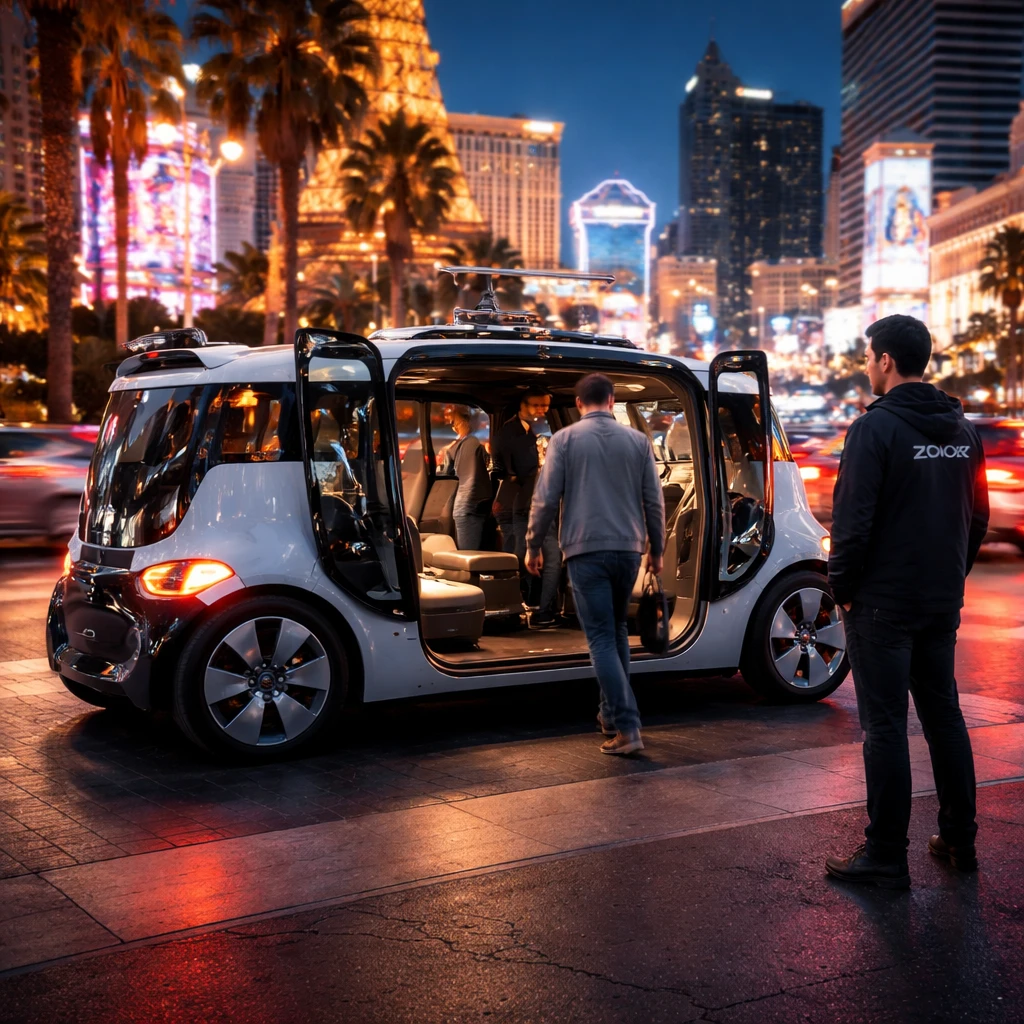
Zoox, the autonomous vehicle unit owned by Amazon, will begin charging riders for robotaxi trips in Las Vegas next week, the company said on Wednesday. The move follows a regulatory milestone in which the U.S. road safety regulator approved commercial deployment of Zoox’s driverless vehicles that operate without conventional human controls.

Until now, Zoox has been providing complimentary rides as part of testing programs in Las Vegas, San Francisco, Austin and Miami. The company’s electric carriage-style vehicle features two rows of inward-facing seats. Starting Monday in Las Vegas, the service will transition from free test rides to paid trips, with fares set at levels the company described as similar to the "comfort" tier common among ride-hailing platforms.

The comfort tier typically reflects a premium option - offering newer, roomier vehicles - with fares roughly 20% to 40% above standard ride-hailing prices. Zoox said it will calculate fares using a base fare plus time-and-distance model based on the best route. Any destination-specific surcharges, such as for airport trips, will be disclosed upfront, and the company said riders will not be charged extra if the robotaxi takes a longer route than planned.

The commercial launch in Las Vegas amplifies competition in the U.S. robotaxi market. Alphabet’s Waymo already operates paid driverless services in multiple cities, and Tesla has started rolling out its own robotaxi service. Zoox’s move to introduce paid rides follows NHTSA’s decision to exempt Zoox from federal rules that normally require human vehicle controls, a notable milestone for companies designing purpose-built autonomous vehicles rather than modifying conventional passenger cars.

However, the NHTSA exemption is not open-ended. It is limited to up to 2,500 vehicles in each of the next two years. As part of the clearance, the agency said it determined Zoox’s vehicle is as safe as an equivalent vehicle meeting federal motor vehicle safety standards, while also imposing additional reporting requirements covering events such as crashes or inappropriate stopping on roadways.

Safety and regulatory scrutiny remain central issues for robotaxi operators. The sector has faced questions about how autonomous vehicles handle emergency scenes and interact with other road users. Zoox itself has issued a number of software recalls over the past two years. The most recent recall, announced in July, addressed an incident where one of its vehicles had difficulty detecting heavy smoke at an emergency scene.

Zoox did not provide a timeline for when paid rides might begin in the other cities where it has been testing. For now, Las Vegas represents the first market to move from testing to a commercial fare model under the new regulatory posture.


Contextual note - This development marks a regulatory and commercial inflection point for purpose-built robotaxi providers operating in a competitive U.S. landscape where established and emerging players are scaling paid services.

Risks

  • Regulatory and safety scrutiny continues to be a risk for robotaxi operators, particularly regarding the handling of emergency scenes and interactions with other road users - this primarily affects the transportation and automotive sectors.
  • The NHTSA exemption for Zoox is limited in scale - up to 2,500 vehicles each year for the next two years - which constrains near-term fleet deployment and commercial scale-up, impacting operational planning and market competition.
  • Software reliability issues have led to multiple recalls at Zoox, including a July recall after a vehicle had difficulty detecting heavy smoke at an emergency scene, underscoring technological and reputational risk for autonomous vehicle providers and related technology suppliers.

More from Stock Markets

Kyndryl Shares Drop After Q1 Misses on Revenue, Profit and Cash Flow Aug 5, 2026 S&P Affirms TeraWulf at BB-; Outlook Shifted to Stable After Anthropic Lease Announcement Aug 5, 2026 Attovia Therapeutics Pops 24% in Market Debut After $289M IPO Aug 5, 2026 JPMorgan and Amazon Team on Quantum Tools to Tackle Large-Scale Finance Optimization Aug 5, 2026 Tanger credits World Cup crowds for June-July traffic and sales lift Aug 5, 2026