
Stock Markets August 26, 2026 10:40 AM

Voya Energy Secures $35M to Roll Out Aluminum-Based, Emissions-Free Power System

Hayward startup raises Series A and outlines industrial electrochemical generator targeting data centers and other large energy users

By Leila Farooq
Share
Twitter Reddit Facebook LinkedIn

Voya Energy closed a $35 million Series A financing round to commercialize an aluminum-derived fuel and low-temperature electrochemical generator that produces electricity without on-site combustion or air emissions. The Hayward, California company plans technology development in the near term, initial deployments in 2027 and manufacturing scale-up in 2028. The containerized system is aimed at data centers, industrial operators and other large users that face constraints from grid access, permitting or fuel logistics.

Voya Energy Secures $35M to Roll Out Aluminum-Based, Emissions-Free Power System
Summarize with
ChatGPT Perplexity Claude Grok Gemini

Key Points

  • Voya Energy closed a $35 million Series A round led by Energy Impact Partners, with participation from John Doerr, Mantis VC, StepStone, Founders Fund, Overmatch, Seven Stars and other institutional investors.
  • The company is commercializing an aluminum-derived fuel paired with a low-temperature electrochemical generator that produces electricity without combustion or air emissions at the point of use; an industrial containerized unit is expected to provide up to 2 megawatts.
  • Target customers include data centers, industrial operators and other large energy users constrained by grid access, permitting or fuel logistics; nearly a dozen partner companies across data centers, industry, transportation, utilities and infrastructure are participating in near-term pilots.

Voya Energy said it has raised $35 million in a Series A financing round and is introducing an aluminum-based fuel system mated to an electrochemical generator that yields electricity without combustion or air emissions at the point of use.

Energy Impact Partners led the funding round. Investors participating alongside the lead included John Doerr, Mantis VC, StepStone, Founders Fund, Overmatch, Seven Stars and other institutional backers.

Based in Hayward, California, Voya plans to allocate the new capital to further technology development, to support initial field deployments slated for 2027 and to scale manufacturing in 2028. The company positions the product at large energy users such as data centers and industrial operators, along with other customers that are limited by grid access, permitting hurdles or challenges in fuel logistics.

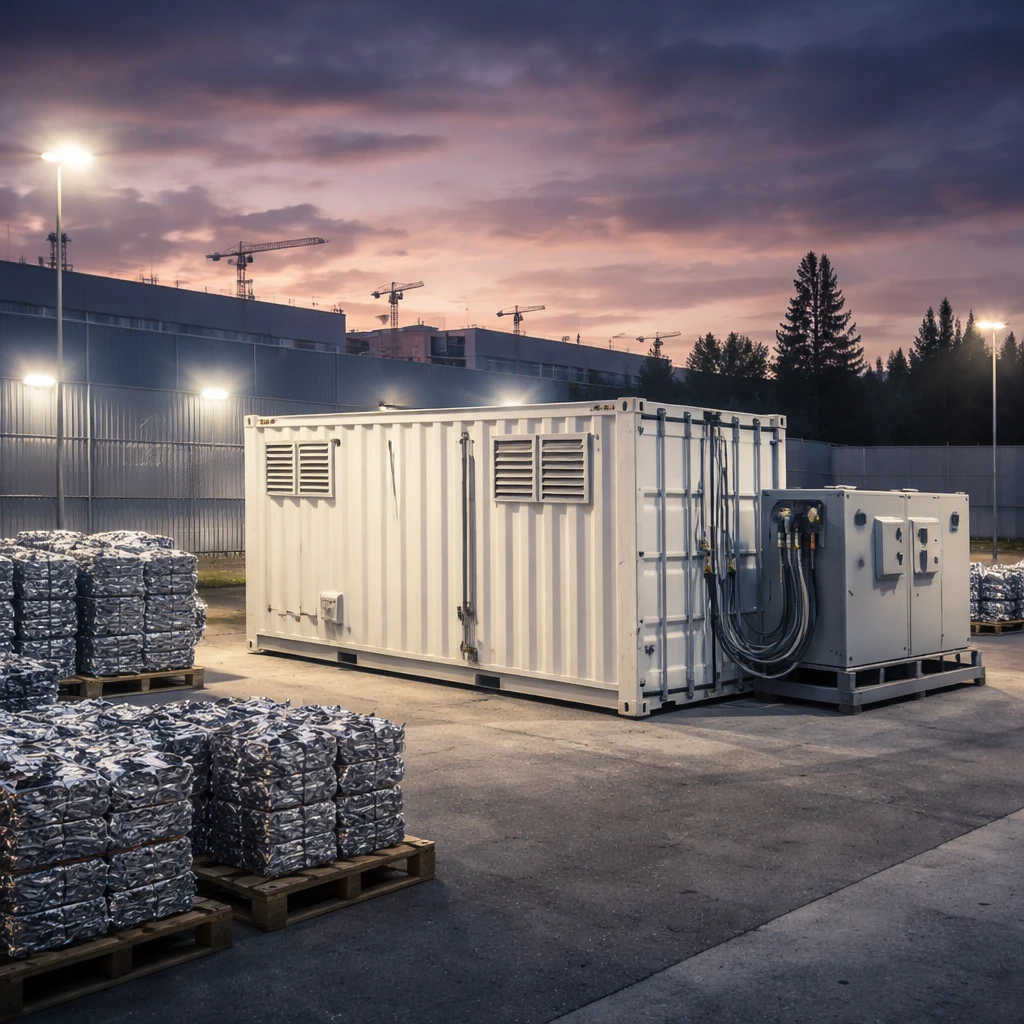
The system uses fuel made from low-grade scrap aluminum. That material is converted directly into electricity through a low-temperature electrochemical process rather than by burning fuel. The company’s industrial-scale configuration is designed to produce up to two megawatts of power from a standard 20-foot container.

Voya projects that, at scale, its approach could yield roughly 100 megawatts of generation capacity and about 10 gigawatt-hours of stored energy per acre. The company states this density is approximately four times more compact than comparable diesel generator fleets and about 100 times more compact than grid-scale battery installations.

Nearly a dozen partner companies from sectors that include data centers, industry, transportation, utilities and infrastructure are engaged in near-term pilot demonstrations of the system. Voya emphasizes that the product can deliver electricity independently of the utility grid.


Operational focus and deployment timeline

Voya’s immediate priorities, as described, are advancing the electrochemical technology, proving initial deployments in 2027 and readying production scale-up in 2028 to meet expected pilot and early commercial demand. The design’s containerized form factor targets customers seeking modular, transportable generation capacity.

Market positioning

By converting low-grade scrap aluminum to electricity via a low-temperature electrochemical pathway, Voya frames its offering as an alternative for large users that need off-grid or grid-independent power without on-site combustion emissions. The firm is engaging partners across multiple sectors to validate use cases in live settings.

Risks

  • Timeline and scale-up uncertainty - The company plans initial deployments in 2027 and manufacturing scale-up in 2028, creating execution risk in meeting those milestones; this affects sectors relying on timely delivery such as data centers and industrial users.
  • Deployment and permitting challenges - While the system aims to reduce dependence on the utility grid, actual deployment will still face site-specific permitting and logistical considerations that could affect adoption by transportation, utilities and infrastructure operators.
  • Commercial performance and capacity claims - The projected per-acre energy density and containerized two-megawatt output are target figures; realization of those metrics at commercial scale will determine competitiveness versus diesel fleets and grid-scale battery installations in affected markets.

More from Stock Markets

Truist Downgrades Nike After Dick's Guidance Cut Clouds Recovery Outlook Aug 26, 2026 Options Signal About a 10% Move for Hewlett Packard Enterprise Stock Ahead of Sept. 2 Results Aug 26, 2026 Market movers Wednesday: Dell and TTM lead gains while several names slide after earnings and guidance Aug 26, 2026 Options Signal a 12% Move for Snowflake Ahead of Sept. 2 Results Aug 26, 2026 Options Market Points to 7.3% Expected Move for Broadcom Around Sept. 2 Results Aug 26, 2026