
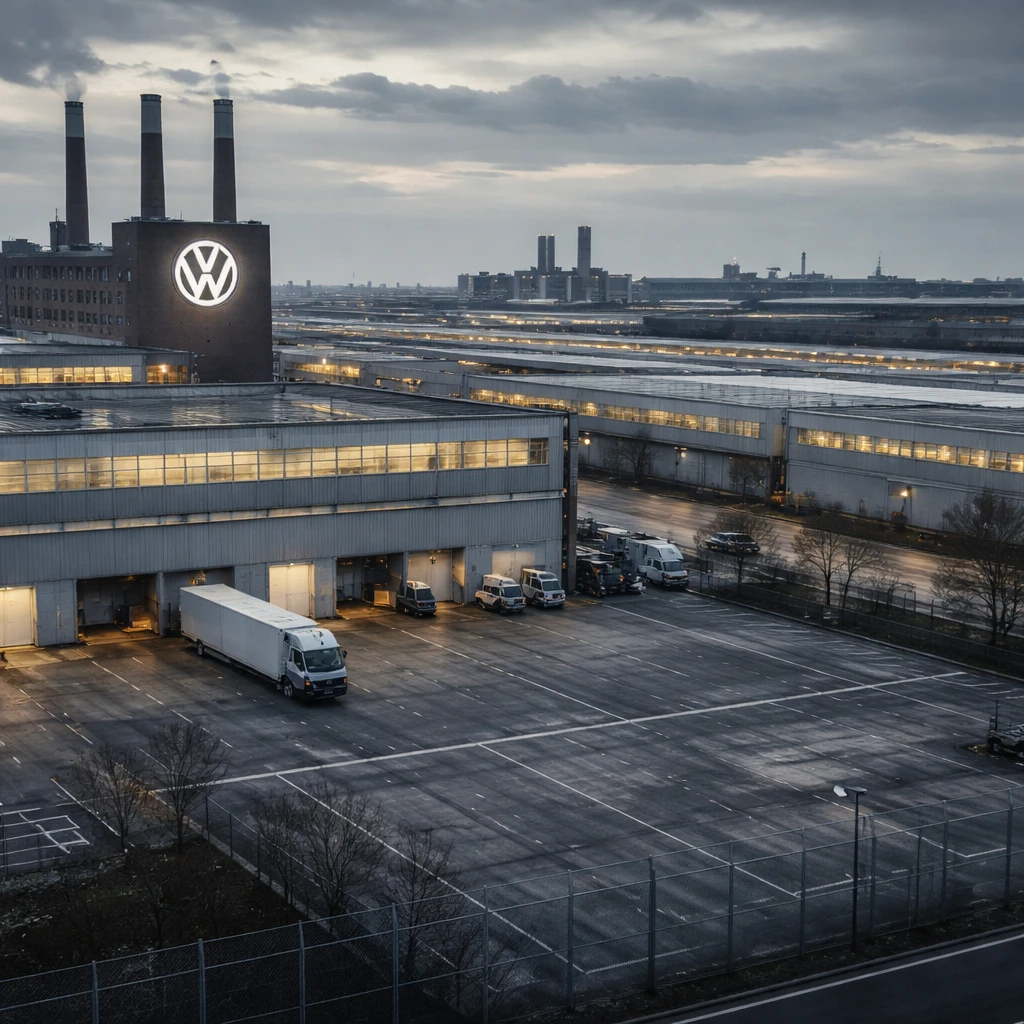
Volkswagen's top executives are advancing an extensive restructuring plan that would reduce the company’s global headcount by as many as 100,000 positions and scale back investment commitments by roughly 15%, bringing total planned spending to just over €130 billion over the next few years, according to a report from a German business publication citing people with knowledge of the matter.
Under the proposed changes, CEO Oliver Blume and CFO Arno Antlitz are said to be pursuing a reconfiguration of the group’s corporate structure. The plan includes spinning off the Volkswagen core brand and the company’s parts-manufacturing operations into standalone entities separate from the present group arrangement.
The restructuring would also involve a consolidation of manufacturing capacity in Germany. Over the medium term, Volkswagen intends to wind down production at a number of domestic plants: Hanover, Zwickau and Emden, along with Audi’s facility in Neckarsulm. The closures are to proceed as the specific vehicle models currently produced at those locations reach the end of their production cycles.
Market reaction was muted but positive in the immediate aftermath of the report. Volkswagen shares were reported up 0.6% in Germany by 07:41 GMT.
Context and mechanics
The changes described would combine workforce reductions, a lower investment trajectory and a legal separation of key business units. The company would reduce planned capital outlays by about 15% to a total slightly above €130 billion over the coming years, while the potential job cuts could affect operations worldwide.
Plant closures in Hanover, Zwickau and Emden, together with Audi’s Neckarsulm site, are connected to model life cycles. Production is expected to be scaled back and ultimately halted at those facilities when the existing models they assemble are phased out, rather than immediate shutdowns.
Market and sector implications
- Automotive manufacturing and parts suppliers may face near-term demand and contract uncertainty tied to the planned closures and reorganization.
- Labor markets in the regions surrounding the affected German plants could experience direct employment impacts as production is wound down over time.
- Investor focus will likely be on the effects of lower investment levels and the financial implications of spinning out core units from the group.
What is not specified
The report cites unnamed sources familiar with the plans but does not include a detailed timetable for when the restructuring steps would be finalized, nor does it provide a specific schedule for workforce reductions across countries. It states that production at the affected plants will be wound down as the current models are phased out, but it does not list which models those are or provide precise dates for the closures.