
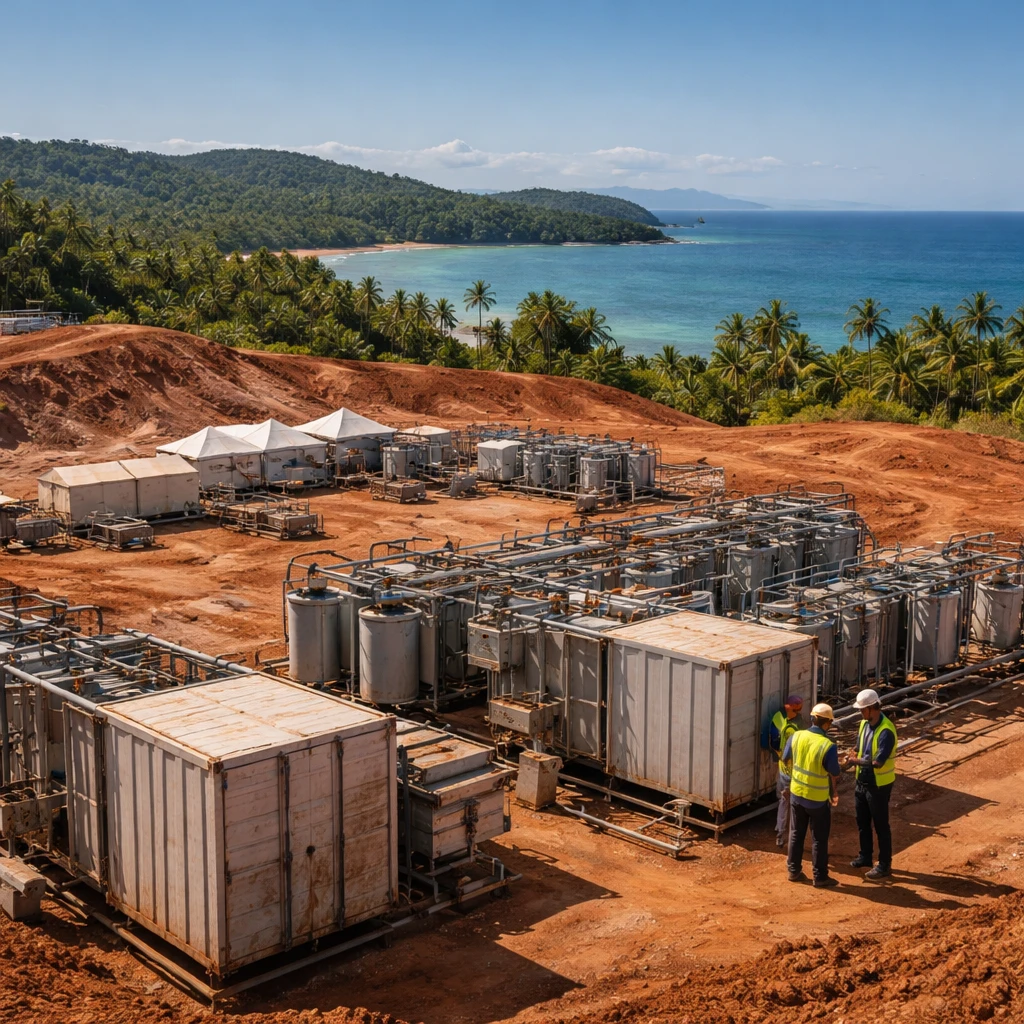
The Ampasindava rare earths development in Madagascar has received a vote of confidence from the United States as Washington seeks to build alternative supply chains for minerals that are critical to modern technology and defence systems.
London-listed Harena Rare Earths is the owner and developer of the roughly $150 million Ampasindava project. The U.S. International Development Finance Corporation has committed up to $4.48 million to support pilot plant work, laboratory testing and environmental programmes at the site, the company said. Harena described the DFC support as paving the way for potential future funding.
A State Department spokesperson framed the assistance as part of a targeted U.S. critical minerals strategy in Africa aimed at increasing U.S. and allied investment in mining sectors that have been dominated historically by what the spokesperson called "opaque, predatory investments from our adversaries." The spokesperson said Madagascar fits within that strategic approach and that U.S. officials see opportunities across the country to expand U.S. and U.S.-aligned involvement in the critical minerals sector.
China remains the dominant player in global rare earth mining and processing, and has in recent years used export controls to demonstrate its leverage over supply chains for electric vehicles, wind turbines, electronics and defence systems. The U.S. support for Ampasindava is an explicit effort to develop alternative sources for those materials.
Project details and timeline
Harena says the Ampasindava deposit contains ionic clay rich in neodymium, praseodymium, dysprosium and terbium. These elements are key to the manufacture of permanent magnets, which the company notes are essential for defence applications including fighter jets and precision-guided missile systems.
The company expects the project to produce about 4,000 metric tons of rare earth oxides annually, including roughly 1,700 tons of high-value magnet rare earths - NdPr and DyTb. Harena's Executive Chair, Andrew Murphy, told reporters that the company is seeking an exploitation permit and hopes to secure approval "in the next couple of weeks." Madagascar's mines ministry did not immediately respond to requests for comment.
Harena aims to commence production at Ampasindava by mid-2028. As part of project planning, the company is evaluating processing and refining options in the United States and Europe. Murphy named MP Materials, USA Rare Earths and Solvay among potential refining partners under consideration.
Financing context
While the DFC commitment is relatively modest compared with the project's overall budget, Harena's leadership regards the support as potentially catalytic. Murphy said the initial DFC backing could open the door to larger U.S. financing as Ampasindava advances toward construction.
A DFC official confirmed the agency could consider additional support for the project, but made clear any further assistance would be subject to standard due diligence and approval processes. The official declined to discuss potential financing details beyond that statement.
Summary and implications
The Ampasindava project underscores a shifting dynamic in Africa's critical minerals sector, where some of the leading rare earth developments are emerging with U.S. and broader Western support. The initiative reflects Washington's wider push to diversify supply chains for minerals of strategic importance. The immediate DFC commitment supports near-term technical and environmental work while leaving the possibility of expanded U.S. involvement if project milestones and approvals are met.
Key points
- U.S. International Development Finance Corporation has committed up to $4.48 million to Harena Rare Earths for pilot plant, laboratory testing and environmental programmes at Ampasindava.
- The Ampasindava project is a roughly $150 million development expected to produce about 4,000 metric tons of rare earth oxides annually, including about 1,700 tons of magnet-critical NdPr and DyTb.
- Harena hopes to obtain an exploitation permit imminently, aims to start production by mid-2028, and is evaluating processing options in the U.S. and Europe with potential partners such as MP Materials, USA Rare Earths and Solvay.
Risks and uncertainties
- Regulatory risk - Harena is awaiting an exploitation permit and has said it hopes to secure approval "in the next couple of weeks." Delays or denial of that permit would affect the project timeline; this impacts the mining and metals sector.
- Financing uncertainty - The DFC commitment is modest relative to the project's overall cost, and any further U.S. support is contingent on due diligence and approvals, creating uncertainty for project financing and construction schedules; this affects project finance and capital markets related to mining investments.
- Supply chain concentration - The broader strategic aim to reduce reliance on dominant suppliers remains a structural issue, with China currently controlling much of global rare earth mining and processing; this has implications for defence, electric vehicle and renewable energy supply chains.