
The U.S. administration is moving to broaden its reach into Venezuela’s mining sector, seeking access to mineral deposits - including gold - as part of a wider effort to secure strategic resources beyond the country’s oil reserves, according to three sources familiar with the discussions.
Those sources, who spoke on condition of anonymity, described an administration-level push to create openings for U.S. companies to invest in or otherwise participate in Venezuela’s mining industry. The initiative would extend U.S. involvement in Venezuelan natural resources beyond crude oil to include minerals that the administration views as important to national security and economic interests.
Officials within the administration are considering several tools to increase U.S. engagement in the mining sector. One option under discussion is an executive order focused on critical minerals, although the draft order is still being composed and the administration’s final approach could change, the sources said.
At the same time, the White House has been holding meetings with private companies to assess interest in investment or participation in Venezuela’s mining activities. "We are all watching the oil situation closely and recognize there could be a parallel track with critical minerals," one source, an executive from a critical minerals firm who met with administration officials, said.
White House spokeswoman Taylor Rogers said the U.S. and Venezuela are "benefiting from renewed cooperation between our governments and new investments by Western companies in Venezuela’s key industries." A White House official added that there is currently no need for an executive order, saying the administration believes existing laws provide an adequate framework for investment.
The effort to expand U.S. influence in Venezuela’s mineral sector fits into a broader strategic push by the administration to reassert U.S. influence in Latin America and to counter China’s growing economic ties in the region. The sources pointed out that Venezuela had previously built strong economic and diplomatic relationships with China under President Nicolas Maduro - who is now being held in a federal jail in New York City on drug trafficking charges he denies - and that the political turn in Caracas has opened channels for new cooperation with Washington. Following Maduro’s ouster, his vice president and ally Delcy Rodriguez has assumed the role of interim president and has increased cooperation with the United States.
Venezuela’s combination of enormous oil reserves and potentially large deposits of gold and other minerals gives the administration an opportunity to link resource access with national security and economic objectives, the sources said. The administration has already taken steps to facilitate limited U.S. involvement in Venezuela’s minerals sector. In March, the U.S. Treasury Department’s Office of Foreign Assets Control authorized certain transactions involving Venezuelan-origin gold, including some activities connected to state-owned miner Minerven. Later that month, Treasury broadened the authorization to cover Venezuelan-origin minerals more broadly, including gold, and permitted some mining-related services and negotiations of potential investment contracts.
Those Treasury actions established a framework that could allow U.S. companies to explore opportunities in Venezuela’s mining sector as the administration seeks to both revive investment and extend U.S. influence over the country’s energy industry.
On the oil front, the administration has moved aggressively to reshape Venezuela’s petroleum sector. Officials recently announced a deal under which the United States would take majority control of more than 65 billion barrels of Venezuela’s proven oil reserves, though the detailed legal structure of that arrangement has not been released. The announcement has fueled concern within Venezuela that the country risks becoming a modern-day colony under increased foreign control.
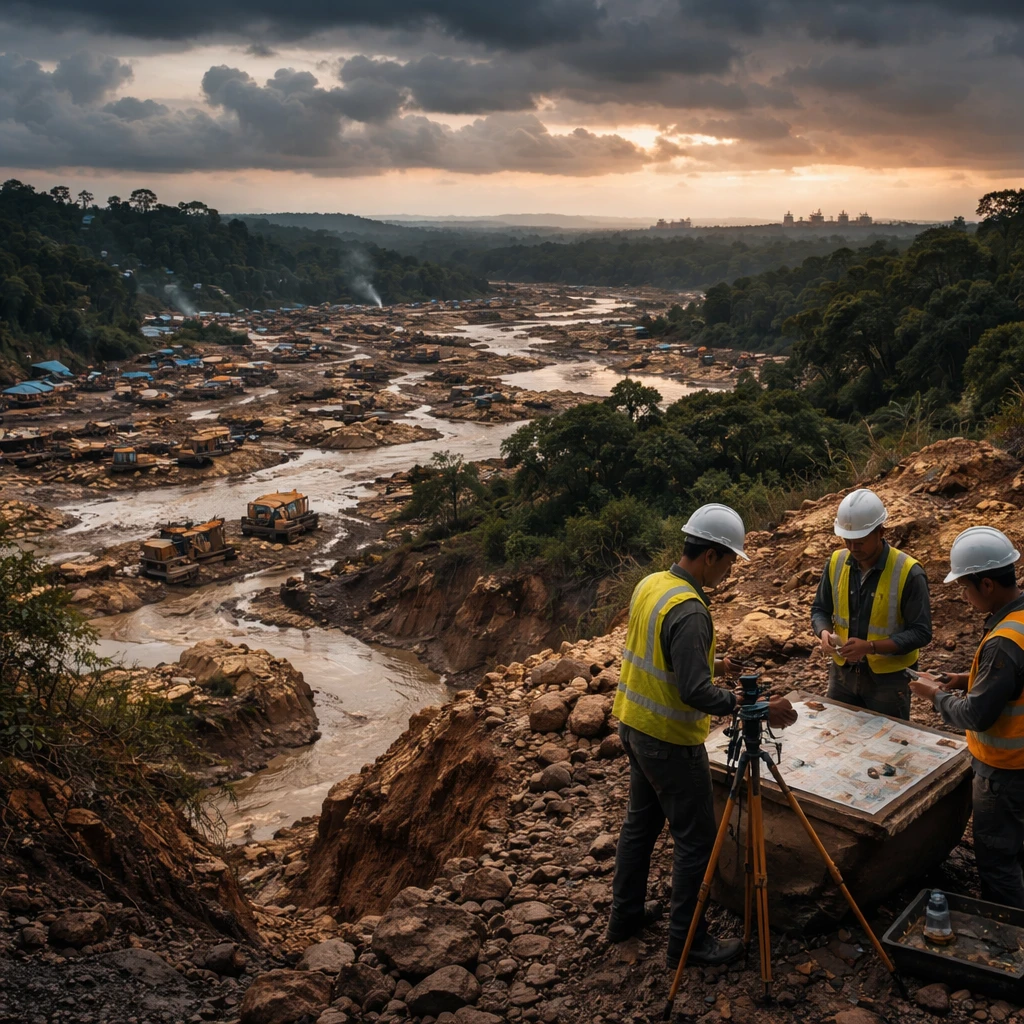
Assessing Venezuela’s mineral potential remains challenging. Much geological data on the country is outdated, and illegal armed groups control gold deposits in the Orinoco Mining Arc, a vast area near Venezuela’s borders with Guyana and Brazil. While Venezuela has historically produced gold, iron ore, bauxite and nickel, analysts and investors are likely to seek updated geological studies before committing significant capital, given uncertainties about mineral estimates, weak infrastructure and the prevalence of illegal mining operations.
In an example of past nationalization of mineral assets, Venezuelan officials in 2012 declined to renew Anglo American’s concession for the Loma de Niquel nickel mine. The state took control of the assets, which at the time had been estimated to contain more than 4 million metric tons of nickel, and has since sought to restart operations.
A Venezuelan government report published in 2018 estimated the country’s resources at 644 metric tons of gold, 14.68 billion metric tons of iron ore, 321.5 million metric tons of bauxite and 407,885 metric tons of nickel. However, the report used terms such as "reserve" and "resource" interchangeably, complicating efforts to determine how much of those quantities could be economically recovered. A 2021 government map, which relied on data compiled in 2009, identified deposits of other minerals - including copper, nickel, coltan, uranium and tungsten - but did not provide volume estimates.
The available assessments do not indicate that Venezuela holds substantial rare earths, the specialized group of elements used in magnets and other advanced technologies.
In April, Venezuelan legislators unanimously approved a mining law intended to encourage new investment. The law reaffirms government ownership of mineral deposits and sets a royalty tax of up to 13% of the gross production value of a mineral.
Despite authorization steps and legislative reforms, significant obstacles remain for investors assessing the Venezuelan mining sector. The paucity of up-to-date geological data, the presence of illegal mining controlled by armed groups, fragile infrastructure and ambiguity in mining statistics are all factors that could delay or limit large-scale investment. Analysts and potential investors are likely to demand fresh geological studies and clearer legal frameworks before deploying capital.
For now, administration officials and industry executives the White House has engaged are weighing whether and how to proceed in a sector that offers both strategic value and considerable uncertainty. The discussion underway highlights the intersection of resource security, geopolitical strategy and private-sector investment in a country whose resource base has long attracted global attention.