
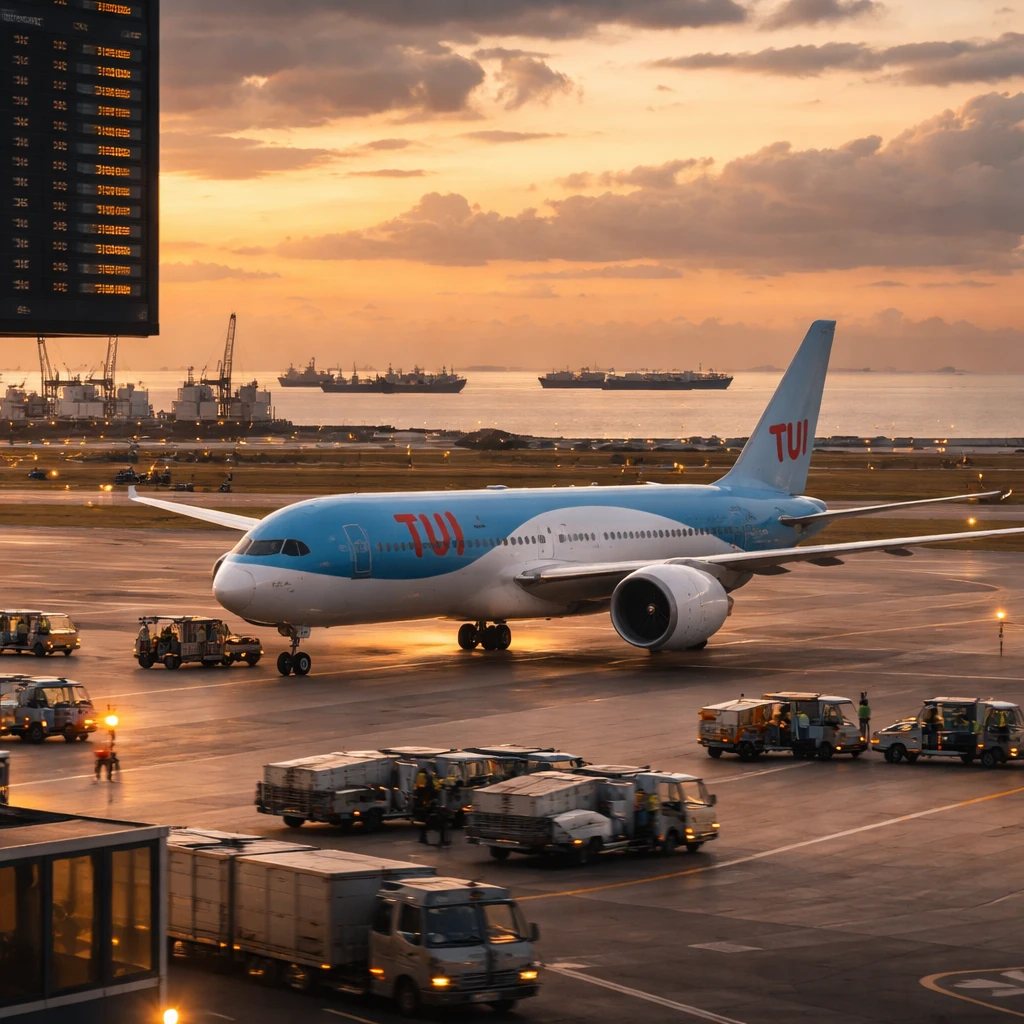
TUI's stock surged nearly 9% to €7.098 after U.S. President Donald Trump canceled planned military strikes against Iran on Thursday evening and suggested a peace framework might be signed in Europe imminently. Investors responded to the reduced geopolitical risk with heavy buying in tourism and aviation equities.
In his comments, Trump said the U.S. had "just made a great settlement of the war with Iran," while noting that the agreement remained subject to finalization of documents. A draft memorandum of understanding that emerged on Friday described terms that would see the U.S. lift oil sanctions and Iran reopen the Strait of Hormuz - steps the market interpreted as directly easing pressure on jet fuel costs and supporting travel demand.
The shift in the geopolitical backdrop is especially material for TUI, which had been contending with pronounced headwinds. The company was forced to cut its full-year 2026 earnings forecast and to suspend revenue guidance after the Iran conflict disrupted second-quarter operations, drove jet fuel costs sharply higher, and caused a marked slowdown in summer bookings.
Any credible route to de-escalation improves both the company cost profile and the demand picture heading into the crucial summer travel season. Analyst sentiment remains constructive toward the stock - J.P. Morgan maintained a Buy rating as recently as May 2026 - and the broader consensus of analysts carries an average price target that sits well above the stock's current trading level.
The broader market backdrop amplified TUI's move. U.S. equity indices rose as investors priced in the de-escalation, with the S&P 500 gaining 1.8%, the Dow Jones rising 1.9%, and the Nasdaq climbing 2.5%. In Europe, sector peers moved sharply higher alongside TUI - Lufthansa (LHAG) and Fraport (FRAG) were among the notable beneficiaries.
Oil prices fell meaningfully on the signals of a peace deal, a development that offers additional relief to airlines and tour operators that had been contending with elevated fuel bills during the conflict. The combination of a potential end to the Iran conflict, lower oil prices, and a broadly risk-on market environment created a powerful tailwind for travel-related names.
TUI's share price had traded not far above its 52-week low of €6.08 in recent weeks amid the geopolitical uncertainty. The sudden reassessment of geopolitical risk and the prospects for restored stability in the Middle East prompted a sharp rebound as investors recalibrated expectations for the company's summer earnings potential.
Context and market reaction
- TUI surged nearly 9% to €7.098 in response to the U.S. decision to cancel planned strikes and statements about a near-term settlement.
- A draft memorandum of understanding reportedly calls for the U.S. to lift oil sanctions and for Iran to reopen the Strait of Hormuz, helping ease jet fuel cost pressures.
- Broader market moves were supportive: the S&P 500, Dow Jones, and Nasdaq all posted gains as investors priced lower geopolitical risk.
Taken together, these elements produced an unusually strong short-term boost to TUI and its sector peers, reflecting how rapidly geopolitical developments can reframe near-term cost and demand assumptions for travel and aviation companies.