
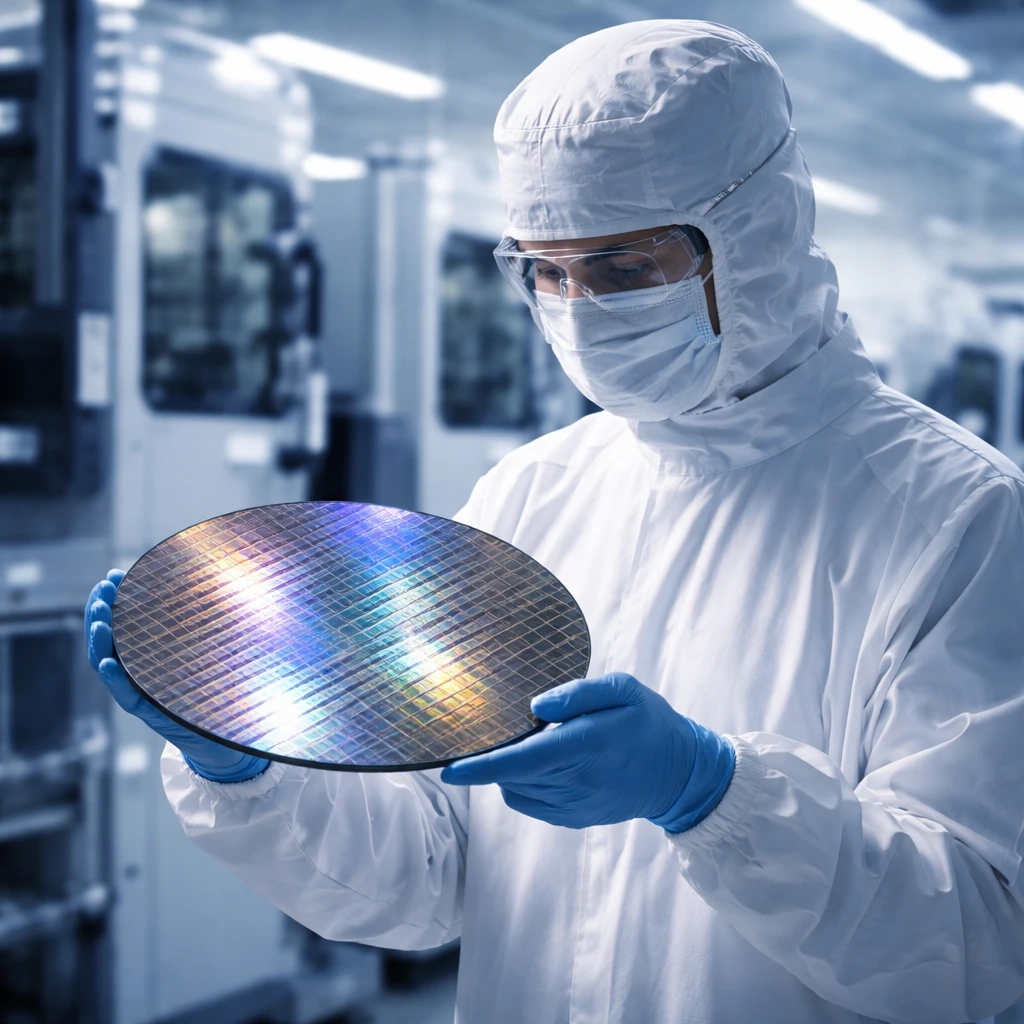
Nvidia’s blockbuster quarterly report - which included $96.2 billion in revenue and $108 billion in guidance for the upcoming quarter - reverberated across the semiconductor industry and helped propel Taiwan Semiconductor Manufacturing Co. stock higher in morning trading. The market interpreted Nvidia’s results as a strong validation of demand for AI infrastructure, a trend that benefits leading contract chipmakers positioned at the high end of process technology.
As the dominant contract manufacturer globally and the sole producer of the advanced nodes used in Nvidia’s GPU family, TSMC occupies a central position in that supply chain. Investors reacted to the reinforced demand signal by bidding TSMC shares up, reflecting the view that accelerating AI infrastructure spending would flow through to the company.
Company-specific news added to the momentum. TSMC confirmed it will produce three new chips for Xiaomi, including the Xring O3 smartphone processor, using its 3-nanometer process. That agreement broadens TSMC’s revenue sources and indicates that customer demand for leading-edge nodes is not limited to hyperscaler AI projects but also extends into consumer device processors.
The broader equity market provided a favorable backdrop. The Nasdaq rose 1.2% during the session while the S&P 500 increased by 0.6%, and several other chip-supply-chain stocks advanced as Nvidia’s results lifted sentiment across the technology sector. Market participants treated the earnings beat as a catalyst for a sector-wide re-rating of companies tied to AI semiconductor demand.
Within this environment, TSMC shares moved toward an intraday high of $427.35, surpassing the prior session’s close of $417.69. That price action reflected investor confidence in TSMC’s strategic position at the center of a multi-year AI infrastructure build and in its ability to capture demand across both hyperscalers and device manufacturers.
Key figures cited in the session:
- Nvidia quarterly revenue: $96.2 billion
- Nvidia Q3 guidance: $108 billion
- TSMC intraday high: $427.35
- TSMC prior close: $417.69
- Nasdaq gain: 1.2%
- S&P 500 gain: 0.6%
The combination of Nvidia’s demand validation, TSMC’s expanding customer roster that includes Xiaomi’s new chips, and a risk-on market environment together helped push shares higher. Market participants treated these developments as reinforcing TSMC’s role in the evolving AI semiconductor ecosystem.