
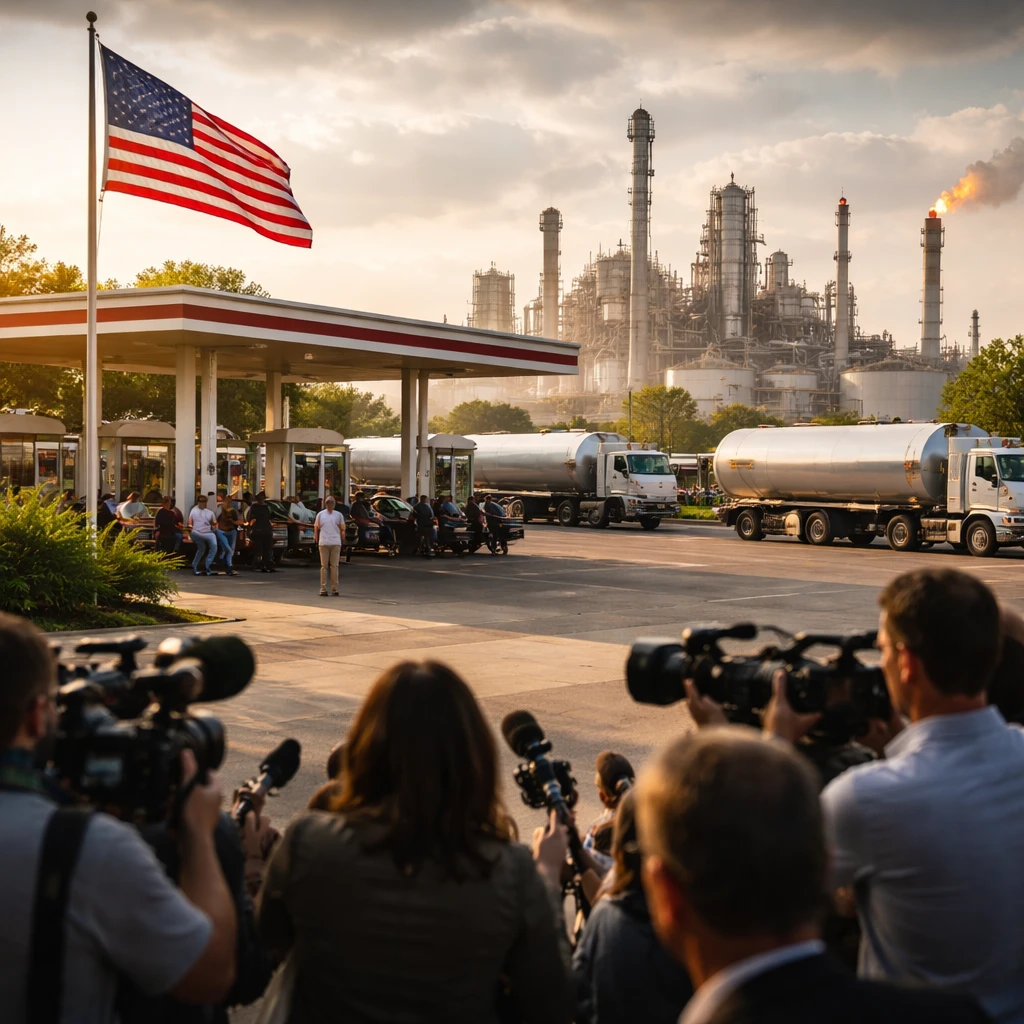
President Donald Trump on Monday criticized ExxonMobil and Chevron for what he described as excessive profits tied to higher fuel prices, urging the oil majors to "give some of that back to the public." The comments - delivered to reporters three days after the companies reported robust second-quarter earnings - marked a break from the president's typical support for the energy industry.
"I don’t like it," Trump said, repeating his complaint about the oil companies. "Chevron, too much money. ExxonMobil, too much. Too much money." Requests for comment to Exxon and Chevron did not receive immediate responses.
The president has a long track record of leaning on corporate leaders through public statements and social platforms to alter business behavior. During his first term, he pressured automakers to retain U.S. production, criticized defense contractors over pricing and pushed pharmaceutical manufacturers to lower drug costs. Since returning to office, he has continued to use the presidential platform to try to influence corporate choices, often relying on public pressure rather than formal regulatory moves.
Earlier on Monday, Trump targeted Chevron CEO Mike Wirth for not acknowledging the administration's role in supporting the oil sector during a television appearance. In a post on his Truth Social platform, the president wrote that the CEO "conveniently forgot" to credit the administration's "genius, foresight, strength, and stability" and suggested the industry would have been harmed without it. He also pointed to Chevron's rebound in Venezuela, saying the company was "back, far bigger and stronger than ever before, expecting to make a fortune!"
Chevron has had a presence in Venezuela for more than a century and remained in the country after then-President Hugo Chavez nationalized oil projects in 2007. By contrast, ExxonMobil and ConocoPhillips chose to exit Venezuela at that time. Responding to broader questions about recent price increases, a spokesperson for the American Petroleum Institute said higher prices stem from global supply and demand dynamics and ongoing uncertainty around the Strait of Hormuz and other key shipping lanes, rather than actions by any single company.
Trump presses for lower pump prices even as he champions energy expansion
Expanding U.S. energy production has been a central element of the president's agenda. He has consistently encouraged more drilling and called for increased oil and gas output, policies that have generally been welcomed by the industry. Still, the president has also repeatedly pushed producers to ensure fuel remains affordable for consumers, creating an inherent tension between promoting greater domestic production and demanding that companies limit the profits they earn when prices climb.
"They better cut the retail price, the consumer price," Trump told reporters, adding that oil prices would "drop through the floor" once the conflict with Iran concludes.
Higher gasoline prices, in part attributed to the Iran conflict and wider cost-of-living pressures, represent a political vulnerability for the president and his party ahead of November's midterm elections, when Republicans are attempting to hold on to control of Congress. Retail gasoline prices are currently averaging about $4.10 per gallon nationwide and have risen more than 30% since the U.S. and Israel attacked Iran earlier this year. Although global oil prices fell after the president called off a planned "massive attack" on Iran over the weekend, gasoline prices at the pump typically lag changes in crude benchmarks and may not decline immediately.
Last week's earnings reports from major U.S. oil and refining companies underscored how recent crude and refining market moves have benefited the sector. ExxonMobil, Chevron, Valero Energy and Marathon Petroleum reported strong quarterly results following the spike in prices after the conflict began in February. Valero posted its strongest quarterly profit since the 2022 energy shock tied to Russia's invasion of Ukraine, while Chevron recorded its highest quarterly earnings in at least six years.
Those results reflect a combination of higher crude prices and improved refining margins that have lifted profits across the value chain. The president's public urging that some of those gains be passed on to consumers highlights the political and economic pressures the industry faces as global uncertainties keep energy prices elevated.
Context and near-term outlook
The statements illustrate the dual dynamic shaping energy policy and market expectations: a White House intent on expanding domestic output and a concurrent push to shield consumers from rising fuel costs. How companies respond to public pressure from the presidential podium remains an open question; historically, the president has used media and social platforms to press firms on issues ranging from manufacturing to health care pricing without instituting immediate regulatory action.