
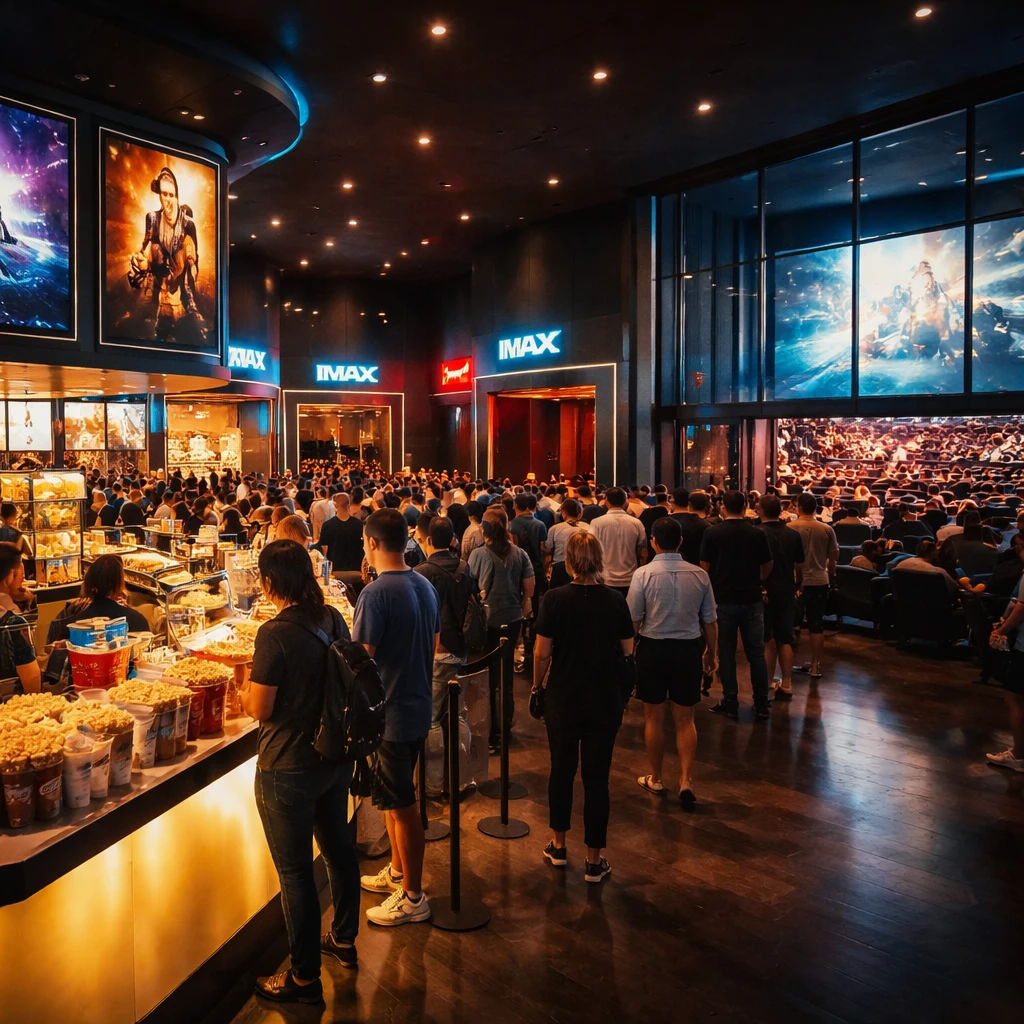
The U.S. box office has posted record-level weekend openings this summer, buoyed by major releases such as "Spider-Man: Brand New Day" and "The Odyssey." Yet the financial rebound appears to be more a function of price and format mix than a full restoration of pre-pandemic audience volume.
Through the first 30 weeks of 2026, theaters sold an estimated 470.9 million tickets, compared with 747.3 million in the same period of 2019, according to S&P Global Market Intelligence. That disparity highlights a core tension in the industry: domestic box office revenue is on track for its best year since the pandemic even as the pool of moviegoers has shrunk.
"Revenue growth for exhibitors for a long while now has been mostly driven by increases in average ticket price along with increases in concession prices," said S&P Global Market Intelligence analyst Wade Holden.
Foot-traffic data from research firm Placer.ai shows a similar dynamic. Measured through July, U.S. theater attendance is up 8.1% year-over-year compared with 2025, but remains down 27% versus 2019 levels. Those figures suggest the recovery in box office dollars is concentrated among fewer, higher-paying customers rather than a broad return to theaters across the population.
Several factors are feeding the revenue upswing. A more diverse release slate this year - including non-franchise standouts such as "Obsession" and "Project Hail Mary" - has helped expand box office intake. Domestic box office revenue reached $6.2 billion through August 2, up 15% from the same period last year, according to media analytics firm Rentrak. By comparison, sales had topped $7 billion at the same point in 2019.
Exhibitors have leaned into product differentiation. Theaters expanded premium large-format screens and invested in upgrades to the in-theater experience, betting that consumers will be willing to pay a premium for screenings that cannot be easily replicated at home. That strategy is showing early returns: films such as "The Odyssey" and filmmaker Christopher Nolan's re-imagining of Homeric material have sold out higher-priced IMAX venues, and those premium formats command higher average ticket prices.
According to EntTelligence data, the average adult ticket price was $13.46 through July 30 this year, while admissions for premium formats such as IMAX averaged $18.22. Those higher prices, together with elevated concession spending, are supporting studio and exhibitor revenue despite lower overall admissions.
AMC Entertainment, the world's largest cinema chain, reported that strong demand for premium screens helped it record its highest single-weekend revenue in the chain's 106-year history, as well as its biggest-attended weekend of the decade. More than 10.2 million moviegoers visited AMC and Odeon theaters during that weekend, the company said.
Market concentration among a handful of big studios is also apparent. An analysis of Rentrak data shows Universal, Walt Disney, Sony, Warner Bros and Paramount Pictures accounted for 68% of domestic receipts this year. Comcast's Universal benefited from titles including "The Odyssey" and "The Super Mario Galaxy Movie," lifting its market share to 24% of domestic receipts and illustrating how a small number of blockbusters are disproportionately driving financial results for exhibitors.
Industry observers point to a structural shift that predates the pandemic: streaming services provided consumers with more home viewing options, and the pandemic reinforced that behavior. As a result, many moviegoers now reserve theatrical visits for event films and franchise releases, while more routine releases face stiffer competition from at-home alternatives.
"This year's success at the box office speaks to a well-rounded release calendar that features a bit of everything and appeals to a wide spectrum of moviegoers," said Shawn Robbins, director of movie analytics for ticket seller Fandango and founder of Box Office Theory.
Hollywood consolidation and regulatory scrutiny have become part of the conversation as well. California, along with 11 other states, sued to block Paramount Skydance from acquiring Warner Bros Discovery in a $110 billion deal. Rentrak data indicate a combined Paramount and Warner would have made up nearly 11% of the domestic box office through the past weekend, underscoring the potential market impact of large-scale studio combinations.
Implications for stakeholders
- Studios: Benefit from higher revenue per ticket and a slate that includes both franchise and non-franchise hits, but remain dependent on a concentrated set of successful releases.
- Exhibitors: Premium screens and upgraded experiences are lifting average revenue per patron, but chains face the challenge of attracting a broader audience beyond event-driven attendance.
- Consumers: Those attending theaters are paying more on average, particularly for premium formats such as IMAX.
The current pattern raises a key test for the industry. Can high-budget, event-style films continue to deliver the box office lift needed to offset lower overall attendance? Or will studios and exhibitors need new strategies to grow the base of moviegoers again? The available data point to a recovery that is robust in dollars but incomplete in terms of audience breadth.
For now, revenue metrics look strong: domestic receipts have rebounded to their best levels since the pandemic, but the underlying unit economics reveal reliance on fewer tickets sold at higher prices. Whether that model proves durable through the remainder of the year remains to be seen based on the slate of releases and consumer behavior.