
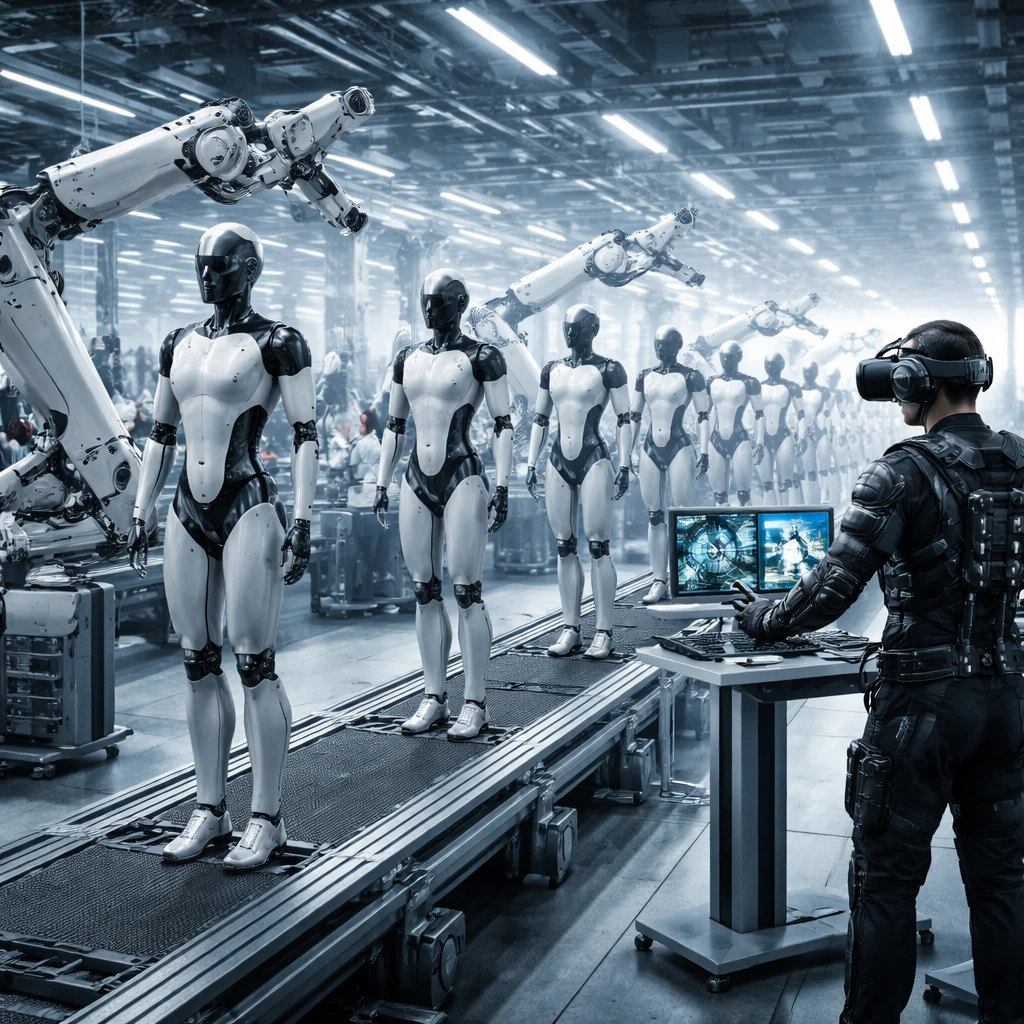
Tesla has laid out a multi-phase production ambition for its Optimus humanoid robot, setting targets that, if realized, would transform the scale of industrial robotics. Management presented plans that place Gen 3 production around 1 million units per year and cast Gen 4 as an aspirational goal of 10 million units per year. Executives emphasized the ramp will begin as a "flat S-curve" because an entirely new supply chain for Optimus must be created.
Production roadmap and timeline
On the company’s Q2 2026 earnings call held July 22, 2026, Tesla management described the initial growth profile for Optimus as a flat S-curve, acknowledging that creating a supply chain from scratch slows the early stages of scaling. The long-term numerical targets were presented as:
- Gen 3 - target of about 1 million units per year
- Gen 4 - aspirational target of 10 million units per year
Management also tied Optimus into a broader capital allocation plan for the year. Tesla expects full-year 2026 capital expenditures to exceed $25 billion and is arranging up to $30 billion in borrowing capacity. Optimus is explicitly listed among capital priorities together with Robotaxi, semiconductor fabrication, and AI infrastructure.
Teleoperation acquisition and AI training
On July 27, 2026, Tesla acquired a Virtuix Omni One Enterprise system for the Optimus division. That system supports full-body simulation and real-time teleoperation, enabling humans to remotely operate humanoid robots to produce training data. Tesla described the acquisition as a critical element of the AI training pipeline for Optimus.
Financial backdrop
The company’s Q2 financial results were mixed, a factor that bears on funding and margin dynamics for projects such as Optimus. Reported Q2 figures included revenue of $28.24 billion versus an estimate of $25.55 billion, a positive surprise of 10.5 percent. Adjusted earnings per share were $0.33 versus an estimate of $0.49, a shortfall of 32.7 percent. Automotive gross margin declined to 16.3 percent from 19.2 percent.
Tesla shares closed at $322.10, up 3.50 percent on the day. Management noted that heavy investment in Optimus, Robotaxi, and AI is compressing margins in the near term, framing the pressure as a deliberate trade-off to support strategic programs.
Market views and execution considerations
Proponents point to the scale potential in the Gen 4 vision: a 10 million unit per year target would represent an extremely large manufacturing ramp. The bull case in the company’s presentation also referenced record robotics funding in 2026 as validation of market interest.
Critics highlight the phrase "flat S-curve" as an admission of a slow initial ramp. Building a brand new supply chain with no direct precedent increases execution risk, and current capital spending is already exerting margin pressure.
These elements together frame Optimus as a high-ambition program balanced by near-term financial and operational constraints. Tesla has signaled significant capital commitment while acknowledging early-stage scaling challenges.