
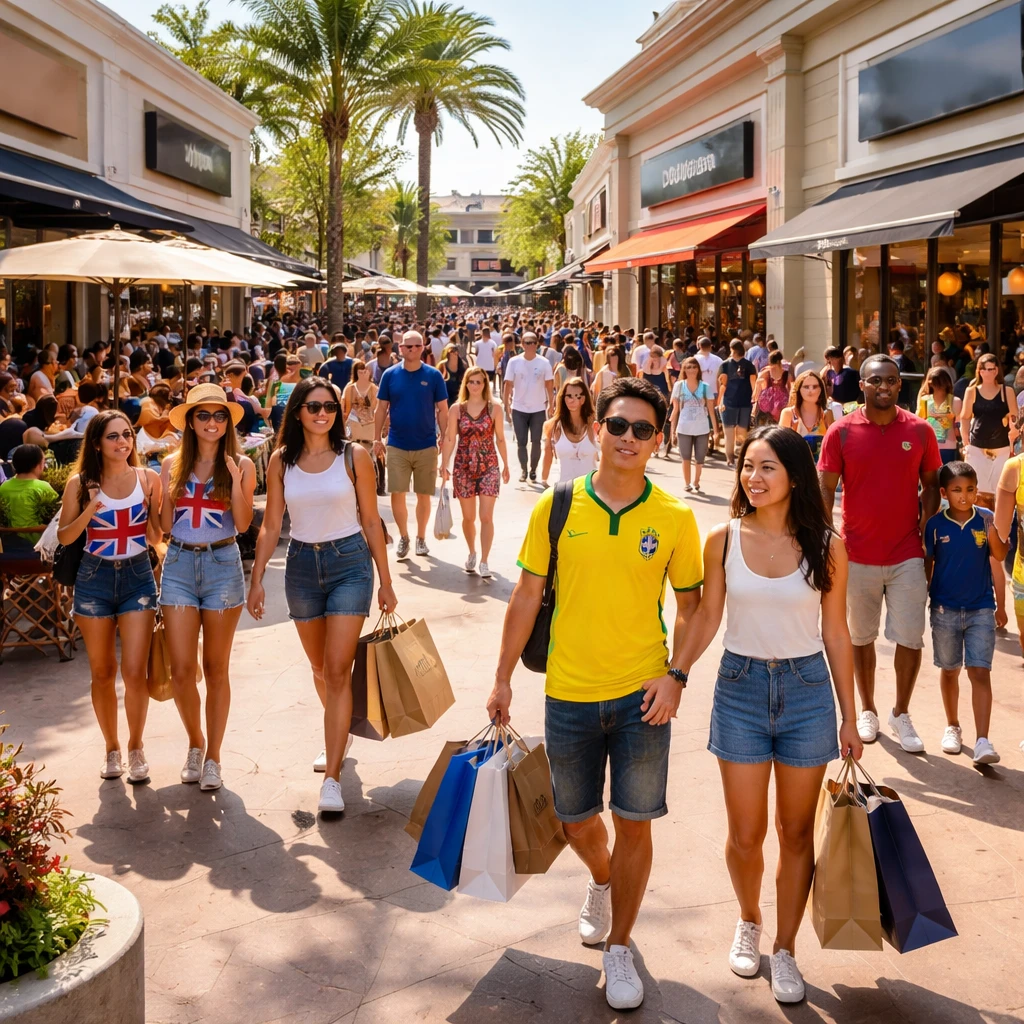
Tanger said it experienced elevated foot traffic and sales during June and July as the World Cup drew both international and domestic visitors to its outlet centers located in host cities.
The outlet operator has properties in eight of the 11 cities that hosted tournament matches. CEO Stephen Yalof told CNBC that the company treated the event as an opportunity to introduce the Tanger brand to new shoppers.
"We knew when you get these new visitors that come for a huge magnet event like World Cup, you've got one opportunity to introduce them to your brand, and then hopefully they become a great ambassador for the brand if they have a great experience," Yalof said.
For the year, Tanger reported a 5% increase in sales. Yalof noted that athletic brands were among the better-performing categories during the tournament weeks.
"Traffic drives sales. Traffic and sales always move together," Yalof said.
According to Yalof, international visitors were seeking American experiences while in the U.S., including dining options and familiar brands available at or near Tanger locations. The outlet format, management said, allowed these visitors to purchase American labels such as Polo, Michael Kors, Kate Spade, Coach, and Nike at reduced prices.
Yalof also pointed to an uptick in domestic travel, saying that Americans chose to remain in the country amid higher oil prices and broader global conditions. Tanger reported strong second-quarter results on Tuesday and attributed those results to marketing initiatives and programs designed to drive traffic.
The company operates centers that combine retail with food and beverage and entertainment offerings, a mix management cited in explaining how Tanger attracts and serves both domestic and international visitors during major events.
Context and company comments
Management framed the World Cup as a concentrated source of incremental traffic that provided exposure to new customers and helped lift sales in the mid-year period. Tanger's quarterly update credited marketing and traffic-focused programming for supporting the stronger performance recorded in the second quarter.