
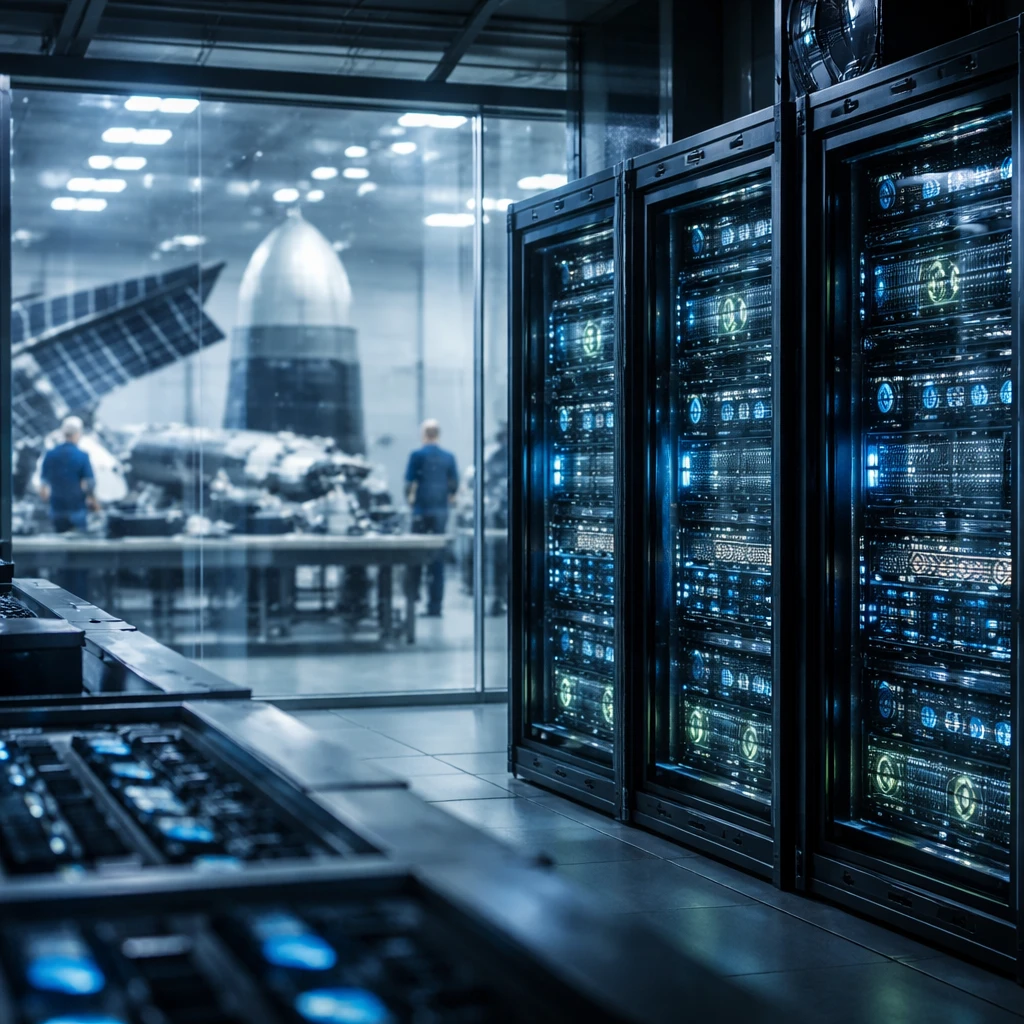
SpaceX reported sharply higher AI-related revenue and unveiled additional cloud-computing agreements on its first earnings call as a publicly traded company, but investor unease over the cost and duration of its AI build-out pushed the stock lower.
Shares fell about 9% in premarket trading on Wednesday, sliding under the $135 IPO price less than two months after the company’s market debut. The drop came even as management highlighted rapidly improving economics for its AI investments and continued growth in AI sales.
Results and spending
SpaceX said its AI business generated $2.6 billion in revenue in the second quarter, more than triple the level from a year earlier, though the segment remains operating loss-making. Quarterly capital spending tied to AI rose to $15.8 billion, and overall capital expenditures for the quarter were about $18.4 billion. That level of spending represents roughly one-fifth of the $85.7 billion the company raised in its June IPO, and SpaceX remains deeply free cash flow negative as it continues to pour money into AI infrastructure.
Chief Financial Officer Bret Johnsen characterized the returns on recent compute investments as rapid. "The current economics have translated into a less than one-year payback on our new capital deployments for compute," he said, and added that SpaceX had signed an additional $6.7 billion in cloud computing contracts since the end of the second quarter. Management also said it is on track to reach a $100 billion annualized revenue run rate by the end of the year, if current plans proceed.
A shift in the funding narrative
Before the earnings release, many investors treated Starlink’s expanding cash flows as the primary source of funding for SpaceX’s AI ambitions. Company executives are now arguing the AI infrastructure itself is beginning to produce revenue that can fund continued expansion. That line of argument is central to management’s case that the investments can become self-financing if demand keeps capacity fully utilized.
Executives said demand for AI computing still exceeds available supply and that SpaceX expects to finish the year with more than two gigawatts of compute capacity. If utilization remains high, the company believes AI could progressively finance its own growth rather than depending on Starlink’s cash generation.
Market skepticism and investor commentary
Despite the bullish operational framing, some investors expressed skepticism about timing and execution. "Elon has continued to surprise investors on what innovation and technology can do, but there has always been a mismatch in terms of the time frame of when that execution is going to occur," said David Wagner, portfolio manager at Aptus Capital Advisors, referencing repeatedly optimistic timelines associated with the company’s leadership.
Another investor commented on the numbers in blunt terms: "I believe the numbers. I would say that yes, those numbers are aggressive, but it’s not a fantasy. The pieces exist, they just require flawless execution."
Portfolio managers highlighted the tension between the speed of monetization SpaceX claims and the heavy near-term capital outlays. "New compute capital monetizes so fast it behaves more like cost of goods than capex," Michael Monaghan, portfolio manager of the Founders 100 ETF, said. Yet other investors cautioned that the relationship between capex and revenue must change. "The relationship between capex and revenue is unsustainable, so capex has to fall or revenue has to grow tremendously, and that is where faith in Musk’s vision, engineering leadership and execution track record separates the bulls from the bears," said Drew Cupps, portfolio manager at Polen Capital.
Outlook and near-term plans
Johnsen indicated that capital expenditures over the next two quarters are likely to remain at levels similar to the second quarter as SpaceX continues to expand AI compute capacity, proceed with Starship production and build next-generation Starlink satellites. The company’s continued emphasis on expanding compute, along with satellite and launch programs, keeps capital intensity elevated in the near term.
Management’s argument rests on two linked assumptions presented in the call: that AI compute can be monetized quickly enough to materially reduce the need for Starlink cash flows to finance growth, and that demand will be durable enough to sustain high utilization of the newly added capacity. The firm’s reported metrics show rapid revenue growth for AI, substantial recent customer commitments and a shorter payback timeline on certain compute capital, but they also show large, ongoing capital expenditures and operating losses in the AI unit.
Implications for markets and sectors
The debate plays out across several market areas: cloud computing and data-center capital intensity; the semiconductor market for AI chips; satellite broadband cash flows through Starlink; and capital markets appetite for loss-making yet fast-growing technology infrastructure businesses. Investor sentiment has visibly shifted following the earnings call, reflecting uncertainty about how quickly AI infrastructure will convert to sustained profitability without continued dependence on Starlink’s cash generation.
SpaceX’s immediate path depends on execution across multiple fronts: scaling compute capacity, securing and monetizing cloud contracts, keeping Starship and satellite programmes on track, and managing near-term capital spending. The firm’s results and commentary provide clear targets and milestones investors will likely monitor closely in the coming quarters.