
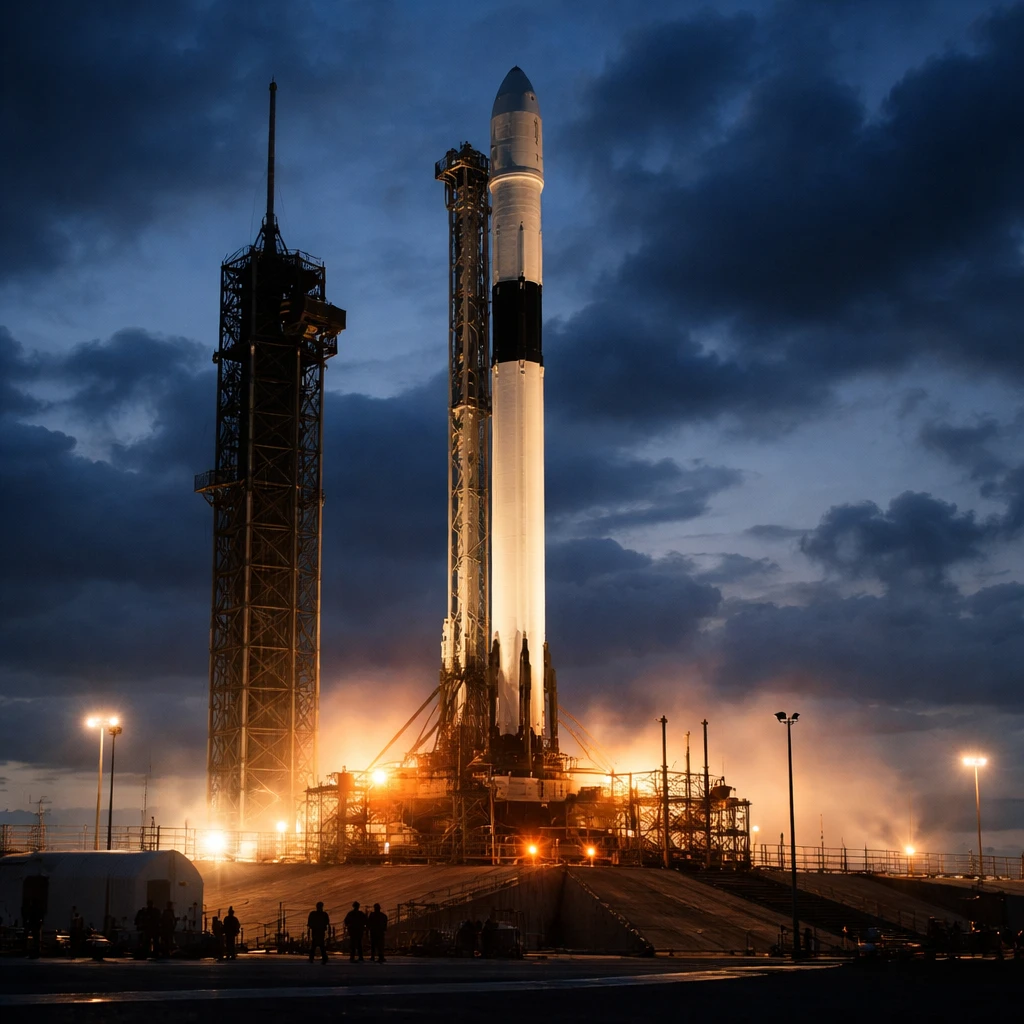
SpaceX posted a markedly stronger-than-expected Q2, delivering $7.8 billion in revenue, a 92% increase from the prior year and roughly 15% above the $6.81 billion consensus estimate. Adjusted EBITDA climbed 191% to $3.5 billion. Despite the operational beat, shares fell 8.15% to $115.12 on the day as attention shifted to a forthcoming insider unlock that could release about 911.5 million shares into the market.
The headline numbers
- Reported Q2 revenue: $7.8 billion (+92% YoY).
- Consensus estimate: $6.81 billion.
- Adjusted EBITDA: $3.5 billion (+191% YoY).
- Net loss: -$541 million, narrowed from -$1.0 billion a year earlier.
- Market capitalization: $1.52 trillion; share price at close: $115.12 (-8.15% on the day).
Segment performance and key metrics
| Segment | Q2 Revenue | YoY Growth | Key Metric |
|---|---|---|---|
| Connectivity (Starlink) | $4.3B | +66% | 12M subscribers (2x YoY) |
| AI Cloud | $2.6B | +247% | 1.4 GW compute capacity |
| Combined | $7.8B | +92% | $14.1B in AI contracts secured |
What the quarter clarified
The report helps resolve several key questions investors had heading into the release. Starlink's monetization trajectory is now clearer: subscribers doubled to 12 million and operating income for the segment increased 79% to $1.7 billion, indicating improving unit economics. The AI cloud business, at $2.6 billion in revenue and 1.4 GW of compute capacity, supports the strategic rationale for integrating xAI earlier in 2026. Management highlighted a contracted AI cloud backlog of $14.1 billion, which provides revenue visibility over multiple years.
Government work remains a substantial pillar. SpaceX has secured more than $6 billion in Starshield multi-year contracts and announced a $1.6 billion Space Force agreement that covers 18 Falcon 9 launches through 2027. Total Pentagon contract awards in 2026 alone exceed $7 billion, underscoring a significant defense revenue stream.
On profitability, the company narrowed its net loss to -$541 million from -$1.0 billion a year ago. Analysts cited in the wake of the results updated full-year 2026 EPS guidance to a range of $8.20 to $8.60, reflecting a steeper path toward GAAP profitability.
The market move - the unlock
Price action following the release was driven less by the operational numbers than by a looming insider share unlock. Approximately two days after the earnings announcement, roughly 911.5 million insider-held shares are expected to become tradable, representing about $109.2 billion in market value at prevailing prices. The stock has already fallen about 49% from a $225 post-IPO peak and was trading near a 52-week low of $104.83, suggesting the market is pricing in potential forced selling rather than an immediate deterioration in fundamentals.
Upcoming catalysts to monitor
- Insider unlock absorption - timeline: this week. Bull case: institutions buy the dip aggressively. Bear case: supply overwhelms demand, stock tests $104.83.
- Potential Tesla-SpaceX merger - timeline: TBD. Bull case: large synergy re-rating. Bear case: distraction from core execution.
- Starship commercial launch - timeline: 2026-2027. Bull case: unlocks next-generation launch revenue. Bear case: delays compress Falcon 9 revenue window.
- Falcon 9 commercial wind-down - timeline: beyond 2028. Bull case: capacity freed for Starship. Bear case: near-term commercial revenue cliff.
- AI compute expansion - timeline: H2 2026. Bull case: $23.6 billion H1 CapEx drives 2027 revenue. Bear case: free cash flow burn widens materially.
Analyst positioning and the valuation tug-of-war
Cantor Fitzgerald reiterated an Overweight rating after the results and set a $246 price target, implying about 114% upside from current levels, based on a blend of EV/EBITDA, EV/Sales, and discounted cash flow approaches. The bull case centers on sustained high revenue growth, the sizable AI backlog, dominant government launch share, and what the bulls see as early-stage Starlink subscriber growth. The bear case emphasizes the very large near-term AI-related CapEx of $23.6 billion in H1, an extended road to GAAP profitability, the intentional wind-down of the Falcon commercial business, and the substantial insider share overhang of roughly $109 billion.
Bottom line
Q2 results deliver a strong operational narrative: accelerating revenue, material improvement in adjusted EBITDA, and narrowing net losses. Yet the impending insider unlock is the proximate driver of the recent sell-off, creating a large potential supply event that investors must absorb. Near-term price dynamics will likely hinge on whether institutions and other buyers step in to offset the newly tradeable insider shares.