
SpaceX disclosed results for the April-June quarter showing revenue of $7.8 billion, a 92% rise from $4.1 billion in the same quarter a year earlier. These figures were released as the company reported publicly for the first time after its initial public offering in June.
Despite the revenue surge, the company’s stock has not held on to its IPO gains. The share price is down about 8% from the record levels reached at the offering, and traders face an additional headwind as SpaceX’s post-IPO lock-up period begins to lapse starting on Thursday, potentially releasing insider and early-investor shares into the market.
Starlink remains the revenue backbone
Starlink and SpaceX’s connectivity business continue to provide the bulk of the company’s revenue. The satellite-internet unit has expanded its global subscriber base through additional satellite launches and by broadening its product set to serve consumer, enterprise, aviation, maritime and government customers.
However, management notes tradeoffs associated with that growth. As Starlink has entered more international markets and introduced lower-priced plans, average revenue per user, or ARPU, has declined. Investors are watching whether SpaceX can sustain subscriber growth while improving network economics, particularly as it invests heavily to expand coverage, scale capacity and develop direct-to-device mobile services.
AI operations add scale and complexity
SpaceX’s AI activities, which encompass xAI, Grok, the social-media platform X and an expanding data center footprint, are among its largest areas of investment. The company has begun to generate revenue from compute contracts with customers including Anthropic, Alphabet’s Google and Reflection AI. The company also acknowledged that a portion of this recurring revenue has not yet been recognized.
Operating losses at the AI unit have grown, and SpaceX has warned that the AI business will require sustained investment before it can produce steady profits.
Starship’s role and launch economics
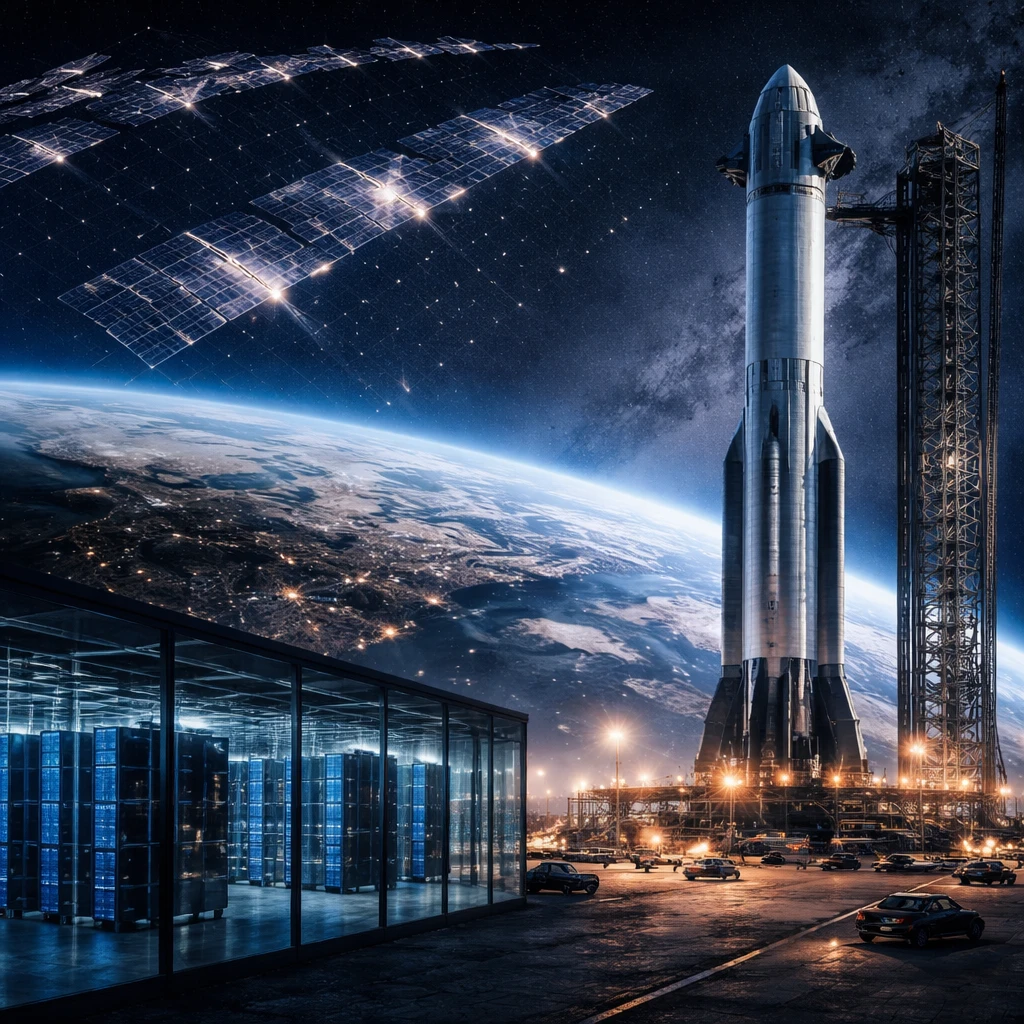
Starship, the next-generation reusable rocket system, has not yet entered commercial service. SpaceX expects that Starship will enable deployment of higher-bandwidth Starlink satellites and orbital AI-computing infrastructure once it becomes operational. The company’s ability to achieve reliable reusability with Starship is central to its long-term plan.
The broader space segment, which covers commercial launches, government missions and Starship development, remains a major source of both costs and uncertainty. While launch activity using Falcon, SpaceX’s partially reusable workhorse rocket, has remained robust, revenue in the segment can fluctuate depending on the composition of missions: internal Starlink deployments, commercial customer launches and government contracts.
In recent years, SpaceX has placed greater emphasis on launches for its own satellite network over third-party payloads, while continuing to absorb significant expenses tied to Starship development.
Partnerships and technology investments
SpaceX also disclosed a partnership with Nvidia to use the chipmaker’s processors in its Starmind AI1 orbital compute satellites. This relationship ties into the company’s strategy to combine satellite connectivity with orbital computing capabilities.
Market reaction and corporate overlap questions
Investors are digesting the mixed signals: robust top-line growth and expanding product lines on one hand, and falling ARPU, heavy investment needs and operating losses in AI on the other. Market sentiment could be further affected as the post-IPO lock-up expiration potentially allows insiders and early investors to sell into the market.
Separately, attention has focused on comments from CEO Elon Musk about potential strategic links between SpaceX and Tesla. Following a report that Tesla executives were instructed to prepare for a separation of its China business in anticipation of a possible merger, Musk publicly dismissed the story as "fake news." He has, however, in the past declined to rule out a merger, citing growing overlap between the two companies.
For investors and market observers, the immediate questions are whether SpaceX can maintain its rapid topline expansion while improving unit economics across Starlink, bring the AI business to profitability over time, and progress Starship toward reliable reusability and commercial operations.