
Overview
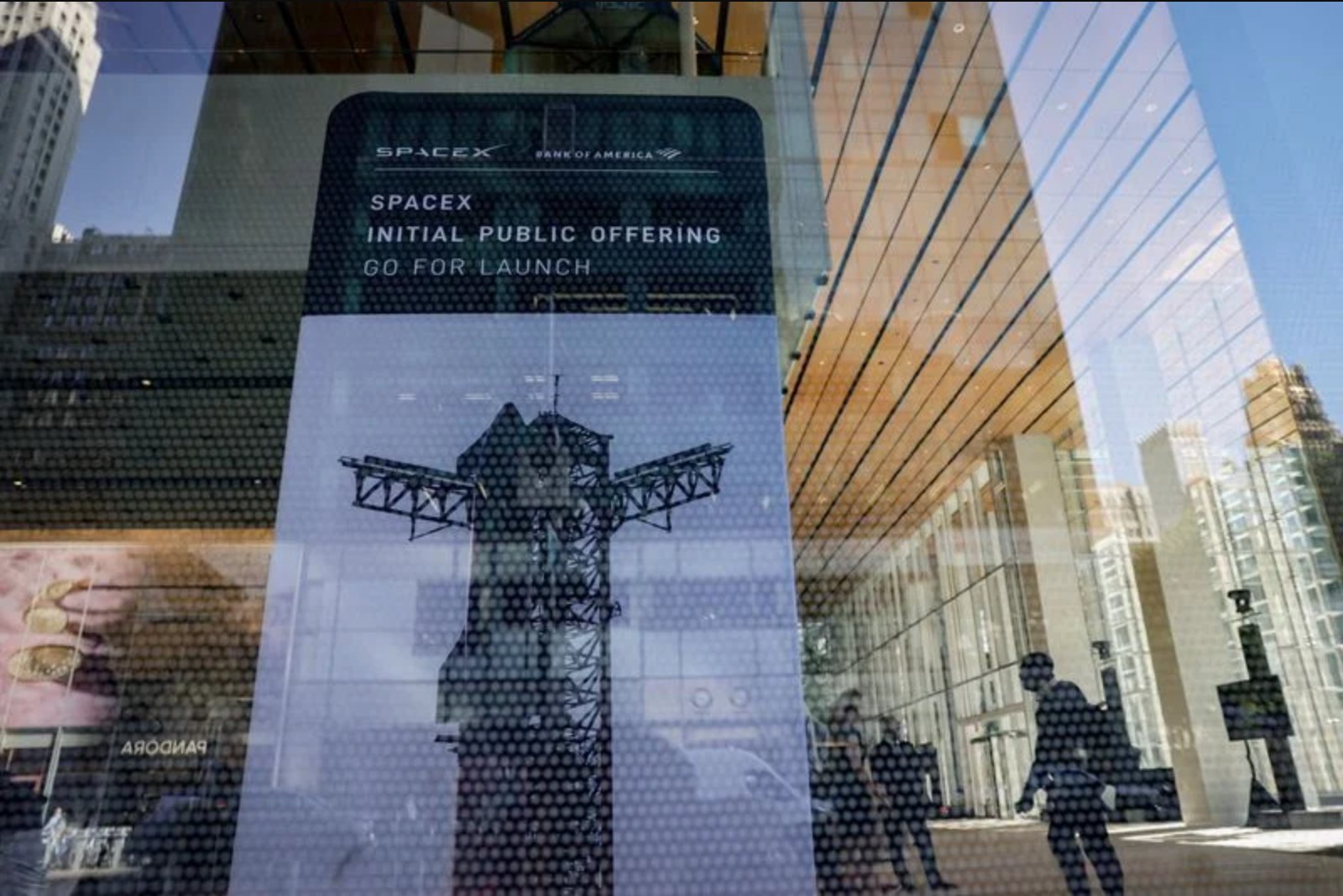
SpaceX’s headline IPO plans have reverberated through Asian markets, triggering heightened investor interest in exchange-traded funds and industrial suppliers linked to the Elon Musk-backed rocket and satellite business. The firm’s proposed $75 billion offering has coincided with a binge of buying in companies tied to satellite and rocketry supply chains, while space-focused ETFs that hold private stakes related to SpaceX are drawing notable inflows.
IPO mechanics and access
The company is reported to be considering allocating up to 30% of the deal to retail investors and is aiming for a valuation of about $1.75 trillion. According to the timetable disclosed in marketing materials, the final IPO price is scheduled to be set on June 11, with trading on the Nasdaq exchange slated to begin the following day. At the same time, parts of Asia face limitations on how retail investors can access the IPO. SpaceX’s website and IPO marketing documents were not accessible in Hong Kong and mainland China in a recent review, and it has been reported that underwriters have barred investors in China and Hong Kong from participating in the IPO, constraining direct retail involvement in the region.
Retail reaction and proxy buying
With direct access limited for some, traders and individual investors in Asia are hunting for regional proxy plays that could capture upside if SpaceX’s public listing strengthens demand across the supply chain. Retail investor interest is reflected in anecdotal buying of firms that supply components to Starlink ground terminals or provide specialty metals for rockets.
One retail investor from Anhui province, Hu Xiaobin, described a personal search for adjacent A-share companies. Over the past two months he bought Sunway Communication, a supplier to Starlink ground terminals, and Western Superconducting Technologies, a supplier of specialty metals for rockets. He characterized his approach as "value speculation" and said he exited those positions ahead of the IPO.
Shares of Shenzhen-listed Lens Technology have also performed strongly, rising nearly 50% to record highs this year after the company flagged commercial space as a new growth driver. Lens' chairman Zhou Qunfei was noted to have been seated between Apple’s CEO and Elon Musk at a Beijing banquet in May, an optics development that further encouraged bets that the company could expand ties with Musk-related ventures.
Market breadth and ETF activity
Space-related equities have not been limited to Asia. Several European companies, including French satellite operator Eutelsat, German satellite maker OHB and Luxembourg-based SES, have posted double-digit gains so far this year. New space-themed ETFs have also launched, catering to the thematic interest.
Tema Space Innovators ETF, which holds a 6.49% private exposure to pre-IPO SpaceX shares, has climbed 29% since its launch in March. Another product, the Tradr 2x Fly Long Daily ETF, offers a twice-levered exposure to Firefly Aerospace, a company described as unprofitable that achieved the first successful commercial Moon landing last year; that fund has attracted attention for traders willing to accept greater volatility.
Despite broader excitement, strategists say much of the current momentum is being driven by retail money rather than major institutional repositioning. "It’s a great story if you’re a trader, and you’d want to bring it up," said Nicholas Smith, a Japan strategist. "But I doubt people would be making big bets on this."
Asia’s supply-chain lens
Investors in the region have fixed their gaze on Taiwan as a crucial link in the SpaceX supply chain. The island houses multiple satellite component manufacturers that have acknowledged supplying parts to SpaceX, including Chin-Poon Industrial, Wistron NeWeb and Universal Microwave Technology. Asset managers in Hong Kong and elsewhere have pointed to additional Taiwanese names such as Compeq, Tong Hsing Electronic and Kinpo, along with Japan’s Meiko Electronics, as commonly traded proxies for SpaceX exposure in Asia.
Central Asset Management’s Jeffrey Chan noted that for local retail investors, "getting a direct piece of the IPO book is going to be incredibly tough," and described SpaceX as likely a must-own asset for global growth funds. At the same time, space-equity enthusiasm has stimulated listings and trading across multiple markets, creating new avenues for investors seeking indirect exposure.
Capital flow and supplier implications
Market participants expect the IPO to funnel capital into the broader space ecosystem, with potential downstream effects for component and service suppliers. "We will see them forging greater tie-ups with suppliers to facilitate the next leg of CAPEX. And there is a raft of Asian companies that will be highly benefiting from that," said Nick Wilcox, managing director for discretionary equities at Man Group.
That expectation underpins some of the buying seen in suppliers to satellite and rocket programs, even as analysts caution that the story has a heavy retail investor component at present rather than widespread institutional repositioning.
Where attention is focused
- Retail allocation: SpaceX is reportedly considering allocating up to 30% of the IPO to individual investors, which has amplified retail-driven interest despite access barriers in parts of Asia.
- Supply-chain proxies: Asian traders and retail investors are targeting companies that supply Starlink ground terminals, rocket components or specialty metals, seeking indirect exposure.
- ETF inflows: Space-themed ETFs with private SpaceX exposure have seen strong performance and increased investor attention since March.
Implications for markets
The market reaction illustrates how a single high-profile IPO can redirect retail flows into related industries and thematic ETFs. For Asian investors restricted from direct participation, the next-best exposure has been regional manufacturers and funds linked to the satellite and rocketry ecosystem. The prominence of retail demand also suggests heightened short-term volatility as traders chase proxy plays ahead of the IPO pricing and subsequent Nasdaq debut.
Closing
SpaceX’s public-market move has already reshaped investor behavior across multiple regions, with a notable tilt toward supply-chain beneficiaries and niche ETFs. As pricing is finalized and trading begins, the market will reveal whether the current retail-led momentum broadens into sustained institutional buying that could materially alter the capital dynamics for suppliers across Asia and Europe.