
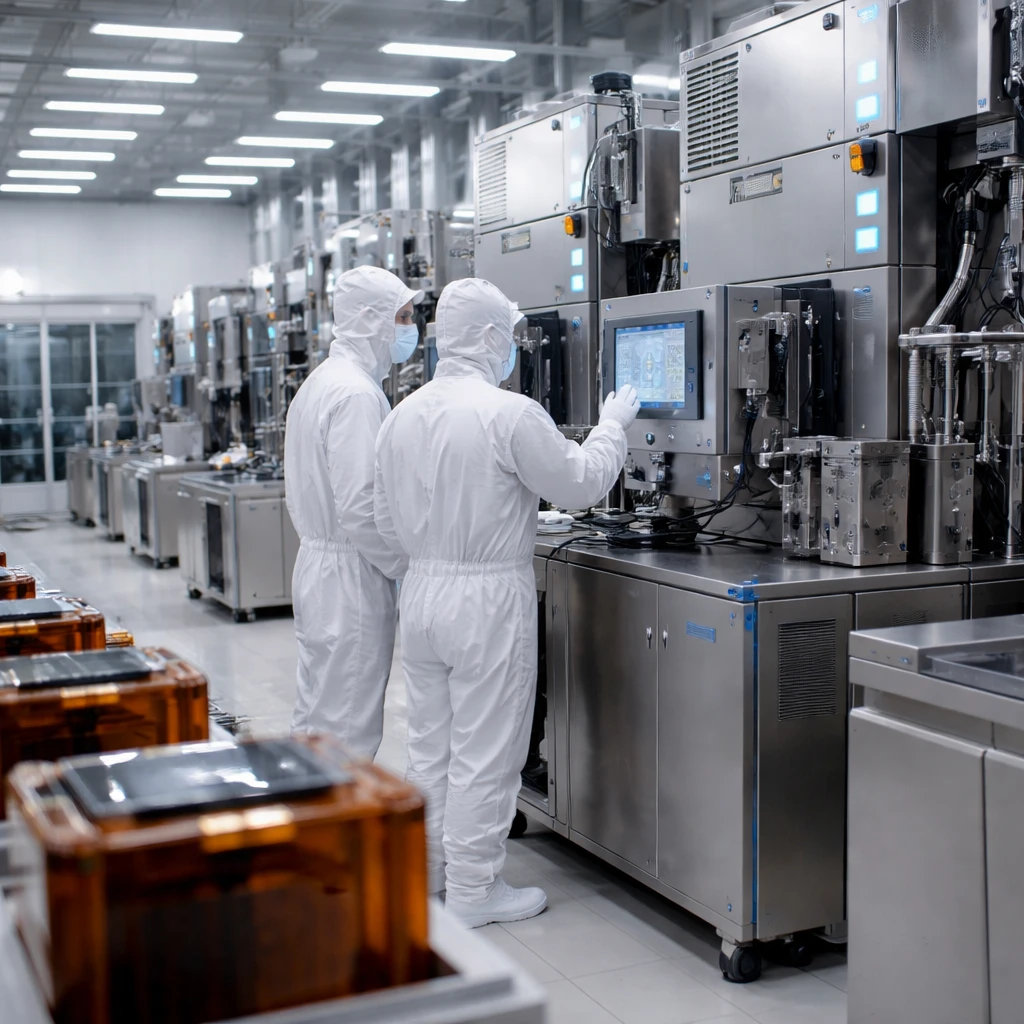
Samsung Electronics and SK Hynix have run evaluations of etching systems made by China's Advanced Micro-Fabrication Equipment (AMEC) for potential use at their Chinese manufacturing sites, according to people familiar with the matter. The trials, which began roughly two years ago amid rising uncertainty over access to U.S. chipmaking tools in China, are intended as a hedge against tighter U.S. export controls, the sources said.
Although neither company has committed to broader deployment of AMEC systems at their plants, the testing itself gives the Shanghai-based equipment maker an uncommon opportunity to be validated by two of the world's leading memory-chip manufacturers. All of the sources who described the trials requested anonymity because of the sensitivity surrounding export controls and supplier choices.
Samsung told Reuters it has not tested AMEC equipment for use at its China factory and had not considered doing so. SK Hynix declined to comment. AMEC and the U.S. Bureau of Industry and Security (BIS) did not immediately reply to requests for comment.
Why the tests began
The evaluations of AMEC etching tools began as Washington signalled uncertainty over whether U.S. companies would continue to be permitted to export advanced chipmaking machinery into China. In 2023, the U.S. Commerce Department designated Samsung and SK Hynix's Chinese facilities as validated end users (VEU), allowing certain controlled U.S. equipment to be shipped without individual licences. That VEU designation was revoked in 2025; subsequently, the U.S. granted the chipmakers annual licences to import equipment into their China plants for 2026.
Despite those licences, the South Korean firms are reportedly concerned that future U.S. measures could extend beyond new machinery to include servicing, repair or replacement of Western tools already installed in their China factories. For that reason, the companies have kept Chinese suppliers under consideration as a potential means to sustain and update current production lines, rather than as a route to expand capacity in China, the sources said.
Where the equipment might be used
Samsung's major NAND flash memory factory in Xian and SK Hynix's NAND production in Dalian and DRAM plant in Wuxi depend heavily on etching tools supplied by U.S. vendors such as Applied Materials and Lam Research. The prospect of substituting or supplementing those Western tools with domestic equipment in China would be significant for the industry supply chain, even if the current focus is on maintenance and upgrades rather than sweeping replacements.
Validation value for AMEC
For AMEC and other Chinese equipment makers, obtaining approval to run tests - and potentially qualify machines - at Samsung or SK Hynix's facilities would serve as a powerful endorsement. Chinese suppliers have historically lagged in areas like advanced lithography and some inspection systems, but they have closed the gap in functions such as etching, deposition, cleaning and planarisation, often at substantially lower prices.
Industry commentary cited within the reporting noted that Chinese tools can be 20% to 30% cheaper than comparable machines from established foreign suppliers. AMEC already supplies equipment to leading Chinese chipmakers, including NAND producer Yangtze Memory Technologies Co (YMTC), which has helped convince Samsung and SK Hynix that certain systems are mature enough for formal testing, the sources said.
Competitive and market implications
The emergence of Chinese equipment vendors poses a long-term competitive challenge to dominant suppliers such as Applied Materials, Lam Research and KLA, along with established Japanese and European manufacturers that have long held control over key wafer-fabrication segments. China remains an important revenue market for those incumbents: Applied Materials reported $8.53 billion in China revenue in fiscal 2025, equivalent to 30% of its total sales.
Deutsche Bank estimates cited in the reporting project that firms including Naura Technology, AMEC, Piotech and ACM Research will each generate more than $1 billion in revenue in 2026. Together, these Chinese suppliers could capture 25% to 30% of China's projected $28 billion wafer-fabrication equipment market in the year, with their share excluding lithography and metrology potentially approaching 40%.
Obstacles remain
Any wider adoption of Chinese tools by foreign-owned fabs will still confront several hurdles. Qualification processes for new equipment can be lengthy; service and support networks for Chinese suppliers are typically smaller than those of long-established vendors; and concerns persist around intellectual property and possible political pressure from Washington. It is also unclear whether Samsung or SK Hynix would consider installing Chinese-made equipment at plants outside China, given security and IP considerations.
For now, the trials appear to be a pragmatic contingency strategy focused on preserving the ability to maintain and upgrade production lines in China should access to Western tools or support be curtailed in the future. No decisions on widescale replacement or capacity expansion tied to Chinese equipment have been reported.
Bottom line
The testing of AMEC etching systems by Samsung and SK Hynix underscores a paradox in U.S. export policy: measures designed to restrict China's semiconductor progress are creating commercial opportunities for domestic Chinese suppliers inside foreign-owned fabs operating in China. While the ultimate commercial impact remains uncertain, the trials mark a notable development in the evolving geopolitics of semiconductor supply chains.