
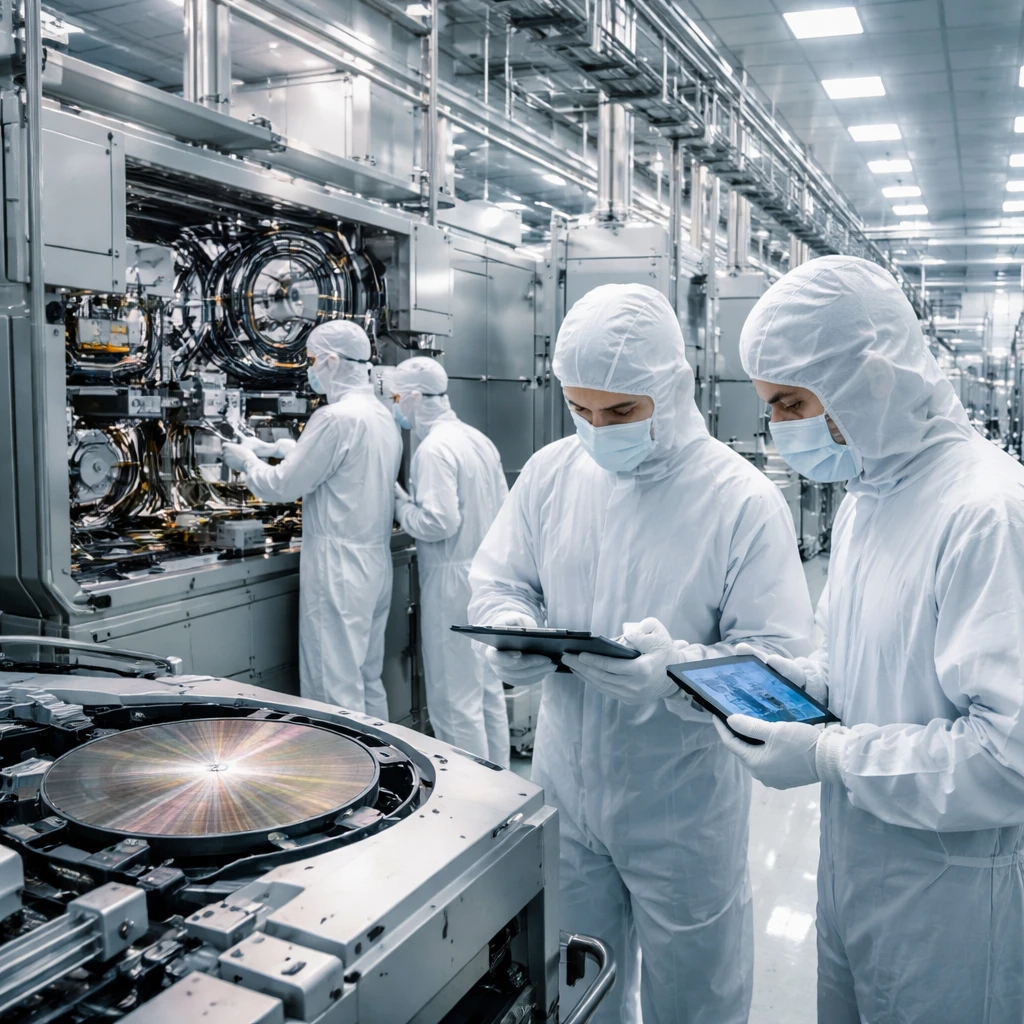
South Korean memory-chip makers Samsung Electronics (KS:005930) and SK Hynix (KS:000660) have conducted evaluations of semiconductor production equipment made by China's Advanced Micro-Fabrication Equipment (AMEC) at plants inside China, according to a Reuters report that cited people familiar with the matter.
The testing, which sources say started around two years ago, is being treated by both companies as a contingency measure. Executives at the two firms are reported to be seeking alternatives should future U.S. export restrictions extend beyond new tool sales to include servicing and replacement parts for Western-made equipment already installed in Chinese fabs.
Shares of the two chip groups reacted positively on the news, with SK Hynix up about 4.9% and Samsung Electronics climbing roughly 2.5% on the day cited, while the broader KOSPI rose near 4%.
Why the trials are underway
According to the report, the assessments are intended to ensure continuity of existing production if U.S. controls are expanded to limit access not only to new Western tools but also to maintenance support and parts for equipment currently operating in China. The trials do not constitute a commitment to deploy AMEC tools broadly, the sources told Reuters.
The situation highlights an unintended consequence of U.S. semiconductor export policy: companies operating in China are exploring local suppliers as backup partners to mitigate the risk of losing access to Western technology and support.
If AMEC were to win orders from Samsung or SK Hynix, observers say it would be a significant commercial endorsement for China's domestic chip-equipment sector.
Regulatory background cited
The U.S. designated the China plants of Samsung and SK Hynix as validated end users in 2023, permitting certain controlled U.S. equipment imports without the need for individual licenses. That designation was revoked in 2025, and the two companies did not receive annual licenses for equipment imports for 2026, the report noted.
Even with past authorizations, both firms remain cautious. They are reportedly concerned that future measures could also constrain maintenance and repair services for Western tools already in use at their Chinese facilities, which is a primary reason for keeping Chinese suppliers on standby to preserve current output rather than to pursue capacity expansion.
Challenges to broader adoption
Any move to scale up use of domestic Chinese equipment would face several obstacles, the report added. These include prolonged qualification processes, smaller service networks compared with Western suppliers, intellectual-property considerations and potential political pressure from Washington. Such barriers could slow or limit large-scale replacement of established Western tools.
Key points
- Samsung and SK Hynix have been testing AMEC-made chipmaking equipment at factories in China, with evaluations beginning about two years ago.
- The trials are a contingency against the risk that future U.S. restrictions could target not only new tool sales but also servicing and spare parts for Western equipment already in China.
- Market reaction to the report saw SK Hynix and Samsung shares rise, and the move affects technology, semiconductor manufacturing and capital markets tied to memory-chip producers.
Risks and uncertainties
- Potential expansion of U.S. export controls could restrict access to servicing and parts for Western equipment in Chinese fabs - this impacts semiconductor supply chains and maintenance-dependent manufacturing sectors.
- Broader adoption of Chinese-made tools could be hindered by long qualification timelines and smaller service networks, affecting the pace of any equipment transition in fabs.
- Intellectual-property concerns and possible political pressure from Washington represent additional uncertainties that could influence procurement decisions and industry relationships.
Conclusion
The AMEC evaluations by Samsung and SK Hynix appear driven by risk management rather than an immediate procurement decision. While the trials demonstrate that major foreign chipmakers operating in China are considering domestic suppliers as backups, multiple practical and political hurdles remain before any large-scale shift could occur.