
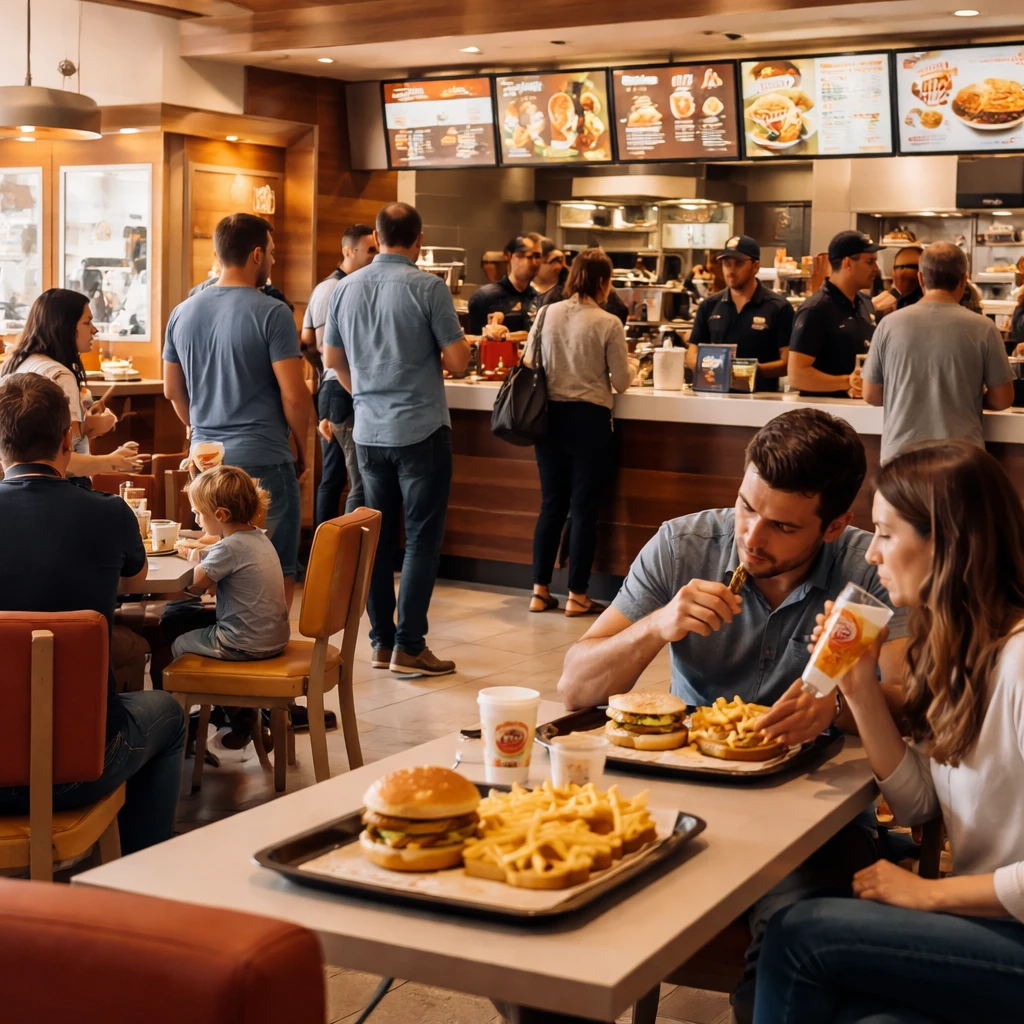
Restaurant Brands International reported comparable sales that exceeded expectations for the quarter ended June 30, with its Burger King U.S. operations the principal driver of the upside. The company said Burger King benefited from value-focused meal deals and continued investment in restaurants and marketing, lifting its U.S. comparable sales sharply year-over-year.
Burger King momentum
Burger King U.S. posted an 8.5% increase in comparable sales for the quarter, compared with a 1.5% rise in the same period last year. That result outpaced the average analyst estimate of roughly 3.5% for the segment. Company commentary attributed the strength in part to value promotions such as the "2 for $5" and "3 for $7" meal bundles, which helped attract diners who had cut back on discretionary spending.
Restaurant Brands has been directing substantial investment into Burger King over recent years with restaurant remodels and marketing programs designed to revive sales, and the quarter’s performance indicates those efforts coincided with effective promotion execution.
Other brands and overall results
Across the company, global comparable sales rose 3.8% for the quarter ended June 30, above the approximately 3.0% growth analysts had been expecting, according to data compiled by LSEG. Quarterly revenue came in at $2.52 billion, narrowly below consensus estimates of $2.53 billion. On a per-share basis, adjusted diluted earnings increased to $1.07 from $0.94 a year earlier.
Tim Hortons, which contributes about 41% of Restaurant Brands’ operating income, emphasized value as well, offering breakfast sandwich or wrap-and-coffee deals for C$3 and loaded wrap meals priced at C$8.99. The chain, which had about 3,900 restaurants in Canada as of February 2026, reported a 0.1% rise in comparable sales in Canada for the quarter, down from 3.6% a year earlier and below analysts’ expectations of a 1.5% increase.
Industry context and mixed results among peers
The company’s results come amid a broader industry backdrop in which operators have leaned more heavily on value menus, bundled meal deals and price-focused promotions to appeal to consumers coping with persistent inflation and higher living costs. Operators have seen varying outcomes: the company noted that some competitors reported mixed results, with one major chain earlier in the week missing U.S. sales growth expectations due to execution challenges that limited the effectiveness of its value offerings, while another leading brand exceeded profit and comparable sales growth expectations the prior week despite managing a separate operational outbreak at one of its units.
Cost pressures
Restaurant Brands also faces margin pressure from rising commodity costs, including increases in beef prices, which account for roughly a quarter of the company’s food basket. The company flagged these cost pressures as a headwind to profitability even as top-line comparable sales improved.
Bottom line
For the quarter ended June 30, Restaurant Brands International posted global comparable sales growth of 3.8%, revenue of $2.52 billion and adjusted diluted earnings of $1.07 per share, with Burger King’s U.S. business delivering a notably stronger performance than anticipated while Tim Hortons lagged expectations in Canada.