
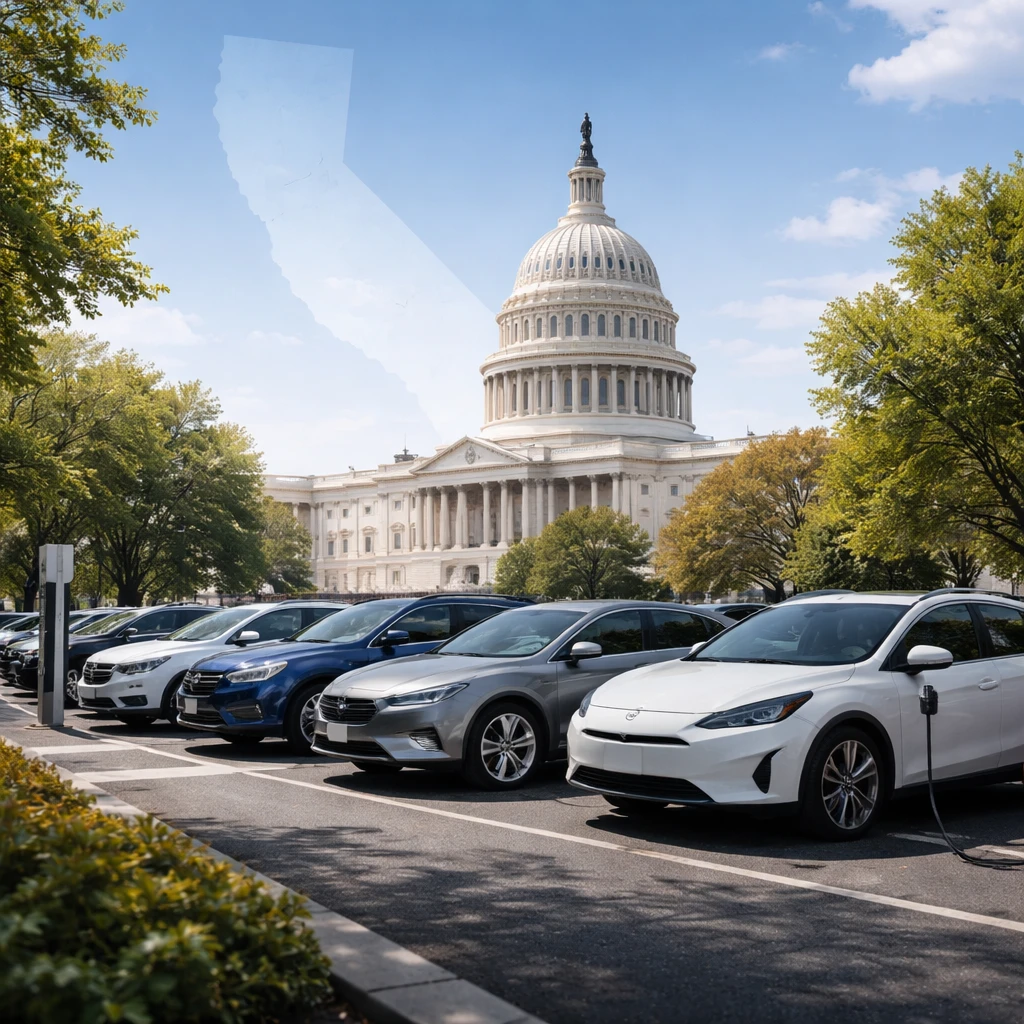
Four Republican U.S. senators this week introduced a resolution to strip away waivers that allow California to set its own vehicle emissions regulations, seeking to prevent the state from enforcing tailpipe standards that exceed federal requirements.
The measure comes after the U.S. Environmental Protection Agency in June forwarded the waivers to the Republican-controlled Congress for potential repeal under the Congressional Review Act, a procedural path that permits repeal by a simple majority vote rather than the 60 votes typically required for most legislation. California has filed a lawsuit in federal court to block the EPA action, arguing it was improper to submit the waivers to the Senate under the CRA.
The four senators sponsoring the repeal proposal - Cynthia Lummis, Eric Schmitt, Pete Ricketts and Jon Husted - said the waivers allowed the California Air Resources Board to extend its regulatory agenda beyond the state's borders. Their action seeks to remove the special permission that has long enabled California to pursue its own vehicle emissions policies.
The waivers at issue grant California the authority to adopt state-level emissions standards for cars and trucks as well as for certain small engines used in lawn, garden and power-washing equipment. Those state rules have pushed automakers to accelerate production of cleaner, electric models designed to reduce emissions and comply with increasingly strict limits on tailpipe pollutants.
California obtained approval in 2022 from the EPA under the Biden administration for a package of vehicle rules known as Advanced Clean Cars I, or ACC I. Those ACC I standards remain in effect and are among the waivers targeted by the congressional action. California's regulatory framework requires automakers to sell a growing share of electric vehicles and to meet tailpipe limits that are significantly more stringent than existing federal standards.
The current dispute follows a broader federal regulatory shift under the administration of former President Donald Trump that sought to curtail California's ability to mandate cleaner vehicles and to favor policies easing sales of gasoline-powered cars and trucks. The EPA has promulgated rules that make it easier for automakers to market more gasoline-powered models while increasing costs tied to electric vehicle purchases, according to the positions described by proponents of the repeal.
California has defended its standards, asserting that fuel savings for consumers over time outweigh the higher upfront costs associated with electric vehicles. The state maintains the tighter rules are necessary to reduce emissions and drive production of lower-emission vehicles.
Legislative and industry developments earlier this year and last year have already altered the enforcement landscape. Last year, Congress removed California's authority to ban traditional gasoline-powered vehicles after 2035 following lobbying from Toyota, General Motors and other automakers seeking relief from the state's emissions mandates. In 2025, Congress approved legislation halting the collection of penalties for failing to meet vehicle tailpipe standards, a change that relieved automakers of hundreds of millions of dollars in potential fines.
The current repeal effort and the pending legal challenge by California highlight continuing tensions between federal regulatory actions, state-level environmental goals and the auto industry's compliance costs. How the Senate and courts respond will determine whether California's stricter standards remain an influential force in steering automakers toward higher electric vehicle production and tighter tailpipe emissions performance.