
Summary
Two core inputs for printed circuit boards - copper foil and glass cloth - are becoming more expensive and harder to source. Copper is trading near historic highs, and glass fiber shortages are limiting production of copper clad laminate (CCL), the base material used inside every PCB. The resulting cost pass-through is rewarding upstream material suppliers and CCL makers while squeezing downstream PCB fabricators, which are unable to fully pass higher input costs to customers.
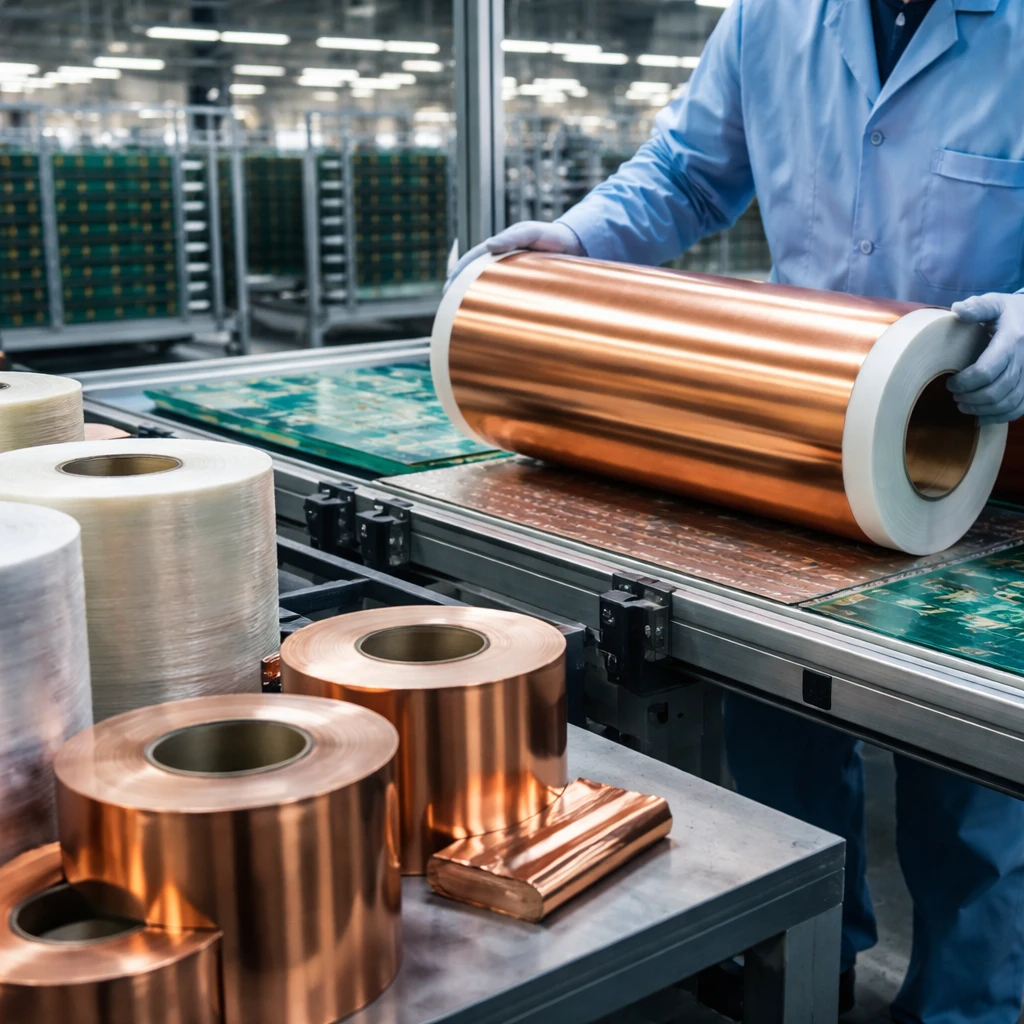
The copper foil pressure
Copper Futures (HG) are trading at $6.59 per pound, a rise of 45% over the past year, and are approaching the LME record of $14,527.50 per metric ton. On the London Metal Exchange copper is close to $14,343 per metric ton. Fears about U.S. tariffs - 15% from January 2027, rising to 30% in 2028 - have prompted accelerated shipments into COMEX warehouses. COMEX stocks have increased for 46 consecutive days and stand at a record 675,185 metric tons, even as CRU projects a global surplus of 639,000 tons.
Market reports indicate that Panasonic - flagged by Citi as its top pick in industrial electronics - is raising copper foil prices in response to these raw material pressures. Citi has highlighted "potential gains from price increases" as a notable catalyst.
Glass fiber shortages compound the problem
Short supply of glass fiber-based materials is the second major constraint. Eltek Ltd (ELTK), an Israeli PCB manufacturer, explicitly cited "raw-material shortages, particularly fiber glass-based materials" during its Q2 2026 earnings call. The shortage prevented conversion of backlog into revenue and helped drive Eltek to a $2.7 million net loss, reversing a $0.4 million profit the previous year. Revenue declined 8% to $11.5 million despite the company reporting its largest backlog on record.
Winners and losers along the chain
The cost cascade produces a distinct divergence across the value chain. CCL makers and copper suppliers are reporting strong price momentum and share gains, while PCB fabricators are seeing margins come under pressure.
- Kingboard Laminates (1888) - identified in the chain table with a 1-year performance figure of +243.8% - is the largest CCL producer and is passing higher copper and glass fiber costs through to PCB buyers. The stock is trading at HK$45.32, up 3.14% on the day, and the company has seen a 12-month rise reported elsewhere in the article as 212%. Citi raised its target price to HK$95.
- Panasonic Corp (6752) - shown in the chain table with a 1-year performance of +187.6% - is positioned as a copper foil supplier with pricing power according to Citi.
- Victory Giant Tech (2476) - listed with a 1-year change of -29.3% YTD in the chain table - has been hit hardest among the fabricators named, trading at HK$233.4 and reported elsewhere in the article as down 46.7% over three months as input costs outpace the company’s ability to raise selling prices.
- Eltek Ltd (ELTK) - displayed with a 1-year decline of -22.5% in the chain table - reported a net loss and flagged material shortages as a primary operational constraint.
How margins are being squeezed
PCB manufacturers illustrate the margin trap. Amber Enterprises reported PCB margin contraction from 16% to 12% in Q1 FY27, attributing the decline directly to rising CCL costs. Management signaled that margin recovery is not expected until Q3, and only if no additional price increases occur.
The structural issue is straightforward: CCL producers such as Kingboard can pass higher raw-material costs onto customers because of tight supplies of copper and glass fiber. PCB fabricators operate in fragmented and competitive markets where routinely transferring every input price increase to buyers risks losing orders. That dynamic produces margin degradation for midstream manufacturers.
Wider implications for electronics supply chains
The PCB cost squeeze is part of a broader wave of electronics input inflation that is rippling through the industry. Several specific examples cited in market reporting include:
- Nvidia servers are reportedly facing price hikes in excess of 15% as memory chip costs rise, with major cloud providers such as Microsoft, Google, and Oracle reportedly notified.
- Samsung foundry prices on advanced nodes are reportedly increasing by 10-15% due to tightening capacity driven by AI chip demand.
- Sales of MLCCs used in AI servers are accelerating; Murata revised its AI/data center MLCC growth projection from 85-90% to 100-105%.
These examples underline that cost pass-through is occurring simultaneously across many layers of the electronics stack - from raw copper to finished AI servers. For investors, the near-term implication emphasized in market commentary is to favor bottleneck holders such as copper and CCL suppliers and memory producers, and to be cautious on assemblers and fabricators that are caught in the middle of rising input costs and competitive pricing environments.
Key points
- Rising copper prices and glass fiber shortages are jointly driving up the cost of CCL, the base material for PCBs.
- Upstream players (copper suppliers, CCL makers) are benefitting from pricing power while downstream PCB fabricators are seeing margin compression and deteriorating results.
- Electronics supply chains broadly - including memory, foundry services, and server assembly - are experiencing simultaneous cost pass-throughs.
Risks and uncertainties
- Further raw-material price increases would extend margin pressure for PCB fabricators; recovery timelines cited by companies are conditional on no additional price hikes.
- Persistent glass fiber shortages may prevent fabricators from converting backlog into revenue even when demand exists, as highlighted by Eltek's results.
- Competitive pressures in PCB end markets could limit the ability of fabricators to pass through costs, raising the risk of order loss and further margin erosion.
Note: This article reflects the data and company statements as presented in market reporting and company disclosures cited in recent earnings and market updates.