
Summary
Muyuan Foods Co Ltd saw its Hong Kong-listed shares drop 3.3% to HK$31.22 on Wednesday following a disclosure of markedly weaker June performance. The company reported declines in both volumes and prices for finished hogs, producing a significant reduction in sales revenue for the month.
Details of June performance
Muyuan said sales of finished hogs in June fell 11.3% year-on-year to 6.23 million units. The company also reported that the average selling price eased sharply, slipping 31.2%. Taken together, those trends drove sales revenue down 41.4% to 7.50 billion yuan for June.
The firm flagged deteriorating conditions in the hog market, noting that local demand had cooled amid sluggish consumer spending while supplies remained relatively high. Muyuan, identified as the largest pork producer in the world, is closely linked to domestic Chinese demand for hogs and pork products.
Market context and peers
The decline in Muyuan’s shares occurred against a contrasting move in the wider Hong Kong market. The Hang Seng Index rose approximately 1.9% on Wednesday, driven by gains in several technology heavyweights including Tencent, SMIC, Lenovo, and Xiaomi. By comparison, Muyuan underperformed, underscoring a rotation away from agricultural names and toward growth-oriented technology stocks.
Peer WH Group also moved lower on the same day, sliding as much as 7.5%.
Investor positioning and near-term data risks
Market participants were positioning ahead of China’s June consumer price index (CPI) and producer price index (PPI) releases due on Thursday. Uncertainty about the trajectory of pork prices and the dynamics of feed costs has kept participants in the livestock sector cautious.
Key takeaways
- Muyuan’s June volumes and prices both declined - finished-hog sales fell 11.3% to 6.23 million units and average selling price dropped 31.2%.
- Revenue for June decreased 41.4% to 7.50 billion yuan, reflecting the combined impact of lower volumes and much weaker prices.
- The stock’s drop contrasts with a roughly 1.9% rally in the Hang Seng Index driven by technology names, indicating a market rotation away from agricultural producers toward growth-oriented tech companies.
Risks and uncertainties
- Continued weakness in domestic consumer demand could keep pork prices under pressure, affecting revenue and margins in the livestock sector.
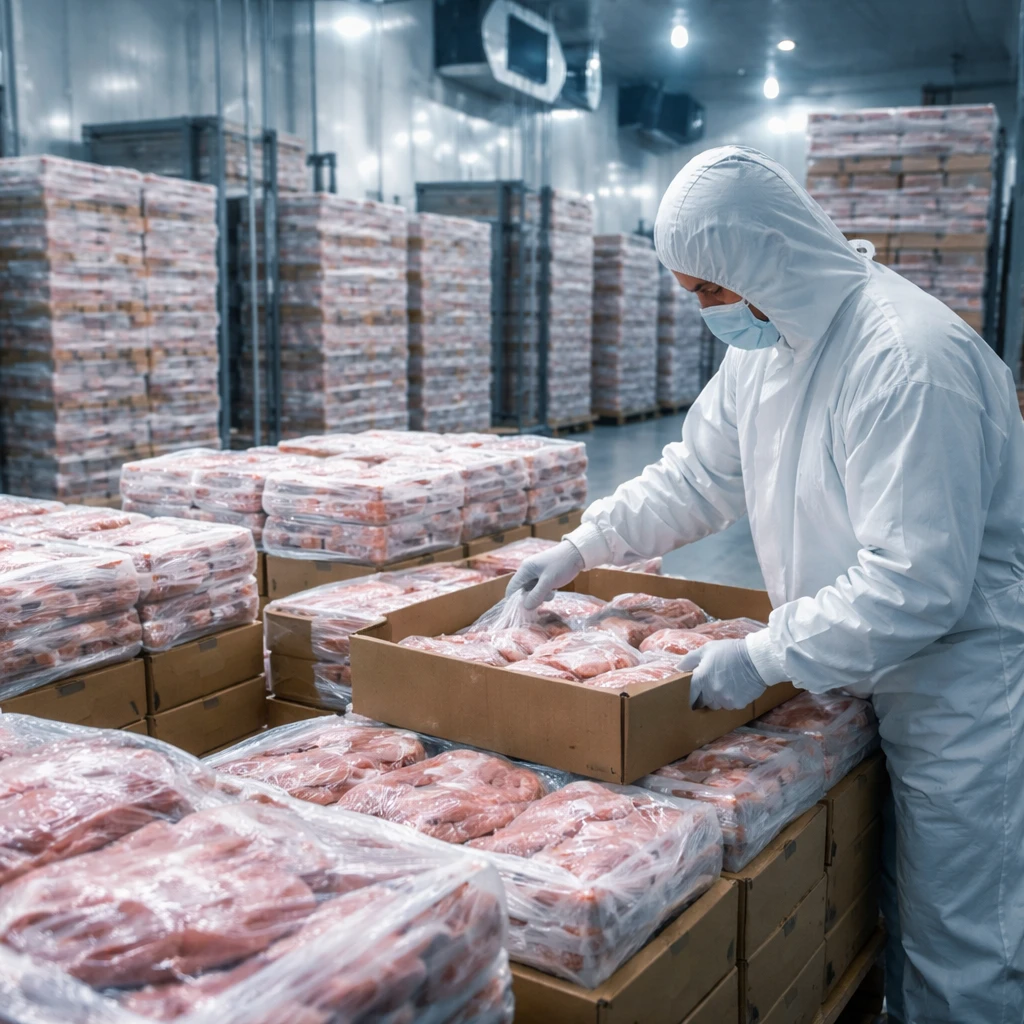
- Persistently high supplies and elevated frozen pork inventories may prolong price weakness and delay any recovery in selling prices.
- Near-term macro releases - specifically China’s June CPI and PPI - represent potential volatility drivers for pork prices and feed-cost expectations, keeping sector participants cautious.
Conclusion
The company’s June trading update paints a clear picture of demand and pricing stress in the pork market. Muyuan’s sharp revenue decline, driven by a steep fall in average selling price and lower volumes, has weighed on the share price even as broader market sentiment favored technology names. Investors will be watching upcoming macro data and feed-cost trends for signs of stabilization in pork pricing.