
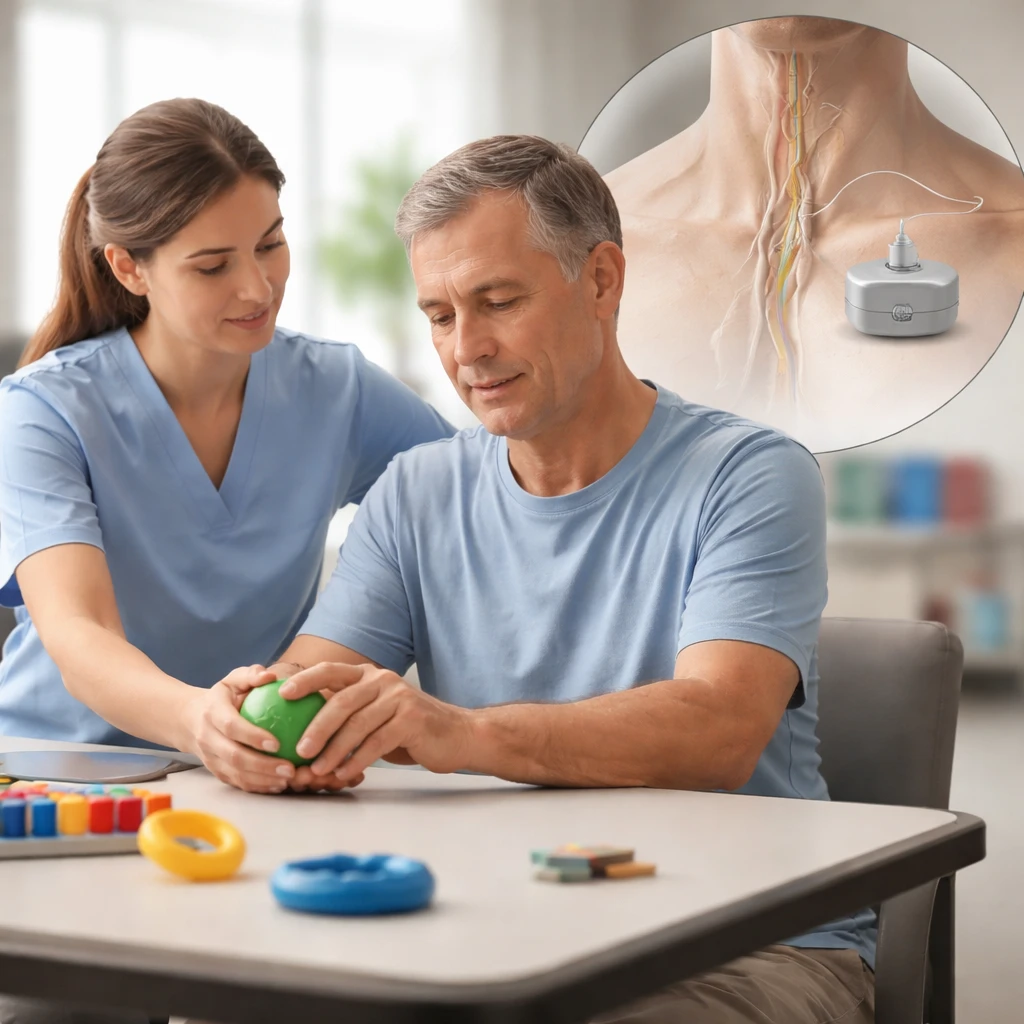
Mobia Medical Inc (NASDAQ:MOBI) experienced a notable premarket uptick in its share price Friday after a major clinical guideline added implantable paired vagus nerve stimulation (VNS) as a considered option for stroke rehabilitation.
The American Heart Association and American Stroke Association incorporated implantable paired VNS into the 2026 Guideline for Adult Stroke Rehabilitation and Recovery, published August 27, 2026 in the journal Stroke. The guideline specifies that VNS when paired with high-dose task-specific training "may be considered to improve upper-limb function and impairment" for patients who meet eligibility criteria.
Mobia’s Vivistim Paired VNS System is identified as the only FDA-approved system that provides this combined treatment approach. The company has emphasized that the approach aligns with multiple elements highlighted in the updated guideline.
Among those elements are the importance of continuity of care, with ongoing functional assessments recommended for at least one year, and the guideline’s endorsement of high-dose, task-specific therapy as a central component of stroke rehabilitation strategy.
The guideline update and its recognition of paired VNS occur against the backdrop of stroke’s persistent burden in the United States. The guideline document notes that roughly 800,000 strokes occur annually and that approximately 10 million stroke survivors live in the country. Upper-limb motor impairment is cited as one of the most common and disabling long-term outcomes following stroke.
The guideline also highlights a common clinical trajectory: many patients experience a plateau in recovery around six months after the stroke, underlining the challenge of achieving continued functional gains in the long term.
Context and implications
The guideline’s language - using "may be considered" - frames paired VNS as an option for eligible patients rather than as a blanket recommendation for all stroke survivors. The document’s emphasis on eligibility and sustained functional monitoring suggests that implementation will be tied to patient selection and ongoing assessment.
For Mobia, the guideline acknowledgment connects directly to its approved product offering, which the company markets as the only FDA-cleared device delivering paired VNS in combination with task-specific training.
The inclusion of paired VNS in a major guideline is likely to influence conversations among clinicians, rehabilitation providers, and payers, although the guideline’s conditional language and the requirement for eligibility and extended follow-up will shape how broadly the therapy is adopted.
Reporting on clinical guidance and market reaction included direct references to the guideline publication and the company’s approved device. No additional claims or projections were added beyond the guideline text and the company’s regulatory status.