
Mistral AI announced Wednesday the launch of Robostral Navigate, a robotics navigation model that the French startup says can guide machines through complicated settings using only a single RGB camera and straightforward language prompts. The company describes the system as an 8-billion-parameter model trained wholly in simulation and compatible with a range of robot hardware.
According to Mistral, Robostral Navigate delivers strong benchmark performance: it achieved a 76.6% success rate on unseen environments in the R2R-CE benchmark. The startup reports that this result not only surpasses prior best single-camera methods by 9.7 percentage points but also exceeds the best approaches that rely on depth sensing or multiple cameras by 4.5 points.
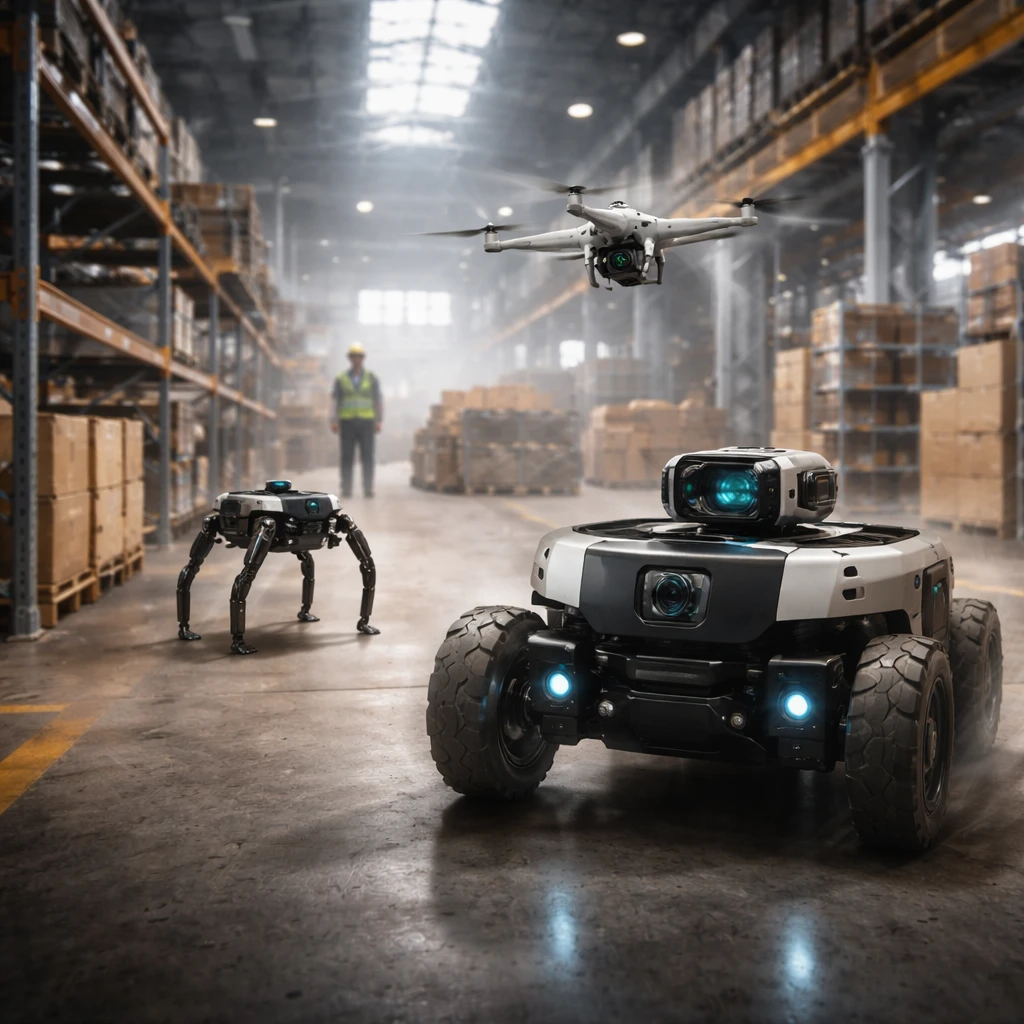
The model is designed to operate without LiDAR or depth sensors, relying instead on a single-camera input. Mistral says Robostral Navigate runs on wheeled, legged and flying robots and generalizes across different robot sizes. The company positions the technology for use across several sectors, including manufacturing, delivery, logistics and hospitality.
On internal validation, the system posted a 79.4% success rate on seen validation scenarios and 76.6% on unseen validation, according to Mistral. The company describes the underlying approach as a hybrid of pointing-based navigation and reinforcement learning.
In corporate developments, Mistral said in May that it had struck agreements with Airbus SE and BMW AG as it moves into advanced manufacturing deployments. The Paris-based startup, founded in 2023 by researchers who previously worked at Google DeepMind and Meta Platforms Inc. (NASDAQ:META), is reported to be in talks to raise about c3 billion at a c20 billion valuation, Bloomberg News reported last month.
Mistral frames Robostral Navigate as hardware-agnostic and simulation-trained, claims that are intended to ease integration across different robot platforms and to accelerate adoption in industrial and service settings. The company highlights potential use cases ranging from factory floors to last-mile delivery and customer-facing hospitality roles.
Summary of key technical claims
- Single RGB camera operation without LiDAR or depth sensors.
- Trained entirely through simulation; hardware agnostic across wheeled, legged and flying robots.
- Reported benchmark performance: 76.6% on unseen R2R-CE; 79.4% on seen validation.