
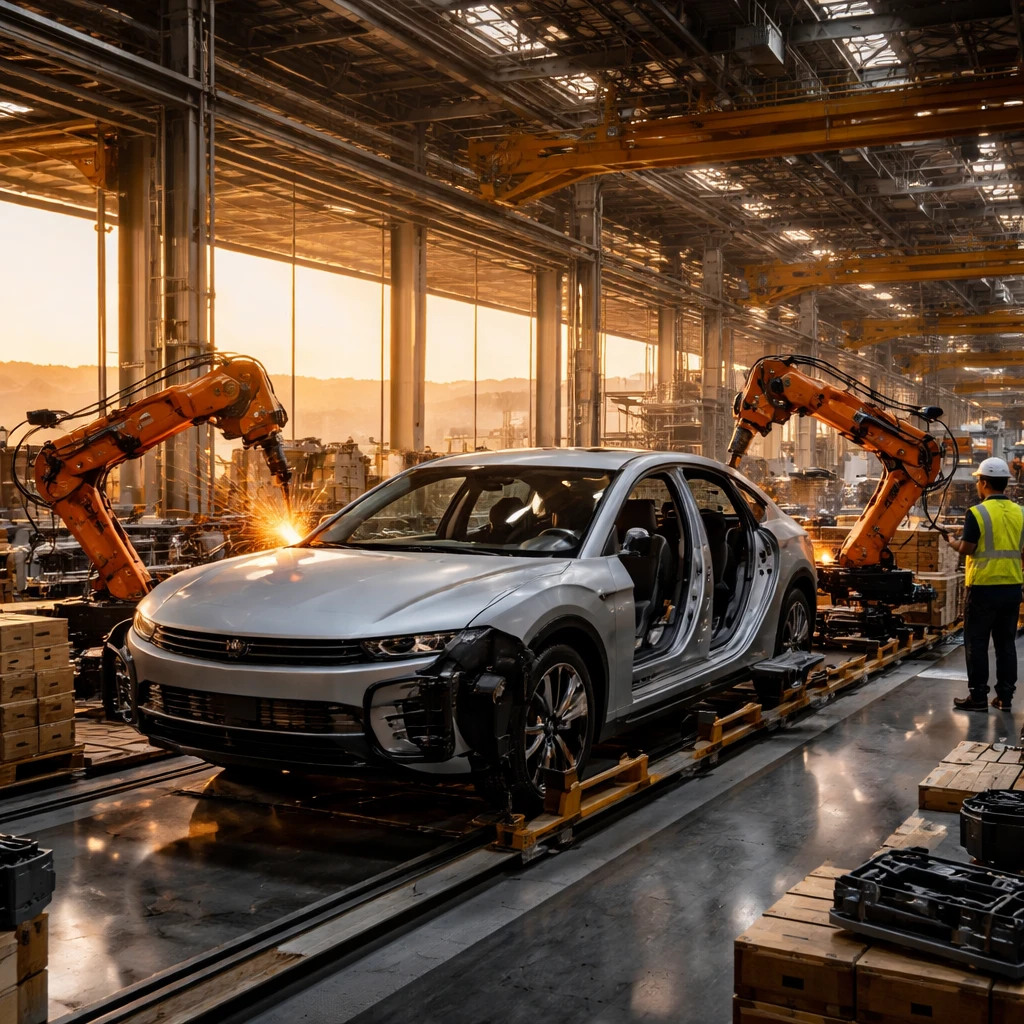
Lucid Group has pushed back the debut of its more affordable electric vehicle line to the second half of 2027, delaying a rollout that had been slated for late this year, the automaker said in a company statement and comments from its chief executive.
The announcement comes as the company executes an "operational reset" aimed at preserving approximately $1.4 billion in cash during the current year. The program centers on reduced production and lower inventory levels after Lucid reported widening losses in the second quarter.
Shares of Lucid traded lower after hours, falling roughly 8% as investors digested the revised timeline and the scope of the cost-cutting measures.
Cost reduction measures
Lucid specified that the $1.4 billion target includes a planned inventory reduction estimated at $600 million to $800 million. The company said it has deliberately reduced production to better match expected demand. In addition to inventory cuts, Lucid will lower capital expenditures by about $500 million and trim operating expenses by around $200 million. Recent layoffs are expected to yield roughly $158 million in annual savings.
These steps follow a period of elevated spending tied to earlier launches of the company's luxury Air sedans and Gravity SUVs. CEO Silvio Napoli characterized those introductions as having occurred "a bit in haste," and said he does not want to "repeat the mistakes of the past." Napoli emphasized that the planned mid-size vehicle will only be launched when it meets the company's quality standards, saying the company will not precipitate a launch before "everything is aligned."
Production, supply chain and facilities
Lucid said a factory in Saudi Arabia, intended to produce its mid-size platform, is expected to be ready by the end of this year. Napoli cautioned, however, that aligning the supply chain around that plant will take additional time. The company has faced supplier-related disruptions that have complicated production, particularly since the rollout of the Gravity SUV.
Napoli refrained from providing new guidance for 2026. He did say he expects production to decline through the remainder of the year even as deliveries improve relative to the first half.
Strategic initiatives and liquidity
Beyond its mid-size vehicle program, Lucid continues to pursue additional avenues for revenue generation. The company is developing a smaller, lower-cost mid-size platform it expects to underpin future growth, and it remains engaged in plans for a robotaxi rollout through partnerships with Uber and autonomous delivery specialist Nuro. Until those initiatives generate material revenue, tightening cash management remains the priority.
Lucid also addressed recent speculation in the market, calling a report suggesting a potential take-private transaction or a Chapter 11 filing "completely false." The company noted it is backed by Saudi Arabia's Public Investment Fund and disclosed that a regulatory filing showed Prince Alwaleed bin Talal Al Saud acquired a 5% stake.
Lucid said that newly secured financing, combined with the operational measures it is taking, is expected to provide sufficient liquidity runway well into 2027.
Market expectations and recent results
On a post-earnings call with analysts, Napoli warned that Lucid's production and delivery volumes are likely to fall short of current market estimates. According to Visible Alpha, Wall Street currently projects Lucid will produce 24,964 vehicles and deliver 21,859 this year.
For the quarter ended June, Lucid reported a 56% increase in revenue to $405 million, which remained below the analysts' average estimate of $416 million compiled by LSEG. The company posted an adjusted loss of $2.78 per share, wider than the prior year's $2.35 per-share loss and worse than the $2.42 per-share loss analysts had expected.
Context for stakeholders
Lucid's measures reflect a broader industry shift among U.S. electric vehicle manufacturers that have been contending with weaker demand following the removal of key tax credits late last year. That change has prompted several manufacturers to pause or cut production and to pivot toward more affordable models.
For Lucid, the combination of delayed product launches, supply-chain challenges and the need to conserve cash have prompted a significant retrenchment in near-term ambitions while the company repositions its product roadmap and cost base.
The company previously announced an approximately 18% reduction in its U.S. workforce and installed Silvio Napoli, former chief executive at Schindler, as CEO after suspending its 2026 production outlook.
Disclosure: The company statement and executive comments described above were provided by Lucid; all figures and projections referenced reflect the information presented by the company and market data sources cited within those statements.