
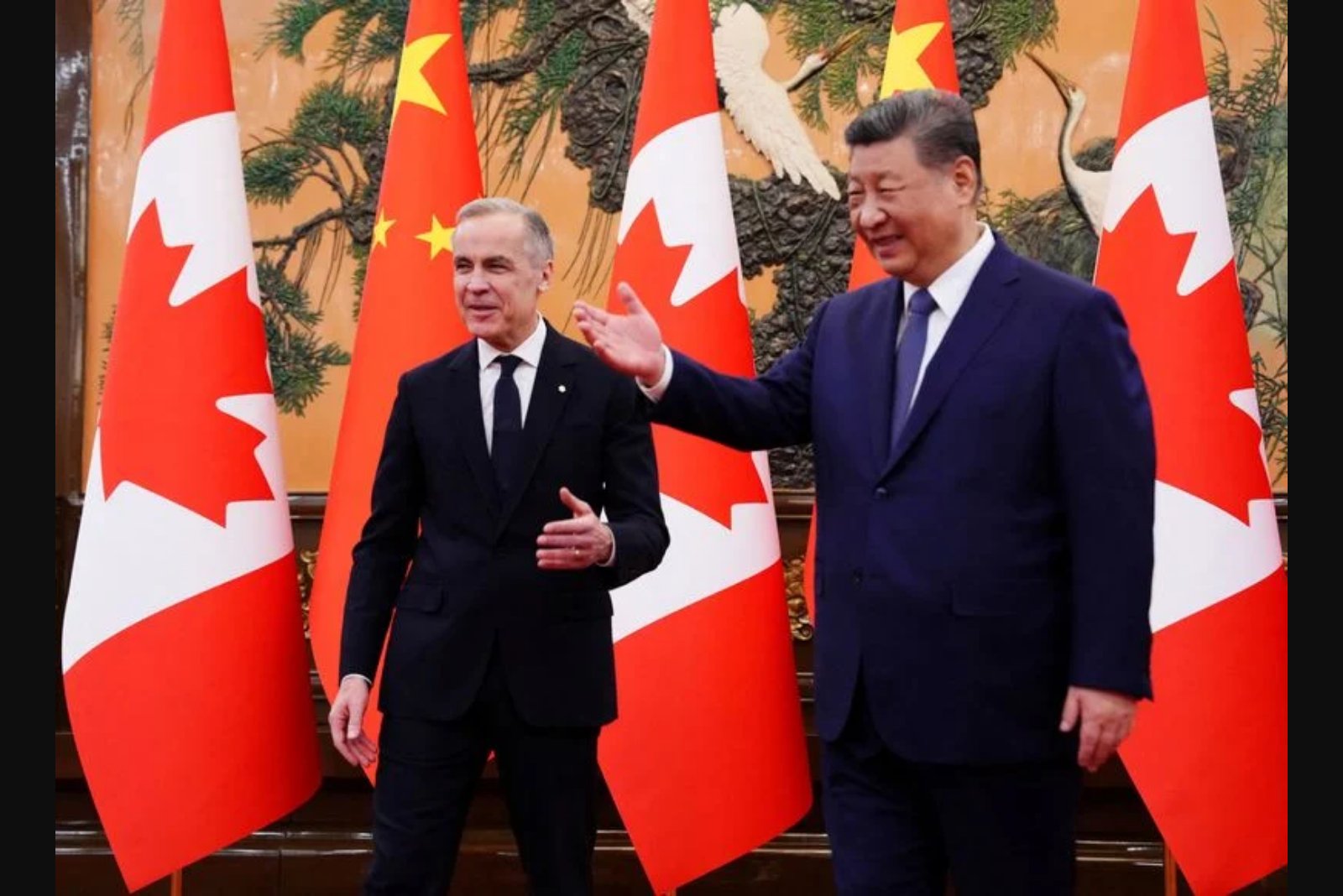
China's ambassador to Canada, Wang Di, told Reuters that Geely Holding Group's Lotus electric vehicles will be delivered to Canada next month under the bilateral arrangement struck between Prime Minister Mark Carney and Chinese President Xi Jinping. The ambassador said a ceremony is planned to mark the delivery in Montreal, making these the first vehicles owned and manufactured in China to enter Canada under the reduced-tariff arrangement.
Under the agreement, up to 49,000 Chinese-made electric vehicles may enter Canada each year at a reduced tariff rate. Ottawa approved the framework as part of a broader push by Prime Minister Carney to diversify Canada's trade beyond its traditional focus on the United States.
Wang said the Lotus delivery will be followed by efforts from other Chinese brands to complete necessary steps with Canadian authorities. He named Chery and BYD among the manufacturers coordinating with government agencies to finalize approvals and logistics before shipping vehicles to Canada.
"Geely EVs will be arriving in Canada next month and they will be holding a ceremony when the cars are delivered in Montreal," Wang said through an interpreter.
Lotus Cars did not reply to a request for comment. Canada's Global Affairs department declined to comment on specific shipments, citing commercial confidentiality.
Canadian officials have previously acknowledged that some vehicles from Chinese automakers arrived earlier for testing under local conditions. Wang expressed a wider timeline for market entry by other Chinese brands, saying he hopes that "in autumn this year, the truly, genuinely other Chinese brand EVs will complete the procedures and get into the Canadian market."
Representatives from some Chinese manufacturers have given their own timelines. BYD Executive Vice President Stella Li recently told Reuters her company would likely begin sales in Canada next year. Separately, U.S.-based Tesla has already made imports of Chinese-made vehicles available in Canada.
Beyond imports, Ottawa aims to attract joint ventures and investment into Canada's electric vehicle supply chain. Wang said Chinese EV makers have shown interest in establishing joint ventures in Canada, though he added they would concentrate first on building sales and assessing market demand before committing to local production arrangements.
The decision by Prime Minister Carney to permit Chinese EV imports has drawn criticism from some U.S. officials and lawmakers, Wang acknowledged. Nonetheless, the Canadian government has continued to pursue stronger commercial ties with China across multiple sectors.
Trade ambitions were a central theme of Carney's visit to China in January, when he announced a target to raise Canadian exports to China by 50% by 2030. Wang Di referenced comments from China's Minister of Foreign Affairs, Wang Yi, who last month suggested Canadian exports to China could expand by 100%.
Wang Di outlined the arithmetic behind a doubling of exports: to reach 100% growth by 2030, Canadian shipments to China would need to climb by roughly 15% per year for the next five years. He noted that Canadian exports had already risen 27.5% in the five months following Carney's visit.
On the topic of energy trade, Wang Di said Canada could supply nearly 22 million metric tons of crude oil to China annually, up from 15.5 million tons recorded last year. He also flagged potential for China to import liquefied natural gas from Canada, but did not provide details.
Agricultural trade features in the bilateral calculus as well. Wang pointed out that Canada, a major exporter of canola, peas and beef, currently accounts for only about 2% of China's agricultural imports, implying substantial market opportunity for Canadian producers.
Recent tariff moves were also discussed. China cut duties in March on certain Canadian products but maintained a 100% tariff on canola oil and a 25% duty on pork. Temporary tariff relief on products such as canola meal, peas and lobster is scheduled to expire at the end of the year, creating an open question for exporters and policymakers.
When asked whether Beijing would extend tariff suspensions or lower tariffs on pork and canola oil, Wang declined to offer a definitive answer. He framed further progress as contingent on both countries adhering to principles he described as mutual respect, equality and reciprocity.
"As long as the two countries uphold the principle of mutual respect, equality, reciprocity ... there will be nothing that we cannot resolve," he said. But he cautioned that deviations from those principles could produce negative impacts.
The immediate commercial development - the arrival of Lotus EVs next month - signals the opening phase of the trade arrangement for electric vehicles. It also illustrates Ottawa's broader strategy of using access and market openings to attract foreign investment and potential supply-chain partnerships as part of a push to build domestic EV capabilities. How quickly other brands clear regulatory and commercial hurdles, and whether tariff measures are extended or adjusted for agricultural and other goods, will determine the breadth and pace of near-term trade flows.