
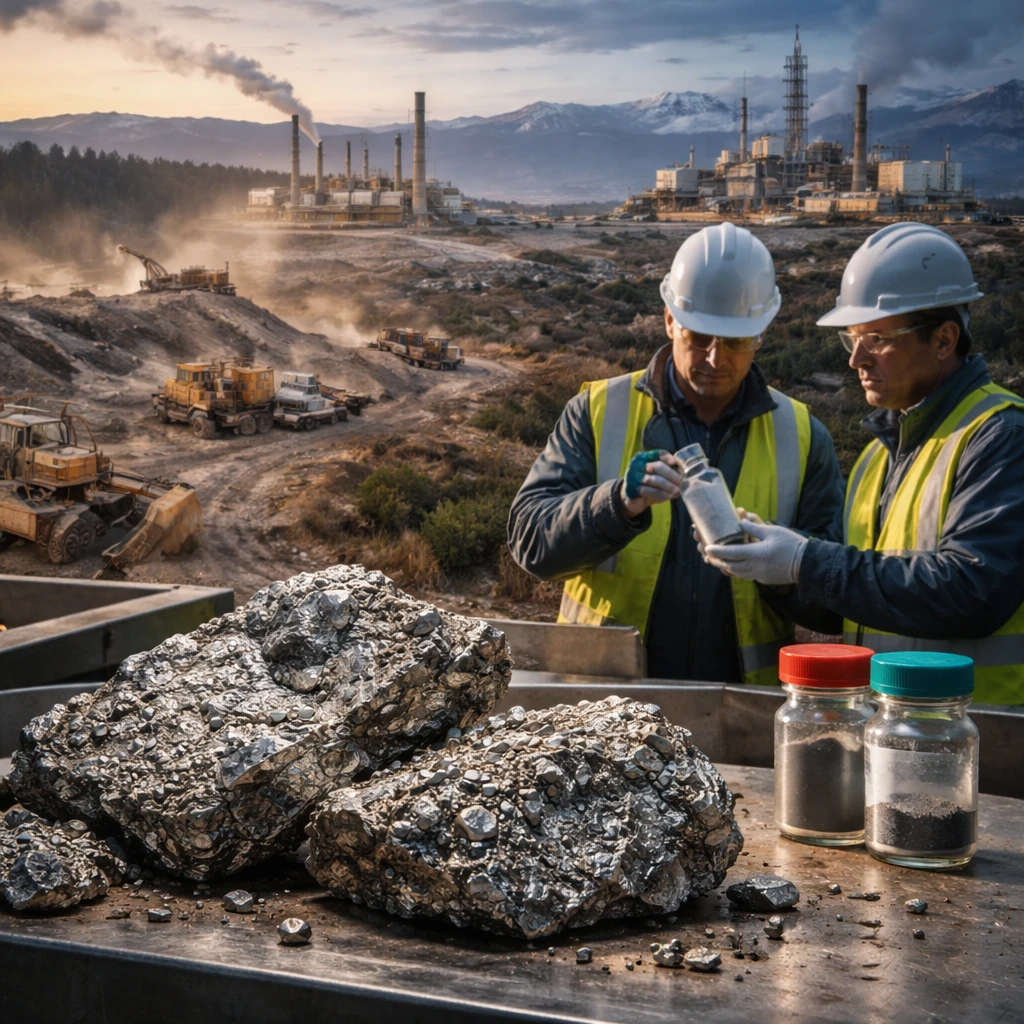
Lockheed Martin is engaged in negotiations to secure domestic supplies of two strategic minerals - scandium and germanium - from North American producers, according to people familiar with the discussions. The talks reflect growing pressure on defense contractors to reduce dependence on Chinese mineral supplies as U.S. policy tightens controls on procurement from certain foreign sources.
On scandium, Lockheed has signed a preliminary agreement with Colorado-based NioCorp Developments to purchase 15 metric tons per year of the metal, the sources said. The supply would come from NioCorp’s planned Nebraska mine, which the company expects to open by 2028 with projected annual output of 100 metric tons. The draft arrangement remains to be finalized, but the two firms already cooperate through a Pentagon-funded research program.
Scandium is one of the 17 rare earths used to create lightweight, corrosion-resistant alloys for aircraft components, and the proposed contracted volume would represent roughly one quarter of current global demand. The U.S. Geological Survey estimates global scandium demand at about 60 metric tons and rising. NioCorp’s CEO, Mark Smith, said both companies recognize the mineral’s importance to future American defense technology. Lockheed said it appreciated the work NioCorp is doing to establish a domestic source of scandium.
The United States has not mined scandium since 1969, and North American production is limited. Rio Tinto is the only North American producer with capacity to generate roughly nine metric tons annually, underscoring the gulf between existing output and the demand profile cited by U.S. authorities and industry participants.
Separately, Lockheed is in discussions over germanium supply with Teck Resources and Quebec-based 5N Plus. Germanium is used in infrared sensors and other military systems; the metal is often recovered as a byproduct of zinc mining.
Teck produces a zinc and germanium concentrate at its Red Dog operation in Alaska. That concentrate is smelted in British Columbia, where the two metals are separated. Teck has described itself as the largest North American germanium producer and the fourth-largest globally, although it does not publicly break out annual germanium production figures. The U.S. Geological Survey estimates global germanium consumption at roughly 60 metric tons annually and rising, and the United States imports more than half of its germanium needs.
Lockheed is also exploring a potential supply relationship with 5N Plus. Earlier this year, 5N Plus received Pentagon funding to process germanium from recycled feedstock in Utah. One of the participants in the discussions described Lockheed’s objective plainly: the company seeks long-term supply chain security and clarity about whether critical minerals are sourced from China or elsewhere. Negotiations with both Teck and 5N Plus have reportedly been under way for more than a year.
The talks are taking place against a backdrop of increased White House scrutiny of defense procurement from foreign suppliers. Last month, the President signed an executive order designed to make it harder for defense contractors to obtain waivers that had previously allowed purchases of minerals from China and other restricted foreign sources. That order has intensified the spotlight on the relative immaturity of U.S. mining and processing capacity compared with established global suppliers.
Industry and government officials acknowledge several obstacles to shifting supply chains. Chinese suppliers have for years offered lower prices for many critical minerals, a price advantage that stems from differences in mining practice, regulatory regimes and other factors. At the same time, U.S. mining and processing infrastructure for many of these materials remains limited, even as numerous projects in North America are in development.
People involved in the Lockheed negotiations said pricing and the duration of potential contracts have been sticking points, complicating efforts to finalize long-term deals. Teck declined to comment on specific commercial agreements but said it has agreed to work with the Canadian government to increase germanium processing capacity in British Columbia. Representatives for 5N Plus were not immediately available to comment.
Lockheed emphasized that it continuously assesses the global critical minerals supply chain to ensure access to materials that support its customers’ missions. The company manufactures systems including the F-35 Lightning II fighter jet and Patriot interceptor missiles for the U.S. government.
Efforts to source scandium and germanium domestically would mark a notable development in attempts to build North American supply chains for materials used in defense electronics and structural components. At the same time, the initiatives underscore persistent tensions between strategic procurement goals and market realities, including pricing competition from established foreign suppliers and constrained regional processing capacity.
Western governments are also pursuing measures aimed at disentangling regional mineral prices from foreign market influence, an initiative that has gained traction as policymakers seek alternatives to long-standing supply arrangements.