
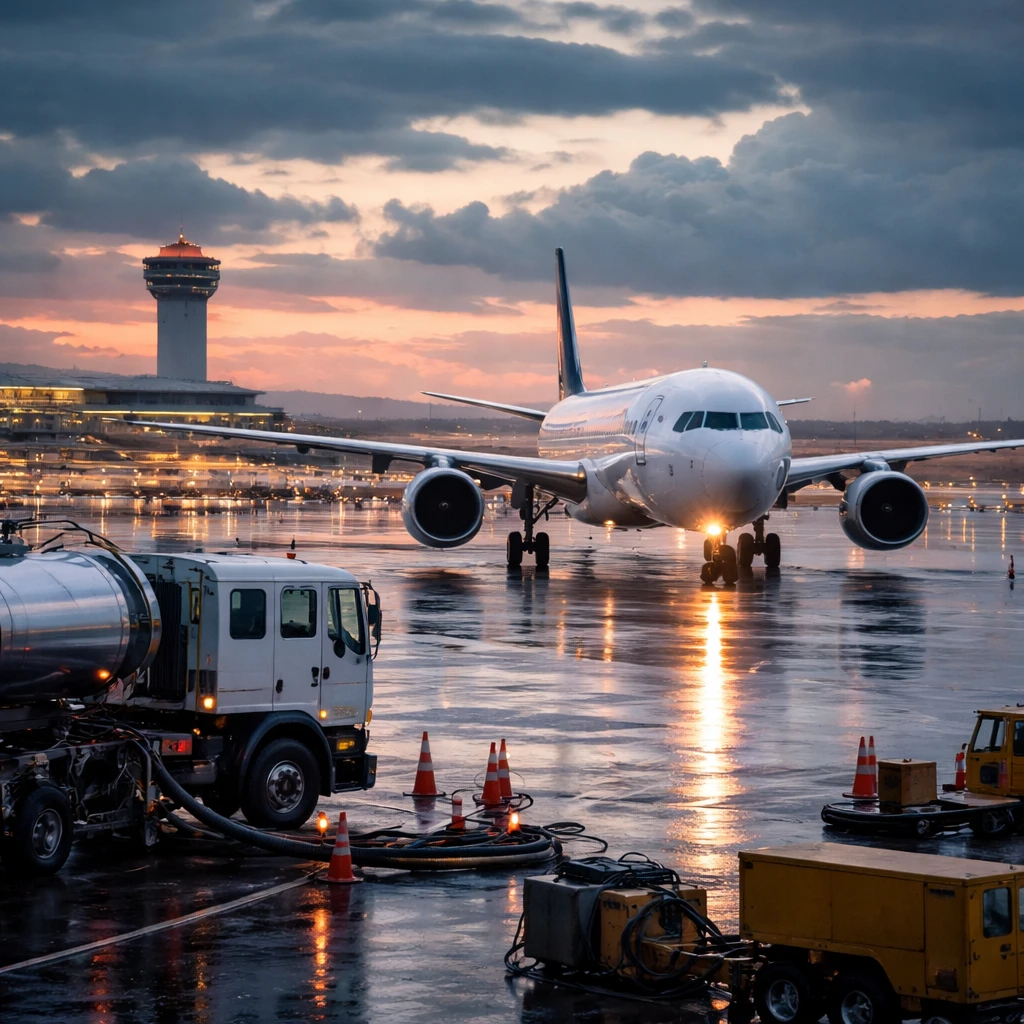
LATAM Airlines on Tuesday increased its full-year core earnings guidance for 2026 after revising down the fuel price scenario it had been using, and said its operating model has remained resilient in the face of the oil shock tied to the U.S.-Israeli war on Iran.
The carrier now expects 2026 adjusted earnings before interest, taxes, depreciation and amortization (EBITDA) of $4.1 billion to $4.4 billion, up from the $3.8 billion to $4.2 billion range it issued in May. In December, prior to the conflict, LATAM had been forecasting 2026 adjusted EBITDA of $4.2 billion to $4.6 billion.
LATAM, the largest airline group in Latin America, also projected capacity growth of 9% to 10% for this year.
Fuel assumptions revised
Chief Financial Officer Ricardo Bottas said the carrier is operating with a more favorable fuel price outlook than it assumed three months ago. Following disruptions to oil supplies linked to the Middle Eastern conflict, jet fuel prices spiked, prompting the company to reassess its scenario planning.
Bottas said the company is now using a third-quarter oil price scenario of roughly $150 per barrel instead of $170, and a fourth-quarter scenario of about $130 instead of $150. He noted that while those figures remain well above pre-conflict assumptions of around $90 per barrel, the improvement compared with the prior scenario was sufficient to warrant the earnings upgrade.
"We are now updating our (price) scenario to around $150 per barrel for the third quarter instead of $170, and $130 for the fourth quarter instead of $150," Bottas said. He added that the second half of the year will still be challenging because of geopolitical uncertainty, but that LATAM is increasingly confident in a gradual recovery of the operating environment and in its business model. "There was a test, and we passed that test," he said.
Quarterly results and cost pressures
The guidance update accompanied second-quarter results in which LATAM reported a net profit of $125.2 million, down from $241.6 million a year earlier. Revenue rose 27% to $4.12 billion, with passenger traffic the principal driver of growth and cargo also contributing to the increase.
Fuel expenses were a significant headwind. Fuel costs nearly doubled from a year earlier, and Bottas characterized the impact as more than $800 million of additional fuel costs in a single quarter. He described that as the magnitude of the challenge faced during the period.
Fleet plans in Brazil
Separately, LATAM disclosed the first phase of introducing Embraer E195-E2 jets into its Brazil network. Up to 14 of those aircraft will be deployed between late 2026 and early 2027 across 42 routes.
LATAM Brazil head Jerome Cadier said the E195-E2s will support expansion into markets with robust corporate demand, naming agribusiness and oil-producing regions as examples, and will help strengthen connectivity through the carrier's hubs. Cadier also said the company was already evaluating approximately 18 potential destinations for further expansion in April 2027.
Contextual note - The company emphasized that recent adjustments to fuel assumptions, while significant, still reflect fuel prices materially higher than those used before the conflict, and that geopolitical developments continue to pose downside risks to the operating outlook.