
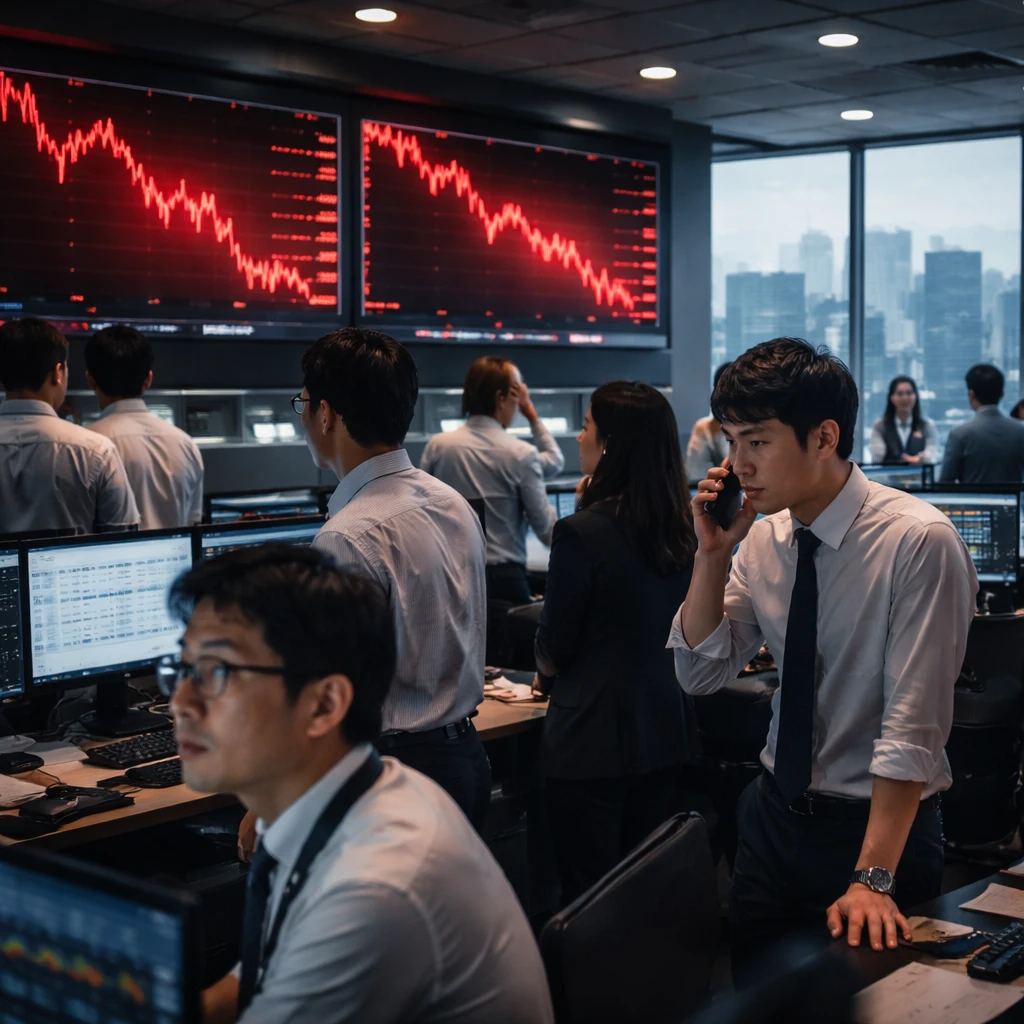
South Korea's KOSPI fell dramatically on Tuesday, sliding as much as 8% and prompting the Korea Exchange to deploy a sell-side sidecar that temporarily halted program trading after the sudden market drop.
By 02:11 ET (06:11 GMT) the index was trading 5.8% lower at 7,587.55. The sharp move reflected heavy selling pressure on large-cap technology names tied to AI-driven demand for semiconductor memory.
At the center of the rout were Samsung Electronics and SK Hynix. Both names saw their shares give back substantial gains as investors questioned whether the brisk, AI-fuelled surge in semiconductor demand can maintain its recent pace.
Samsung earlier on Tuesday issued a forecast for a record second-quarter operating profit of 89.4 trillion won ($58.4 billion), a level the company said was about 19 times the year-ago figure and comfortably ahead of analyst expectations. Despite that forecast, Samsung's stock dropped as much as 10% to 286,000 won as market participants locked in gains following a strong rally year-to-date.
The selling extended beyond those headline names, sweeping through the wider market and erasing months of prior gains as investors reassessed elevated valuations along the AI hardware and memory supply chain.
Market mechanics and investor behavior
The Korea Exchange's activation of a sell-side sidecar temporarily paused program trading to stem rapid, automated selling. The move underscores how abrupt re-pricing of large-cap technology names can cascade into wider market volatility when algorithmic trading is active.
For market participants, the episode highlighted two concurrent dynamics present in the price action: powerful fundamental news flow from a major issuer and rapid profit-taking that can overwhelm liquidity, particularly in sectors that had enjoyed outsized gains tied to AI narratives.
What this means for sectors
- Technology and semiconductors were the clear epicenter of the sell-off, with memory-chip producers especially affected.
- The broader equity market experienced spillover effects as investors re-evaluated valuations across the AI supply chain.
Given the abruptness of the move and the program-trading pause that followed, market participants will be watching whether selling pressure stabilizes or if further reassessments of valuations follow in subsequent sessions.