
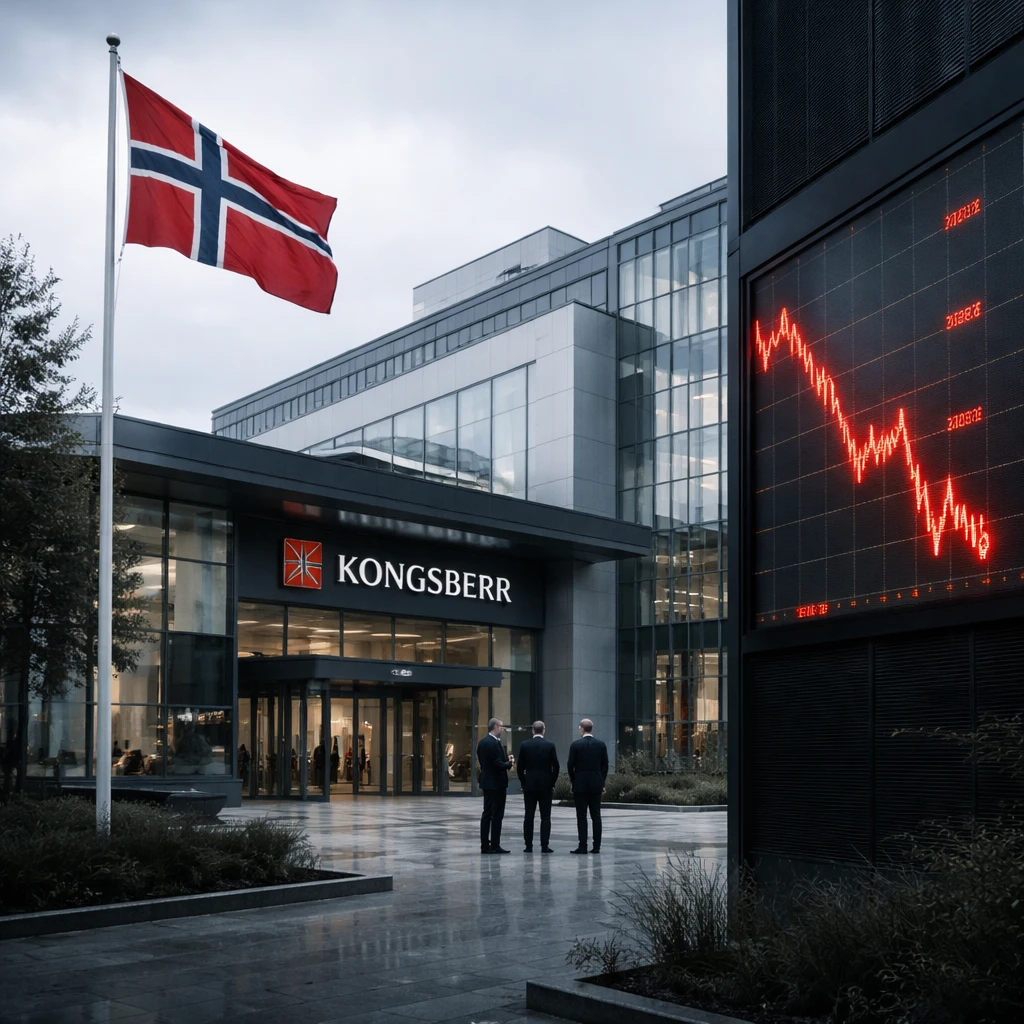
Kongsberg Gruppen ASA's stock moved lower in today's trading, down a little more than 3% to trade at 303.2 after management outlined aggressive long-term revenue targets during its Capital Markets Day presentation.
The Norwegian defense and technology group set a goal to nearly triple revenue from last year’s NOK 33 billion to NOK 100 billion by 2029, and to further expand to NOK 150 billion by 2033. Alongside those topline ambitions, the company said it is aiming for an operating margin above 16%, and indicated that it has the capacity and supply-chain arrangements needed to satisfy anticipated demand.
Initial market reaction to the targets saw a brief uptick in Kongsberg shares, but that gain reversed and the stock was trading down roughly 3.2% as of 07:56 GMT. The move lower followed the combination of the company-specific news and a broader risk-off tone across global equities.
Global markets are facing renewed selling pressure as an escalation in the Middle East coincided with rising unease about technology stocks, creating headwinds for a rebound toward record highs. Investor sentiment has also been influenced by concerns linked to the potential volatility around SpaceX’s IPO as well as apprehension ahead of upcoming inflation data, both of which have contributed to selling in risk assets.
Those macro dynamics are particularly relevant for high-multiple defense and technology names like Kongsberg. Today's slide reflects the intersection of the company’s long-term targets and the wider market environment. Looking ahead, the firm’s momentum will depend on order intake, the ability to preserve margins, and how macro variables such as interest rates, geopolitical developments, and foreign-exchange movements evolve.
Sections:
- Company targets: Nearly triple revenue to NOK 100 billion by 2029 and target NOK 150 billion by 2033; aim for operating margin above 16%.
- Market reaction: Shares briefly rose on the announcement then fell to around -3.2% by 07:56 GMT.
- Macro backdrop: Escalation in the Middle East, tech-sector worries, SpaceX IPO uncertainty, and inflation-data concerns driving risk-off sentiment.