
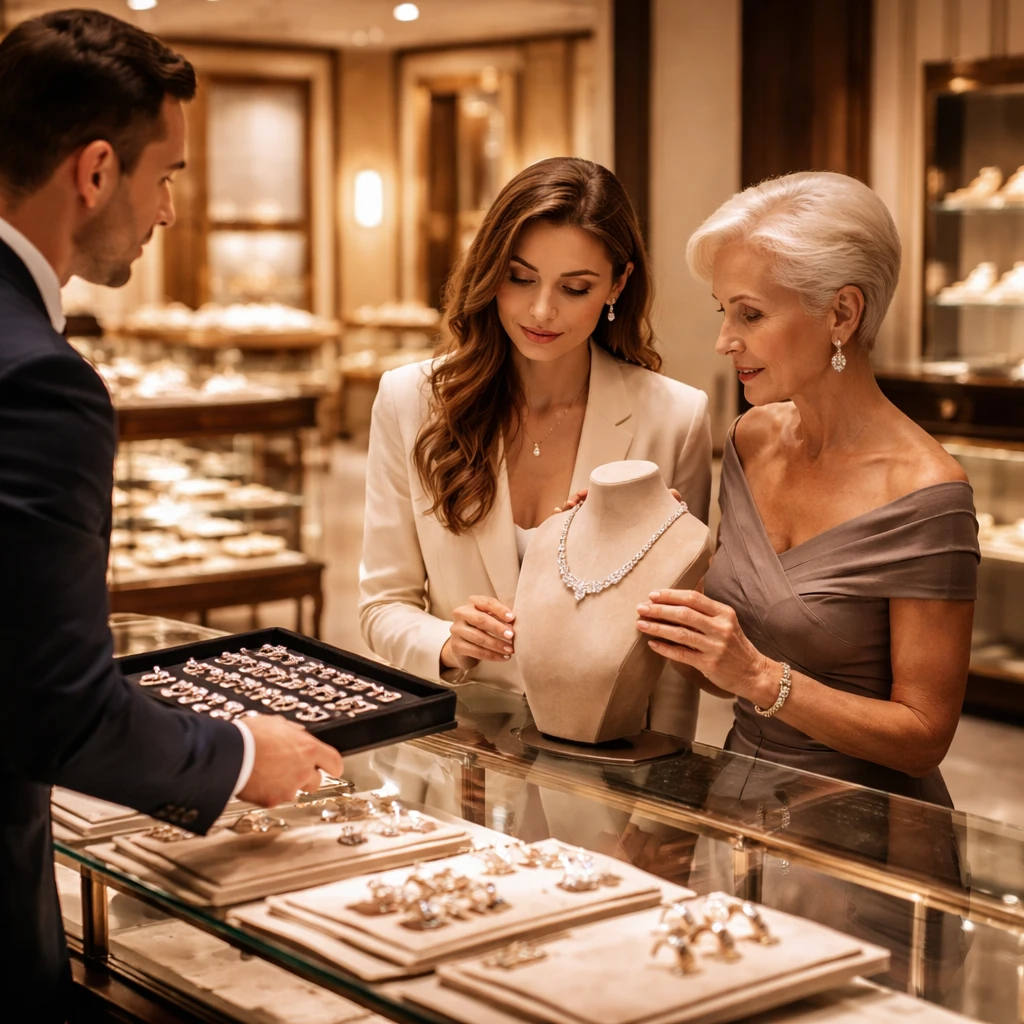
Luxury conglomerates confronting sluggish fashion demand and a spending slowdown tied to the Middle East conflict are narrowing their focus on one key area - jewellery. Investors and analysts say the strength of jewellery sales could be decisive in sorting winners and losers across the roughly $400 billion industry.
After two consecutive years of contraction, the sector was forecast to resume growth in 2026. But industry observers caution that the conflict continued to dampen spending in the first quarter and is expected to have a stronger effect in the three months to June. Within this challenging backdrop, leather bags - long a mainstay of luxury profitability - are struggling to provide the same lift, seen as too expensive and losing appeal among younger consumers. Jewellery, by contrast, is showing resilience.
Analysts at Vontobel noted earlier in the year that although the jewellery segment remains a relatively small portion of sales for many groups, it "punches well above its weight" when it comes to consistent growth and higher margins. The category's momentum reflects both product dynamics and market sentiment rather than a simple needle-mover shift in overall mix.
Carole Madjo, head of European luxury research at Barclays, pointed to two factors that have lifted interest in jewellery. Shoppers are showing fatigue with limited innovation in high-end fashion amid designer turnovers, and a rally in gold prices has increased jewellery's appeal as an investment. "All these points combined together were making jewellery a bit more attractive compared to soft luxury," she said.
Concrete results underline the trend. Sales of jewellery at Richemont, owner of Cartier and Van Cleef & Arpels, jumped 24% in the quarter to June 30, significantly outstripping analyst estimates. LVMH, which owns Bulgari and Tiffany, is also anticipated to see better performance in hard luxury. Barclays analysts recently raised their growth forecast for LVMH's Watches and Jewellery division from 7% to 8% for 2026, up from the 3% growth recorded last year. That division represented 13% of LVMH's €81 billion turnover in 2025.
LVMH is scheduled to report second-quarter sales on Monday, Gucci owner Kering on Tuesday, and Hermes on Wednesday - results that will give investors fresh confirmation of the category's trajectory.
While Richemont and LVMH own the most prominent jewellery houses, the category's pull is visible across smaller brands and fashion houses reallocating attention to hard luxury. Kering, which owns Pomellato and Boucheron, said in April that sales of its new jewellery division rose 22% on a comparable basis in the first quarter, outpacing all other segments. Vontobel analysts cite Hermes' jewellery business as having achieved a compound annual growth rate of almost 30% since 2019, though that progress starts from a very small base.
Madjo highlighted how players across the luxury spectrum are shifting emphasis. "Even at soft luxury players like Hermes, Prada, Gucci, everybody's putting a bit more emphasis on jewellery because that's where the growth is coming from right now. So you want to be exposed to that," she said.
The pivot toward jewellery presents strategic headwinds for brands historically anchored in bags and footwear. Claudia D'Arpizio, senior partner at Bain & Company, warned that "bags and shoes are facing meaningful headwinds, as both have experienced significant softening in consumer desirability, particularly among younger audiences." She added that these categories have historically driven revenues and margins, but post-COVID dynamics have made the environment more difficult and prompted the need for revised formulas to restore momentum.
Hermes illustrates the tension. The firm's long-standing scarcity-driven model, centered on highly controlled pieces such as the Birkin bag, came under pressure after it missed first-quarter growth estimates and saw its stock fall by about 10%, a decline that raised questions about the durability of scarcity as a growth lever.
As luxury companies reassess product priorities and allocate resources, jewellery's stronger growth profile and margin characteristics make it a focal point for investors and management alike. Yet the sector's ultimate winners will likely be those that can translate consumer interest into sustained, scalable sales without overextending the premium and exclusivity that underpin luxury pricing power.