
Stock Markets August 4, 2026 09:19 PM

Jetstar to start charging for overhead carry-on luggage from February

Budget carrier will allow one under-seat bag for free while larger overhead items will incur route-based fees and a paid priority option

By Derek Hwang
Share
Twitter Reddit Facebook LinkedIn

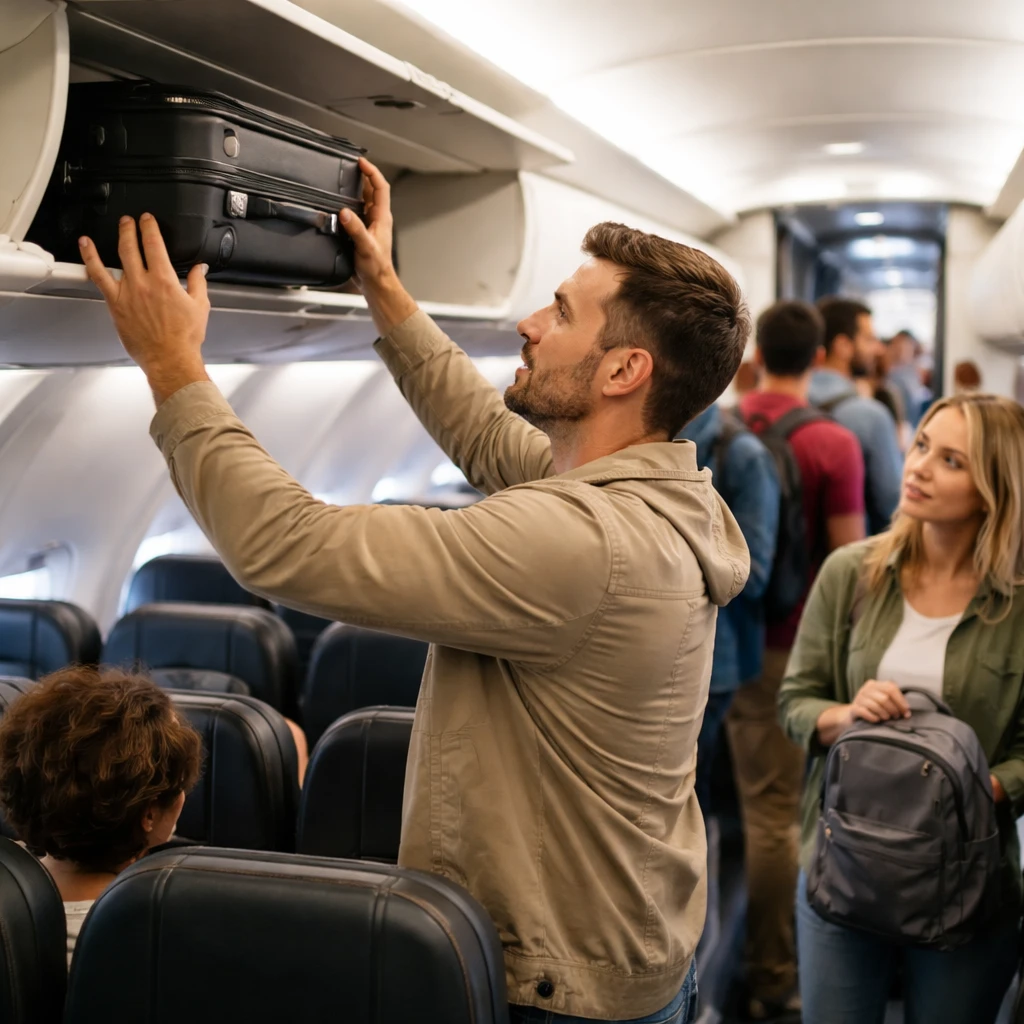
Jetstar, the low-cost division of Qantas, will require passengers to pay for storing larger carry-on bags in overhead lockers beginning in February. Passengers may bring one small bag that fits under the seat at no additional cost; larger items will be charged between A$25 and A$52 per flight depending on route. The airline will offer a prepaid Priority Carry-on product that removes a prior 7-kg weight limit and includes early boarding.

Jetstar to start charging for overhead carry-on luggage from February
Summarize with
ChatGPT Perplexity Claude Grok Gemini

Key Points

  • From February, Jetstar will charge passengers for storing larger carry-on bags in overhead lockers while permitting one under-seat bag free of charge - sectors affected include airlines and consumer travel.
  • A larger overhead carry-on could cost between A$25 and A$52 per flight depending on route; a prepaid "Priority Carry-on" option removes the previous 7-kg limit and adds early boarding - impacting airline ancillary revenue streams.
  • Jetstar says the change follows customer and crew research identifying gate weigh-ins and competition for locker space as significant stressors, and that the measure should streamline boarding and support on-time departures - operational implications for airline performance and airport processes.

SYDNEY, Aug 5 - Jetstar, Qantas' budget arm, will introduce a new cabin baggage regime that requires passengers to pay to use overhead locker space from February. The airline said travellers may still bring one smaller bag that fits beneath the seat - examples include a backpack, handbag or laptop bag - without additional charge, but larger carry-on items will attract fees.

Under examples supplied by the carrier, a larger overhead locker bag could cost between A$25 and A$52 per flight depending on the route. The shift aligns Jetstar's approach with several low-cost carriers globally that include a modest under-seat bag in the base fare while charging for access to overhead locker space.

Passengers who expect to travel with more than the under-seat allowance will be able to buy a pre-purchased product called "Priority Carry-on." That option bundles permission to stow a larger overhead locker bag with early boarding and removes the earlier 7-kg (15-pound) weight limit.

The airline noted that ancillary charges - covering baggage, excess luggage, seat selection and priority boarding - make up an increasing portion of revenues for low-cost carriers. Consumer groups have criticised such practices, arguing that advertised base fares do not always reflect the full cost of travel.

Jetstar said the policy overhaul followed extensive research with customers and crew. That research, the airline said, identified gate bag weigh-ins and competition for limited overhead locker space as among the most stressful elements of the airport experience.

Jetstar's chief executive, Stephanie Tully, said the carrier expects the new model to speed up the boarding process and improve on-time departure performance by making more efficient use of overhead locker capacity. She framed the change as consistent with the airline's low-fares philosophy.

"You only pay for what you need - travelling with less means paying less, and you can always add more if you need," the statement said.

The airline also reiterated the currency conversion used in its pricing examples: $1 = 1.4182 Australian dollars.


This adjustment to Jetstar's baggage rules reflects a broader industry trend of unbundling services from base fares, while offering optional paid services for passengers who want additional convenience. The company highlighted operational benefits as a key rationale for the change.

Risks

  • Consumer criticism over ancillary fees: groups argue advertised base fares can understate the true cost of travel, which could affect consumer sentiment and booking behaviour in the travel and leisure sector.
  • Uncertainty whether the policy will deliver the promised operational improvements: although the airline expects faster boarding and better on-time performance, the outcome is not guaranteed - affecting airline operations and punctuality metrics.
  • Possible customer dissatisfaction from added fees for overhead space: passengers who routinely travel with larger carry-on items may view the change negatively, with potential implications for ticket demand and ancillary revenue mix.

More from Stock Markets

Sysco Suspends Purchases of Mexican Iceberg Lettuce After Cyclosporiasis Outbreak Aug 4, 2026 Futures Tick Up After Wall Street Records; SpaceX and AMD Weigh on Gains Aug 4, 2026 Chinese AI-hardware Stocks Slide After Report of U.S. Move to Block New Component Imports Aug 4, 2026 SoftBank Corp. posts record Q1 revenue as AI and cloud demand lifts profits Aug 4, 2026 Attovia Therapeutics Prices IPO at $17 a Share, Seeks Up to $289 Million on Nasdaq Aug 4, 2026