
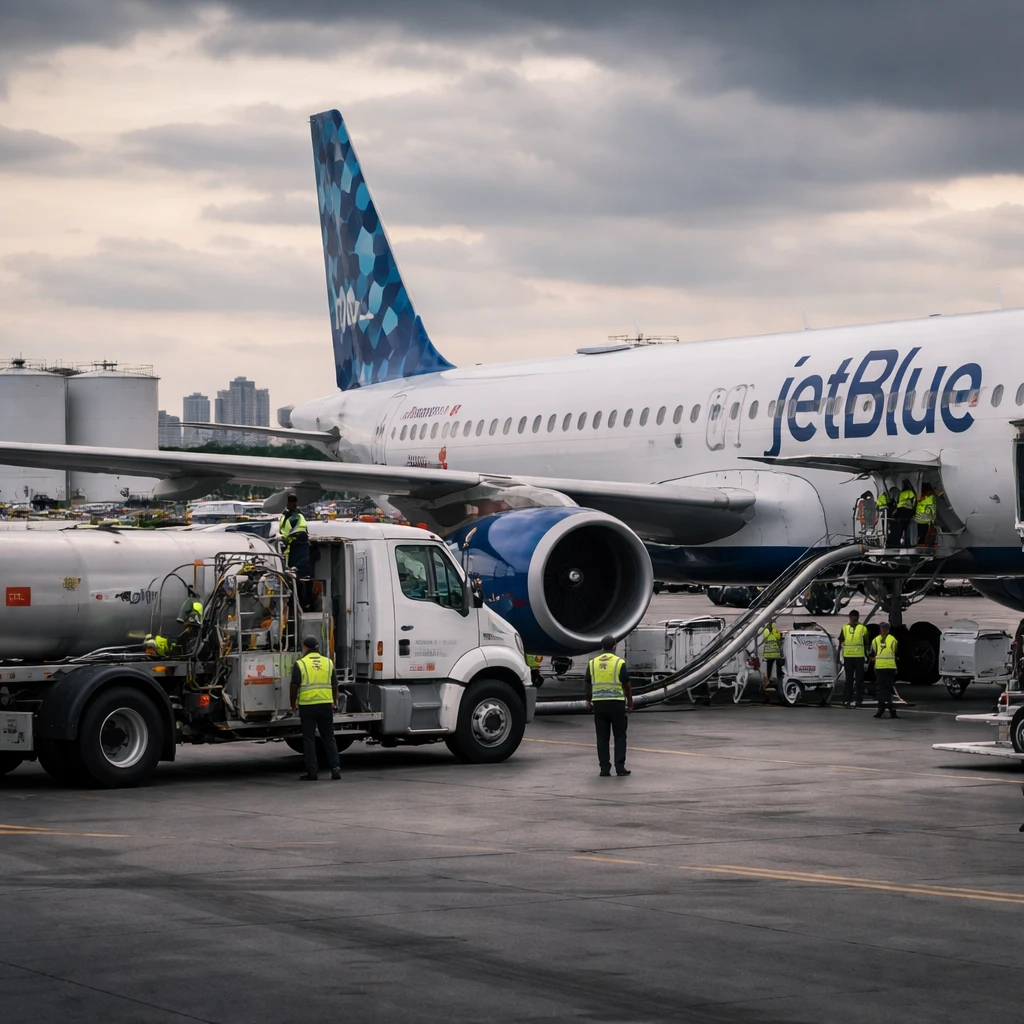
JetBlue Airways said on Tuesday that its second-quarter results reflected a tougher profit environment as jet fuel costs climbed sharply, widening the carrier's net loss compared with a year earlier. The New York-based airline said stronger travel demand and higher ticket prices enabled it to recover a larger share of elevated fuel expenses than it had anticipated, prompting the company to reinstate its annual outlook for revenue per available seat mile - a common proxy for pricing power.
Most U.S. carriers recovered roughly half of the additional fuel costs tied to the conflict in the Middle East during the second quarter, the company said, but executives noted that overall profit visibility remains mixed across the industry. JetBlue itself reported a wider year-over-year net loss as airlines continue to face difficulty fully passing on volatile energy costs to consumers despite healthy travel demand.
"Our second-quarter results demonstrate the progress we’re making on the levers within our control," said Ursula Hurley, JetBlue's chief financial officer.
Alongside the results, JetBlue introduced a long-term target of at least $1 in earnings per share by 2028 and said it remains on track to return to profitability, while cautioning that volatile fuel prices are an ongoing headwind.
JetBlue said it recaptured 50% of its higher fuel costs in the quarter, a notable improvement from its earlier expectation of recovering between 30% and 40%. The company reported that average airfare during the period rose nearly 9%, while revenue per available seat mile (RASM) increased by 11%.
Fuel markets themselves saw significant swings in recent months. Jet fuel retreated from spring highs after a peace agreement between Washington and Tehran in June, but renewed fighting in July drove prices higher again. When hostilities paused over a weekend, oil prices slipped to a one-week low. The company said volatility in energy markets has added billions of dollars to U.S. carriers' quarterly fuel bills, disrupting margin-recovery plans for smaller carriers, including JetBlue, which have less financial flexibility to absorb such shocks.
During the quarter, JetBlue's fuel bill rose by nearly 81%, amounting to roughly $407 million, and the airline paid an average of $4.23 per gallon of jet fuel during the period. For the full year, JetBlue said it expects to pay $3.49 per gallon on average for jet fuel.
On an adjusted basis, JetBlue reported a loss of $0.66 per share for April through June, slightly better than the $0.71 per share loss analysts had expected, according to LSEG data. Total revenue for the quarter climbed 14.5% to $2.69 billion, narrowly topping analyst projections of $2.68 billion.
Shares responded positively to the results in intraday trading, with the stock showing gains during the session.
Key takeaways
- JetBlue widened its year-over-year net loss in Q2 as jet fuel costs surged, but reinstated its annual RASM outlook after stronger-than-expected fare recovery.
- The carrier recouped 50% of higher fuel costs in the quarter, above the prior 30%-40% projection, with average fares up nearly 9% and RASM up 11%.
- JetBlue set a long-term profit target of at least $1 per share by 2028 and said it expects full-year jet fuel costs of $3.49 per gallon.
Risks and uncertainties
- Ongoing volatility in jet fuel and crude oil prices can sharply change operating costs and undermine margin recovery plans - affecting airlines and the broader travel sector.
- Smaller carriers with limited financial flexibility, such as JetBlue, face greater exposure to swings in energy costs which could pressure profitability and capital plans.
- Visibility on profits across the U.S. carrier group remains uneven, which may affect investor expectations for airline earnings and sector valuations.