
Jefferies has moved Best Buy to a Hold rating from Buy, saying the market may already be pricing in an optimistic view of second-quarter comparable sales and that any additional upside to earnings could be limited amid softer consumer demand and growing cost pressures.
The brokerage pointed to July purchase-intent data that showed a year-over-year decline of more than 3% - one of the most pronounced monthly drops in excess of two years - a signal it said raises concern ahead of a challenging third-quarter comparable period.
Jefferies also said that, following second-quarter results, any upward revision to full-year guidance is likely to be modest. The firm highlighted recent changes in the company's finance leadership and noted that higher advertising expenditures could place further strain on margins.
While maintaining an $85 price target, Jefferies emphasized that this implies little upside from the stock's prior close of $85.25. Its fiscal 2027 projections put earnings per share at $6.65, narrowly above consensus of $6.55, and revenue at $42.2 billion versus the Street estimate of $42.0 billion.
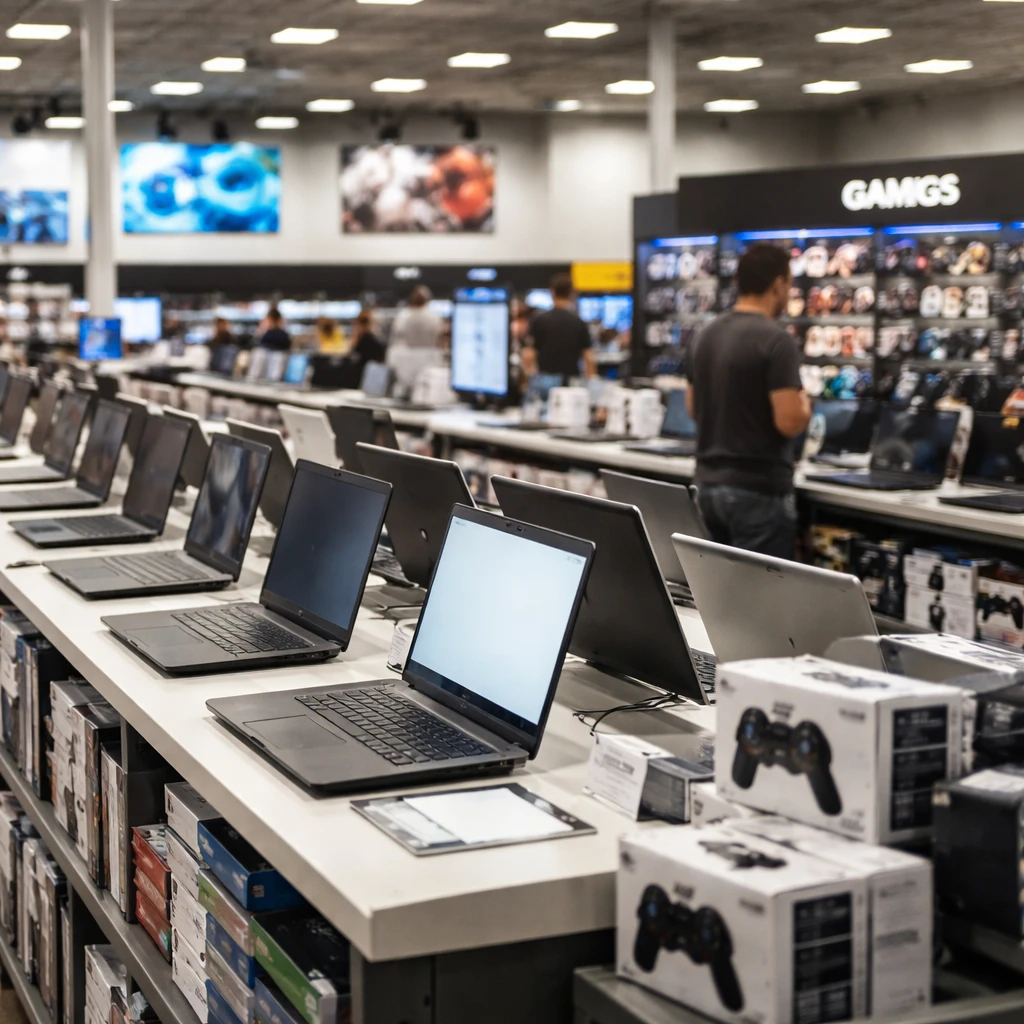
A key element of Jefferies' concern centers on the cost trajectory for DRAM memory. The brokerage estimated a base-case scenario in which roughly 50% DRAM inflation would lift laptop prices by about 8%, creating a greater-than-100-basis-point headwind to comparable sales. It also outlined a more severe scenario in which a stronger shortage could push laptop prices up by as much as 14%.
On the demand side, Jefferies warned that higher DRAM-related laptop prices could further dampen PC replacement cycles and weaken demand into next year.
Jefferies acknowledged a potential near-term tailwind from the release of Grand Theft Auto VI, estimating the title could add about $100 million in revenue this fiscal year and approximately $170 million in the following fiscal year through game and accessory purchases. However, the firm said that these gains are likely to be offset by slowing PC demand, tougher year-over-year comparisons and uncertainties tied to the company's new leadership team.
Contextual note - The analysis reflects Jefferies' view as presented and does not introduce additional forecasts or assumptions beyond those detailed above.