
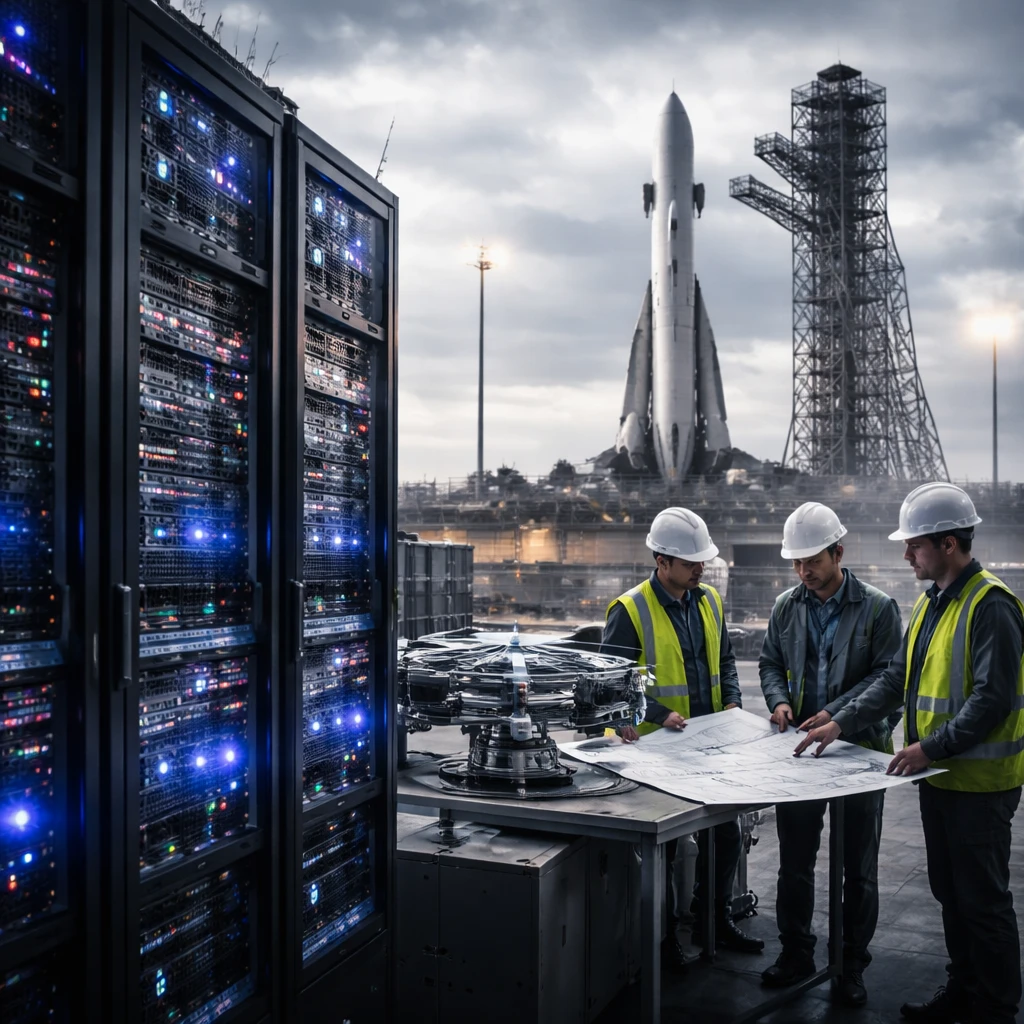
SpaceX impressed investors with faster-than-expected revenue gains tied to its AI push on its first earnings call since going public, but the reaction in the market was negative as worries about mounting capital spending and the durability of Starlink’s cash flows outweighed the encouraging early returns.
Shares slid about 12% on Wednesday, falling well below the company’s $135 IPO price less than two months after its high-profile debut. Market watchers pointed to persistent elevated capital expenditures and waning investor enthusiasm as key reasons the stock may remain under pressure in the near term.
Market response and near-term outlook
“With capex expected to remain elevated and investor enthusiasm cooling, I believe the stock could remain under pressure ahead of the lock-up expiration,” said Carolane de Palmas, market analyst at brokerage ActivTrades. “That could translate into significant volatility as markets reassess SpaceX’s valuation and cash-burn trajectory.”
The drop in the share price reflects investors’ reassessment of how long a profitable Starlink business can continue to bankroll the company’s increasingly expensive investments in data centers and high-end accelerators.
Management argues AI is beginning to finance expansion
SpaceX disclosed that its AI-related revenue more than tripled from a year earlier and highlighted a string of new cloud computing agreements. At the same time, quarterly capital spending on AI climbed to $15.8 billion.
Chief Financial Officer Bret Johnsen said the economics of these investments are improving rapidly. “The current economics have translated into a less than one-year payback on our new capital deployments for compute,” Johnsen said, adding that SpaceX had signed another $6.7 billion in cloud computing contracts since the end of the second quarter and was on track to reach a $100 billion annualized revenue run rate by the end of the year.
Management positioned this faster monetization as a key difference from traditional data center investments, which typically require years to recover upfront costs. Executives also said demand for AI computing continues to outstrip supply and that they expect to finish the year with more than two gigawatts of compute capacity.
Spending levels remain substantial
Even with the improved payback metrics, the company’s capital intensity remains high. During the quarter, SpaceX spent about $18.4 billion on capital expenditures, a figure the firm says is roughly one-fifth of the $85.7 billion it raised in its June IPO. The company also remained deeply free cash flow negative as it continues to prioritize AI infrastructure buildout.
Johnsen cautioned that capital expenditures over the next two quarters would likely remain at levels similar to the second quarter as SpaceX continues expanding AI compute capacity, Starship production and next-generation Starlink satellites.
Analysts weigh risks and plausibility
Some portfolio managers accepted the company’s math but emphasized execution risk. “Elon has continued to surprise investors on what innovation and technology can do, but there has always been a mismatch in terms of the time frame of when that execution is going to occur,” David Wagner, portfolio manager at Aptus Capital Advisors, said, referring to missed timelines at another company associated with the same founder. “I believe the numbers. I would say that yes, those numbers are aggressive, but it’s not a fantasy. The pieces exist, they just require flawless execution.”
Others noted broader investor scrutiny of open-ended tech spending. “We’ve watched the same scrutiny land on Big Tech this earnings season, where investors have questioned open-ended wallets and started demanding a visible return on them,” said Josh Gilbert, lead analyst at trading platform eToro. “SpaceX faces that test with an added degree of difficulty because it’s asking shareholders to bankroll data centres in orbit.”
Market participants also discussed how quickly compute investments are monetizing. “New compute capital monetizes so fast it behaves more like cost of goods than capex,” said Michael Monaghan, portfolio manager of the Founders 100 ETF, which holds SpaceX shares.
At the same time, the tension between heavy capex and the need for much higher revenue growth to sustain that spending drew a cautionary note. “The relationship between capex and revenue is unsustainable, so capex has to fall or revenue has to grow tremendously, and that is where faith in Musk’s vision, engineering leadership and execution track record separates the bulls from the bears,” said Drew Cupps, portfolio manager at Polen Capital, which holds a position in SpaceX.
Financial snapshot and implications
SpaceX’s AI business produced $2.6 billion in second-quarter revenue, more than triple the level a year earlier, but it remained loss-making on an operating basis. The company spent heavily in the quarter and signaled spending will stay elevated as it scales compute, ship production and satellite deployment.
If demand for AI compute remains strong and the company can keep infrastructure fully utilized, management argues AI could increasingly support future expansion in a more self-sustaining way without relying solely on Starlink’s cash generation.
Bottom line
The earnings call shifted the investment debate toward whether AI infrastructure can itself become a primary growth engine and funding source. While management highlighted rapid paybacks and robust contract additions, the market’s reaction underlines concern over continued heavy capital deployment and the time and execution needed to translate early revenue momentum into sustained profitability.