
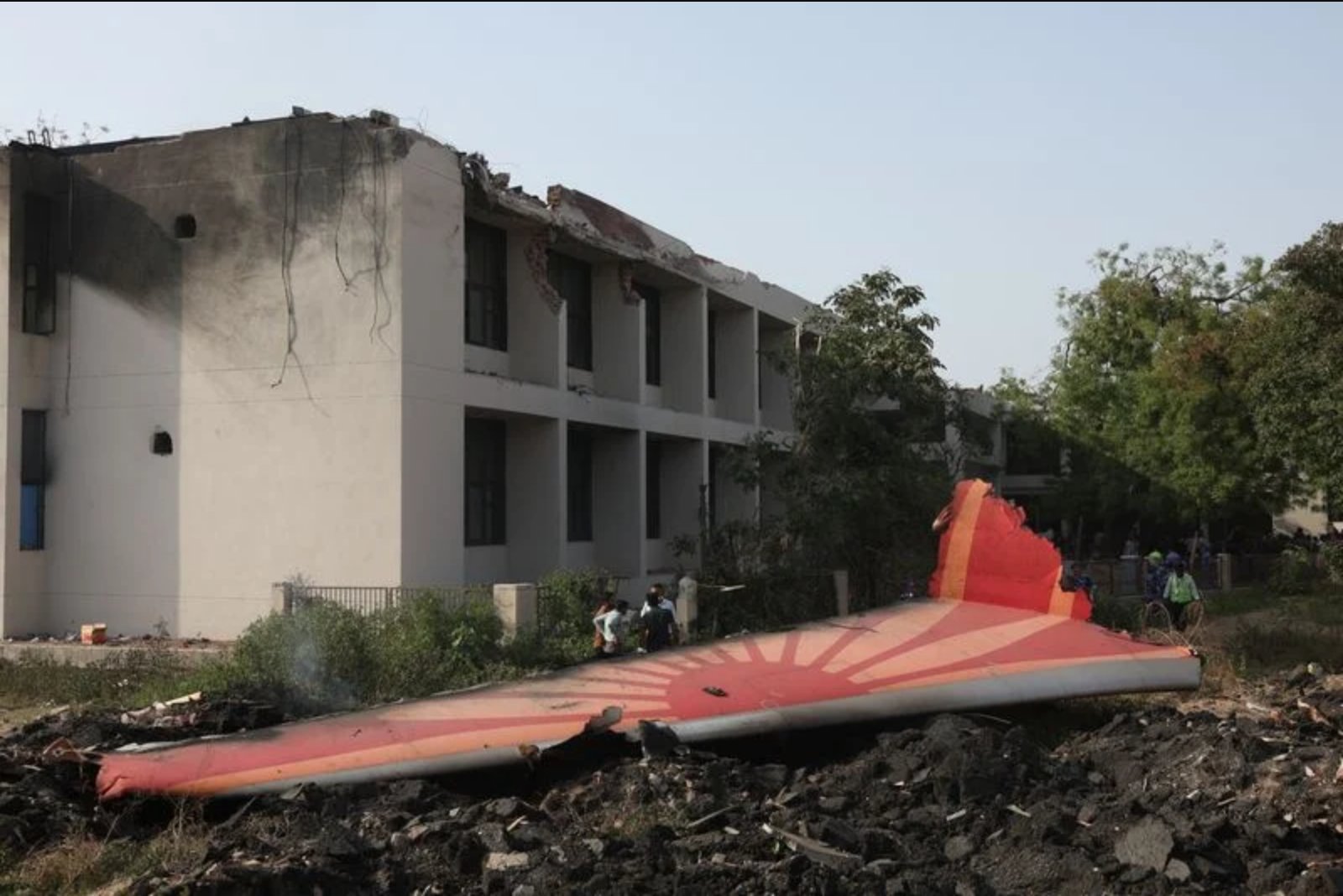
India's official air accident investigation body has prepared a transcript of the cockpit voice recorder, conducted a psychological autopsy and advanced into the final stages of its probe into last year's fatal Air India accident, according to a court filing.
The investigative report published on July 12 last year lays out a precise sequence of events on June 12, 2025, recorded to the second. The timeline begins with the Dreamliner, registration VT-ANB, arriving in Ahmedabad from New Delhi and ends with the cessation of recorded data shortly after crew distress calls.
Key moments from the timeline:
- 05:47 GMT (11:17 a.m. IST) - Air India Dreamliner VT-ANB landed in Ahmedabad from New Delhi as flight AI423.
- 07:48:38 GMT - The aircraft was seen departing from Bay 34 at the airport.
- 07:55:15 GMT - The aircraft requested and received taxi clearance; about a minute later it taxied from the bay to Runway 23 via Taxiway R4, backtracked and lined up for takeoff.
- 08:02:03 GMT - Control was transferred from ground to tower.
- 08:07:33 GMT - Takeoff clearance was issued.
- 08:07:37 GMT - The aircraft began its takeoff roll.
- 08:08:39 GMT - The aircraft lifted off. The report notes, "The aircraft air/ground sensors transitioned to air mode, consistent with liftoff."
- 08:08:42 GMT - The aircraft reached a maximum airspeed of 180 knots. "Immediately thereafter, the Engine 1 and Engine 2 fuel cutoff switches transitioned from RUN to CUTOFF position one after another with a time gap of 01 sec." The report states the Engine N1 and N2 began to decrease from their take-off values as fuel supply was cut off.
- 08:08:47 GMT - Both engines' parameters "passed below minimum idle speed" and the Ram Air Turbine (RAT) hydraulic pump began providing hydraulic power. CCTV footage reviewed by investigators showed the RAT deploying during the initial climb immediately after liftoff. The aircraft began to lose altitude before crossing the airport perimeter wall.
- 08:08:52 GMT - Engine 1 fuel cutoff switch moved from CUTOFF back to RUN.
- 08:08:56 GMT - Engine 2 fuel cutoff switch transitioned from CUTOFF to RUN. The report explains that when fuel control switches are moved from CUTOFF to RUN while inflight, each engine's full authority dual engine control (FADEC) automatically manages a relight and thrust recovery sequence of ignition and fuel introduction. Engine 1's core deceleration stopped, reversed and began progressing to recovery. Engine 2 relit but could not arrest core speed deceleration and re-introduced fuel repeatedly in attempts to increase core speed and recover thrust.
- 08:09:05 GMT - One of the pilots transmitted "MAYDAY MAYDAY MAYDAY".
- 08:09:11 GMT - Data recording stopped.
- 08:14:44 GMT - A crash fire tender left the airport premises to carry out rescue and firefighting operations.
The cockpit voice recording captured a brief exchange between the pilots after the fuel cutoff events. One pilot asked the other, "why did he cutoff" and the other pilot replied that he did not do so. Investigators also noted that when the engines moved from CUTOFF to RUN in flight, the FADEC systems executed relight sequences automatically, with differing outcomes for the two engines.
The report describes CCTV evidence of RAT deployment during the aircraft's initial climb and observes that the aircraft began losing altitude before it crossed the airport perimeter wall. Recorded flight data stopped at 08:09:11 GMT, shortly after the mayday transmission.
This reconstruction of events is part of a broader inquiry that has included both technical and human-factor examinations; investigators have prepared a cockpit voice recorder transcript and conducted a psychological autopsy as they approach the final stages of the probe.