
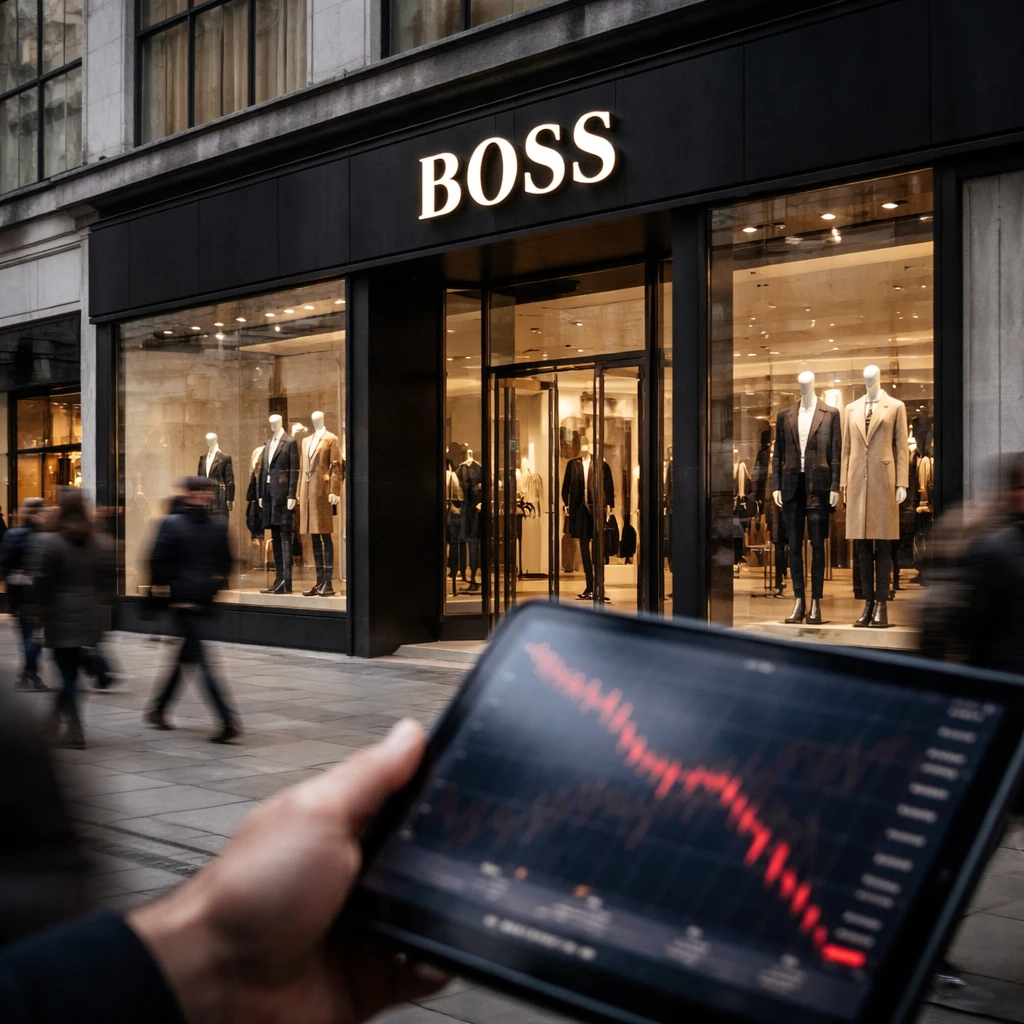
Hugo Boss shares fell 2.1% to trade at €38.20 in today’s session, stepping back from the €39 52-week peak reached in the prior session. The market is continuing to absorb the implications of the company’s Q2 2026 results, published on August 4.
The figures showed group revenue of €905 million, representing a 9% decline on a currency-adjusted basis. Operating profit (EBIT) dropped 28% year-over-year to €59 million. The EMEA region was the weakest spot, recording a 13% fall in sales. While the company reported operating profit and earnings per share that exceeded analyst consensus, the magnitude of the revenue contraction and management’s characterization of 2026 as a deliberate "year of adjustment" tempered investor enthusiasm about the near-term recovery timeline.
A further headwind for the stock is the unresolved takeover bid from Frasers Group. The British retail group announced a voluntary offer of €38 per share in June 2026. Hugo Boss’s managing board and supervisory board formally rejected the proposal as financially inadequate, citing independent assessments from Bank of America and Goldman Sachs that supported their view.
The acceptance window for the offer extends until August 13, 2026, but only about 7.3% of shares have been tendered to date, leaving the bid’s outcome uncertain. With the trading price now below the €38 offer, the takeover premium that had propped up the share price in recent weeks has largely disappeared.
On the strategic front, Hugo Boss reiterated its full-year 2026 targets: EBIT between €300 million and €350 million, and a mid-to-high single-digit currency-adjusted revenue decline. The company’s Claim 5 Touchdown restructuring program intentionally accepts short-term revenue and profit reductions in order to achieve a leaner cost base and higher medium-term margins. Management has signaled that a return to growth is not expected until 2027.
Market context was not broadly negative on the day; U.S. equities were modestly positive, with the S&P 500 up 0.5%, indicating the pressure on Hugo Boss is primarily driven by company-specific developments rather than a general market selloff.
Takeaway - The combination of a pronounced sales decline, a restructuring strategy that front-loads pain, the loss of a takeover-driven price floor after a rejected bid, and a prior run-up to a 52-week high amid takeover speculation set the stage for today’s pullback in the absence of any new adverse corporate announcements.