
Overview
In parts of Africa where global online retailers have limited or no direct operations, shoppers are increasingly purchasing goods from the likes of Amazon and Walmart through intermediaries that stitch together cross-border supply chains. These package-forwarding companies address several practical barriers - the lack of formal street addresses, low penetration of traditional bank cards and the need to consolidate shipments from different international sellers - and convert them into a functioning retail pipeline.
How the pipeline works
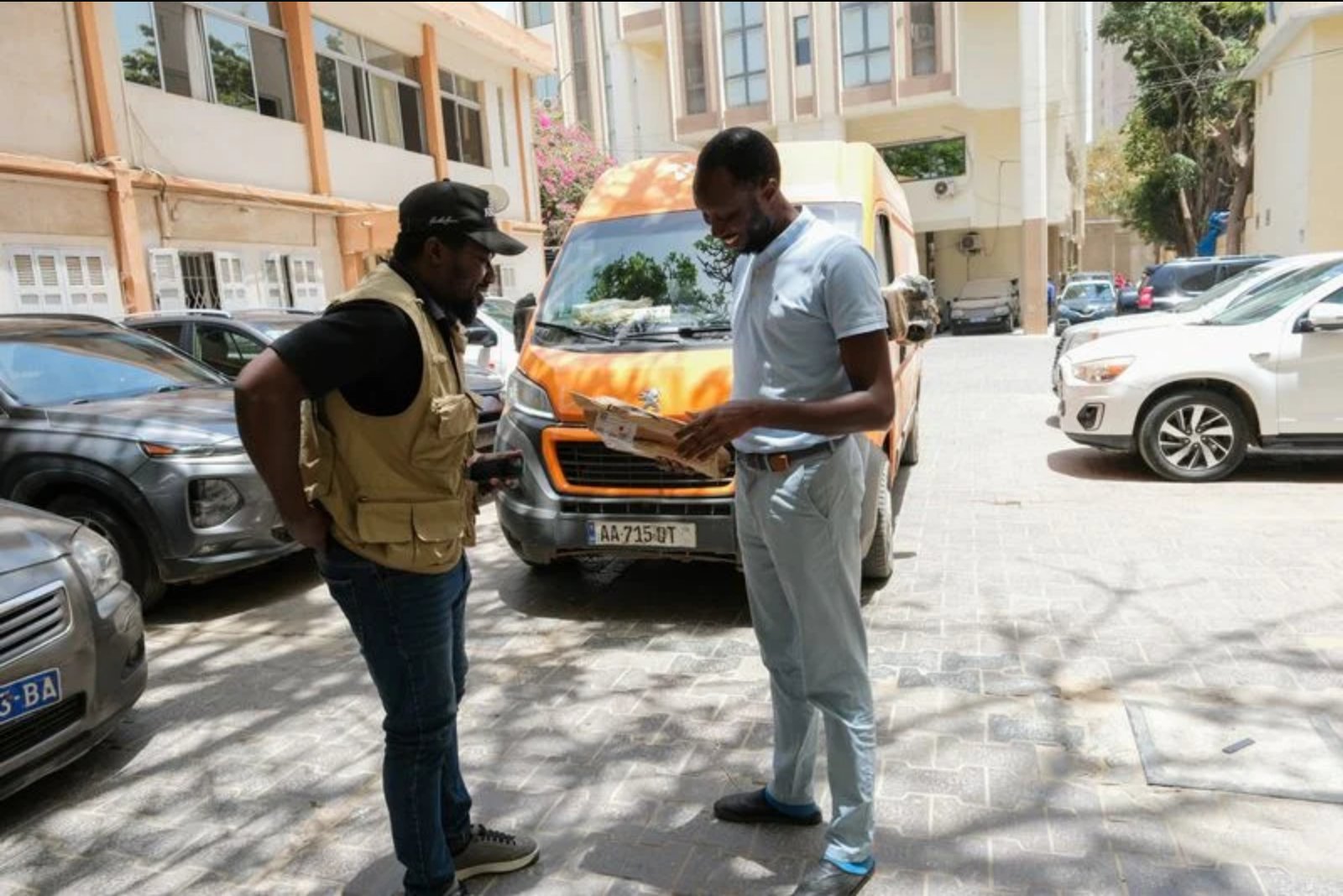
One illustrative example is a Senegalese company that gives customers delivery addresses at partner warehouses in France, the United States and China. Shoppers route multiple purchases to those addresses, where items can be consolidated and repackaged for dispatch to West Africa. On arrival in the destination country, customs duties are paid, providing revenue to local governments.
Crucially, customers who lack bank cards can settle balances using digital mobile money accounts. Those accounts are often funded with cash at neighbourhood kiosks, reflecting the broader role of mobile money as an alternative to conventional banking in many parts of Africa. Once consignments reach the final country, motorbikes and vans using GPS navigation distribute parcels across urban areas such as Dakar, delivering them to customers' doorsteps even where formal street addressing is weak.
"You have to be very, very, very flexible. That's the key word," the company's 34-year-old chief executive said while standing outside a depot stacked with packages bearing labels from international brands.
Origins and scale of a local operator
The Senegalese firm began operating in 2018 with the idea of leveraging informal networks of air travellers between France and Senegal. From those small origins it has expanded to move four to five metric tons by air and two to three containers by sea each week. To control expenses it rents warehousing space in France and relies on partners in the United States and China to manage trade there.
Established logistics rivals
Global logistics companies also play in this space on a much larger scale. One such group runs two overlapping platforms that provide similar services across sub-Saharan Africa. One of those services traces its roots to a platform focused on U.S. expatriates, which the logistics group acquired in 2022. The same group also operates an in-house platform that ships to many African countries.
The group's chief executive told Reuters the company seeks to serve African customers who want access to brands and choice that are otherwise unavailable locally. Angola is cited as one of its principal destinations, and the firm also operates in difficult environments including Somalia.
Demand drivers and product categories
Logistics executives say that electronics, apparel, toys and machinery for agriculture as well as auto parts are prominent categories shipped via these channels. The global logistics group describes sub-Saharan Africa as one of its fastest-growing regions and has set targets to expand revenue from these shipments by 2030.
Limits to expansion
Despite the growth narrative, several structural constraints restrict how far these models can scale. For both the independent forwarders and larger logistics operators, demand is concentrated in or near major cities where incomes are higher. E-commerce in Africa is primarily driven by economic hubs, according to TechCabal Insights, a consultancy referenced in industry commentary.
Internet access has grown to roughly 43% of Africa's 1.5 billion population, but only a subset of internet users have the income to make online purchases. In Nigeria, for example, only one in three internet users shops online. In regions such as Central Africa, the consultancy estimates online shopping penetration at about one in 20 people.
South Africa as an outlier
South Africa stands apart on the continent for the depth of its online shopping market. Online retail volumes there have risen by nearly 35% per year over the last five years, reaching about 140 billion rand in 2025, according to Mastercard figures cited in industry reporting. That growth encouraged large international retailers to establish operations in sub-Saharan Africa: one major online marketplace launched its first South African marketplace in 2024, and the first stores bearing the Walmart name opened in Johannesburg the previous year.
When asked, neither of those large retail companies provided comment on whether they planned to expand their direct operations into other parts of sub-Saharan Africa or supplied data on sales volumes to intermediaries.
Regional competition and local players
Even where Amazon and Walmart have limited reach, intermediaries and regional e-commerce firms face competitive pressures. A Nigerian retail company often dubbed as the continent's leading e-commerce platform operates across eight sub-Saharan African markets, offering a wide range of consumer goods from fashion to home appliances. That company has not yet reached profitability, but says it expects to break even within the current year.
Its chief executive said the firm competes with Chinese retail entrants by customizing services for each market, including opening local help centres and setting up pick-up points in rural areas. Executives at both the Nigerian group and the global logistics company identified Nigeria as among the African markets with the most potential for e-commerce.
While the Nigerian government does not routinely publish comprehensive e-commerce statistics, it has cited United Nations estimates that place the national e-commerce total at roughly $75 billion in 2025.
Reflecting commercial interest in the market, the global logistics group opened a warehouse in Nigeria in April of this year. The Nigerian e-commerce company's chief executive reported that business in Nigeria expanded by about 50% over the last quarter of 2025 and characterized the market as underpenetrated and early in a broader transformation.
Implications for distribution and retail sectors
The interplay between specialised forwarders, large logistics firms and regional e-commerce platforms demonstrates that alternatives to direct retail footprints can unlock access to international brands for African consumers, particularly in urban centres. These models lean heavily on distribution strength, partnerships for international handling, and the use of mobile payment systems to bridge gaps in formal banking.
Methodology note
This article aggregates interviews and industry statements to describe the operational mechanisms, scale and constraints of parcel-forwarding and logistics services facilitating cross-border retail into African markets. Where specific company practices or growth figures are cited, those are derived from company statements or industry commentary as presented in reporting.