
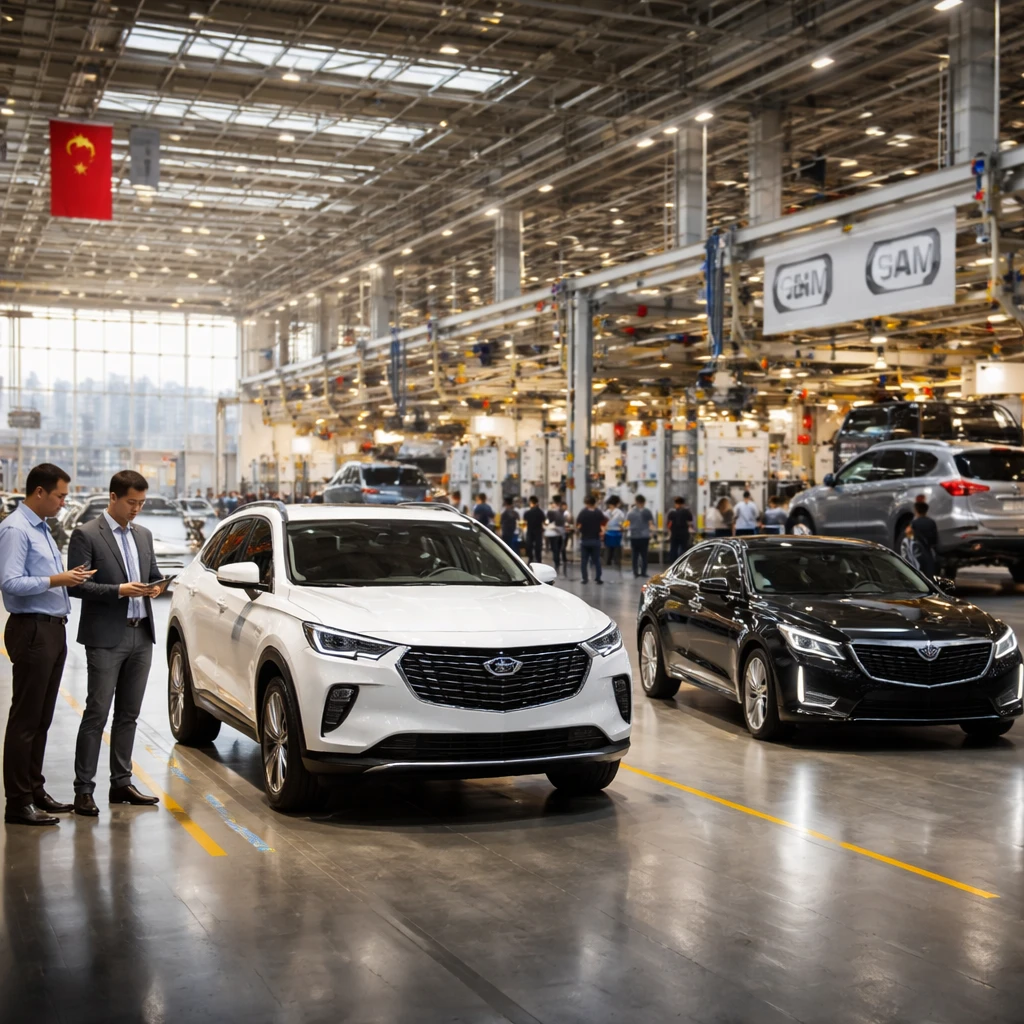
General Motors and SAIC Motor announced that they have extended their joint venture in China for another 20 years following a significant realignment of GM's business in the country that included factory closures and the removal of certain Chevrolet models from the local lineup.
The renewed 50-50 partnership is structured to place more vehicle-development activity inside China, with the intent of better tailoring products to domestic customer preferences. Under the new arrangement, GM will focus its China efforts on its Cadillac and Buick nameplates, while discontinuing Chevrolet sales in the Chinese market.
GM also said the revised terms permit the company to use its China operations as an export base. The Detroit automaker plans to ship Buicks and Cadillacs from China to markets in the Middle East, Africa, South America, Mexico and other parts of Asia.
A long-running presence in China
GM was among the first international automakers to enter China when it formed a partnership with SAIC in 1997, growing over time to become a leading seller in the market. But over the last decade, GM's Chinese sales have declined markedly as domestic manufacturers matured and as the market shifted strongly toward electric vehicles.
Last year, GM sold 1.9 million vehicles in China, a figure that represents a 51% decline from 2016. Chevrolet in particular faced pressure from lower-cost competitors and lost market share. Despite stopping retail Chevrolet sales in China, GM will continue to build Chevrolet vehicles there and export them through a separate joint venture with SAIC and Wuling.
Local product development and electrification
The SAIC-GM joint venture has produced more than 20 million vehicles during its nearly three decades of operation and will now compete with an expanding portfolio of locally developed models. In recent months the partnership launched the Buick Electra sub-brand, which includes electric and hybrid models developed in China.
One early Electra product, the Electra E7 SUV, recorded more than 10,000 sales in its first month on the market. That model is slated to be the first premium vehicle developed within the joint venture to be exported overseas, with shipments to begin in October.
SAIC-GM has indicated plans to introduce at least 30 electric or hybrid models by 2030.
Export limits and geopolitical constraints
GM said the joint-venture automaker does not intend to export vehicles to the United States. The company cited tariffs and national security policies aimed at China-developed technology as the reasons those Chinese-developed products will not enter the U.S. market.
Financial effects and restructuring
Earlier in 2024, GM initiated a restructuring of its China business after steep declines in market share. The company recorded two non-cash charges on its China joint venture that together exceeded $5 billion. GM had been losing money in China after previously reporting roughly $2 billion in annual profits earlier in the decade.
Following the restructuring, GM has returned to profitability in China for several consecutive quarters, most recently reporting $83 million in second-quarter income.
Outlook
The renewed agreement with SAIC positions the joint venture to lean heavier on local development and electrified products while using China as a regional export platform for premium Buicks and Cadillacs. The joint venture will not target the U.S. market for exports due to trade and security constraints.