
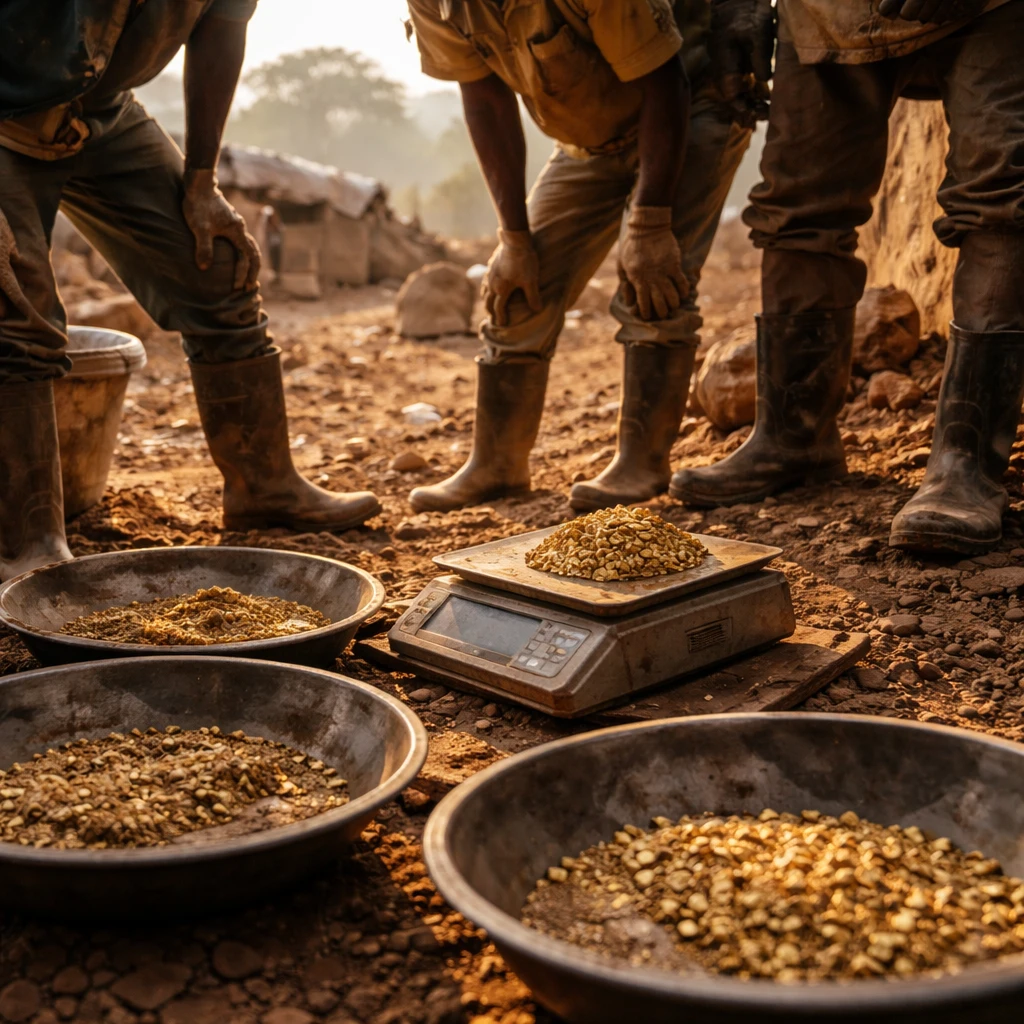
Ghana’s state gold marketing agency reported purchases of between 50 and 54 metric tons of gold from artisanal and small-scale mining operations in the first six months of 2026, according to comments by the agency’s chief executive, Samuel Gyamfi.
Gyamfi told reporters that, if buying continues at the current pace, small-scale miners could match or surpass the 104 metric tons recorded in 2025. That 2025 total marked a notable shift in the country’s production profile - small-scale output exceeded large-scale production for the first time.
The Gold Board said the small-scale sector generated nearly $11 billion in foreign exchange earnings last year, while large-scale miners contributed about $9 billion. Those figures underscore the growing role of artisanal and small-scale activity in Ghana’s FX receipts and export mix.
Gyamfi also cautioned that recent declines in global gold prices have lowered the board’s earnings expectations for 2026. He noted that the Gold Board’s earlier forecasts had been built on an assumed average gold price of roughly $5,000 per ounce and on weekly purchase volumes in the vicinity of 2.5 metric tons.
Despite the downward adjustment relative to initial forecasts, Gyamfi said Ghana remains on course to record higher gold export earnings in 2026 than in 2025, because average prices to date remain above last year’s levels, even if they fall short of the Gold Board’s original projections.
Gold continues to be Ghana’s largest export and primary foreign exchange earner. The country, identified as Africa’s largest gold producer, has implemented sector reforms aimed at cutting smuggling losses and boosting foreign exchange receipts from the sector.
Bottom line: Purchases through the Gold Board in H1 2026 point to strong small-scale production that could replicate or exceed 2025’s record output. However, weaker-than-expected gold prices have narrowed the upside for export earnings compared with the board’s initial projections.