
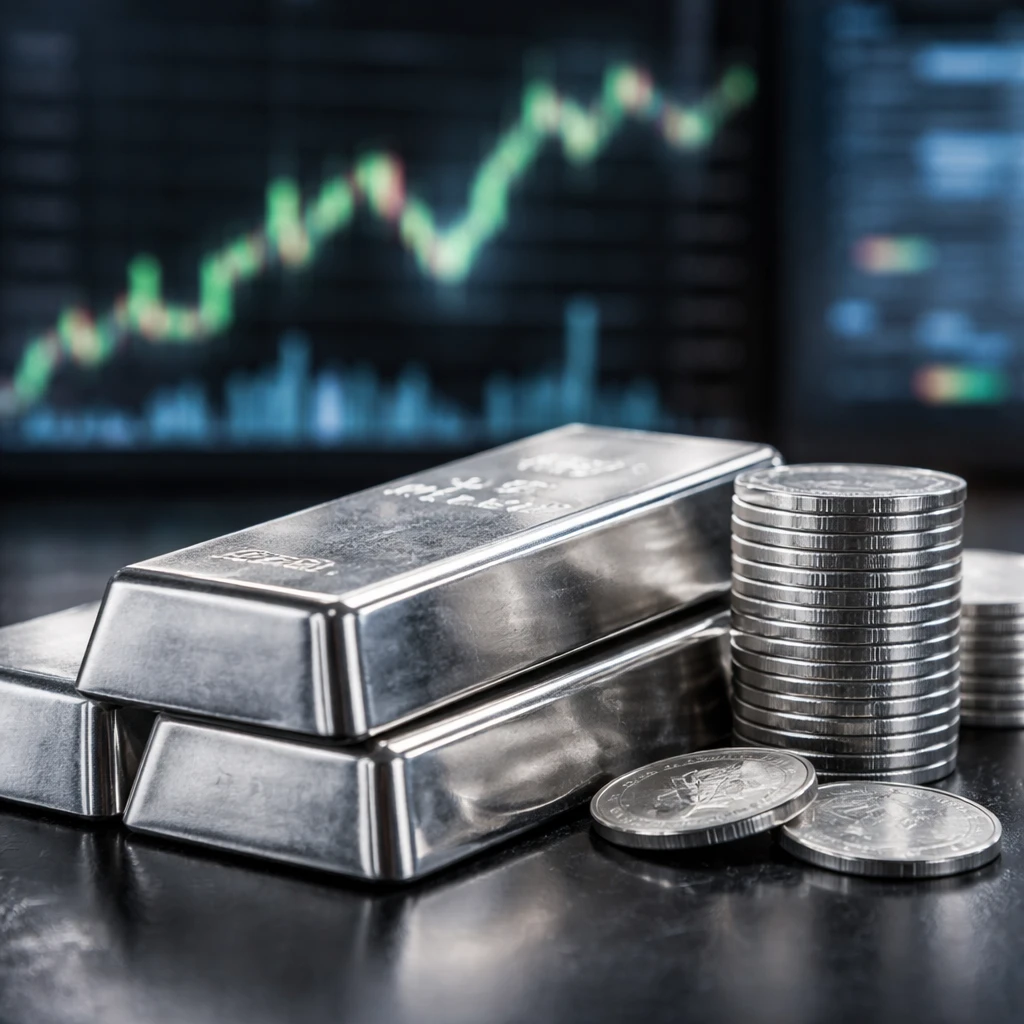
Silver futures advanced 1.1% in today’s session to reach $58.408, led by a notable shift in geopolitical risk perception tied to the Middle East. The market reacted after President Trump signaled that peace negotiations with Iran were set to resume - a development that eased concerns of a prolonged regional conflict that had been lifting oil prices and stoking inflationary pressures weighing on precious metals.
The immediate market effect was visible in energy prices, which moved lower following the announcement, reducing the oil-driven inflationary impulse that had been the most pronounced headwind for silver in recent weeks. That drop in oil helped clear a key macro overhang for the metal and contributed directly to silver's rise.
At the same time, the Federal Reserve's decision to hold interest rates steady provided an additional technical buffer for silver. The policy statement showed that three FOMC members had dissented in favor of an immediate hike, yet the overall outcome left rates unchanged - a development that helped cap near-term rate-hike expectations and offered some support for commodities priced in dollars.
Currency moves also played a role. A softer U.S. dollar made dollar-denominated commodities relatively more attractive to international buyers, enhancing demand dynamics for silver. From a technical perspective, silver had been trading in oversold territory, with momentum indicators recovering from depressed levels around the mid-$57 support area. That technical set-up left the market primed for a rebound that was realized in today's session.
The broader market backdrop was constructive for risk assets. U.S. equity benchmarks rose, with the S&P 500 up about 0.5%, the Dow Jones rising roughly 0.7%, and the NASDAQ gaining around 0.6%, collectively reflecting a risk-on tilt that often accompanies moves into cyclical and industrial metals.
Beyond the immediate drivers, structural fundamentals for silver remain supportive: the market is projected to post a deficit of roughly 46 million ounces in 2026, which would mark a sixth straight year of undersupply. That persistent shortfall provides a medium-term underpin for demand, even as expectations for further rate increases limit near-term upside for the metal.
Taken together, the geopolitical de-escalation signal from Washington, a steady Fed, dollar softness and recovery from deeply oversold technical conditions combined to push silver back through the $58 mark. Nonetheless, the metal's wide 52-week trading range - from a low of $36.96 to a high of $121.785 - highlights the magnitude of the correction from earlier peaks this year and the remaining uncertainty around the path of monetary policy.