
Stock Markets June 22, 2026 08:05 AM

Fervo Energy Shares Rise After Agreement to Build Geothermal 'Digital Twin' with Nvidia and PNNL

EGS-Twin project will combine field measurements, physics models and AI to inform reservoir operations with implementation planned by 2029

By Jordan Park
Share
Twitter Reddit Facebook LinkedIn
FRVO NVDA

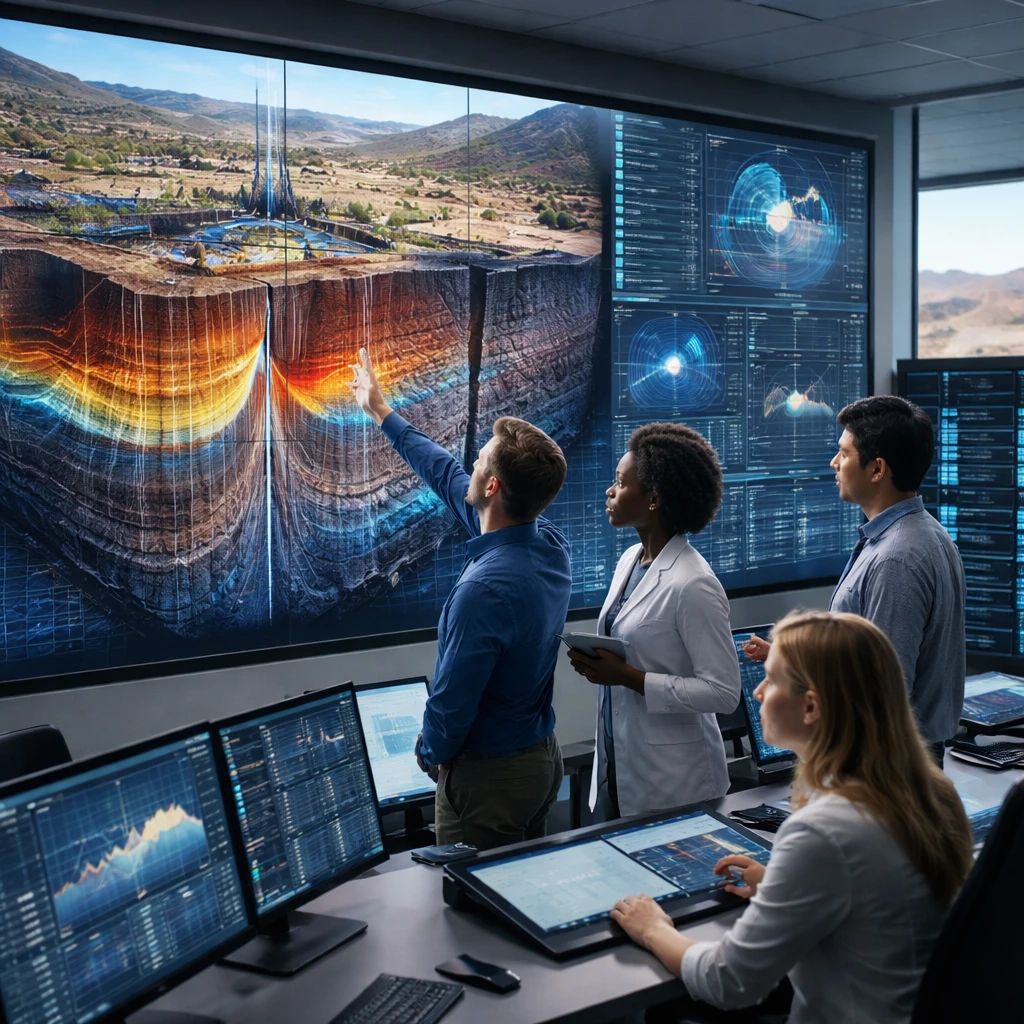
Fervo Energy said it has partnered with Nvidia and the Pacific Northwest National Laboratory to develop EGS-Twin, a digital twin platform for enhanced geothermal systems. The announcement sent Fervo shares up 11.1% in premarket trading Monday. The initiative will use Fervo’s Nevada and Utah field data, Nvidia AI infrastructure and PNNL high-performance computing to train and integrate models into a library for operational forecasting and large-scale simulation.

Fervo Energy Shares Rise After Agreement to Build Geothermal 'Digital Twin' with Nvidia and PNNL
FRVO NVDA
Summarize with
ChatGPT Perplexity Claude Grok Gemini

Key Points

  • Fervo announced a partnership with Nvidia and the Pacific Northwest National Laboratory to develop EGS-Twin, a digital twin platform for Enhanced Geothermal Systems.
  • The platform will integrate real-time field data, physics-based modelling and AI forecasting; PNNL will train models on Nvidia AI infrastructure and incorporate them into Omniverse libraries.
  • PNNL will deploy high-performance computing resources, including U.S. Department of Energy supercomputers, to run large-scale simulations; implementation is planned by 2029.

Fervo Energy Co Ltd (NASDAQ:FRVO) saw its stock jump 11.1% in premarket trading Monday after the company disclosed a collaboration with Nvidia and the Pacific Northwest National Laboratory to build a digital twin platform for Enhanced Geothermal Systems technology.

The joint effort will produce a platform called EGS-Twin that combines real-time field data, physics-based modeling and AI-driven forecasting. According to the announcement, the platform is intended to provide operators with improved visibility into subsurface behavior and day-to-day operational performance.

Researchers at PNNL will begin training AI models using proprietary field measurements from Fervo’s sites in Nevada and Utah. That training will run on Nvidia AI infrastructure and the models produced will be added to Nvidia Omniverse libraries for use within the platform.

EGS-Twin is described as a tool to help geothermal operators recognize and respond to subsurface changes, optimize electricity generation and support the wider deployment of enhanced geothermal systems. PNNL will establish workflows and data pipelines and leverage high-performance computing - including U.S. Department of Energy supercomputing resources - to perform large-scale simulations required by the platform.

Fervo’s chief technology officer and co-founder Jack Norbeck commented on the project: "We believe that digital twins will expedite the learning curve for geothermal development as we build and operate our GeoBlock assets. Integrating high-fidelity physics-based models with AI-driven forecasting has the potential to reshape reservoir management, improve heat recovery, and enhance system reliability."

PNNL will begin immediate training of the digital twin using Fervo’s proprietary datasets and will continue to refine the models as new production data becomes available. The partners have scheduled implementation of the platform by 2029.

The collaboration brings together field operators, national laboratory researchers and commercial AI infrastructure and signals an effort to fuse observational data, physics simulations and machine learning into a single operational tool for geothermal assets. Market reaction was swift, as Fervo shares recorded the premarket gain following the announcement.


Sectors affected: energy production, clean energy technology and high-performance computing services.

Risks

  • Timeline uncertainty - the platform is scheduled for implementation by 2029, and meeting that schedule will depend on technical progress and continued access to data and computing resources - impacts energy project development timelines.
  • Dependence on production data - model training and refinement require proprietary field data from Fervo’s Nevada and Utah sites; limitations in data availability or quality could affect model performance - impacts operators and technology developers.
  • Reliance on high-performance computing - the platform’s ability to run large-scale simulations depends on access to DOE supercomputing and other HPC infrastructure, which could present logistical or scheduling constraints - impacts computational service providers and research workflows.

More from Stock Markets

AeroVironment Announces $89.4M Goodwill Restatement; Shares Slip in Premarket Trading Jun 22, 2026 Supermicro Shares Jump After Firm Unveils NVIDIA Vera Rubin NVL4 Data Center Blueprint Jun 22, 2026 Bernstein Names Six Power and Energy Transition Stocks to Watch as Data Center Demand Drives Grid Spending Jun 22, 2026 MDA Space Shares Jump After Blue Canyon Acquisition; Analysts Lift Targets Jun 22, 2026 Momentus Announces $75M At-the-Market Share Offering; Stock Slides in Pre-Market Jun 22, 2026