
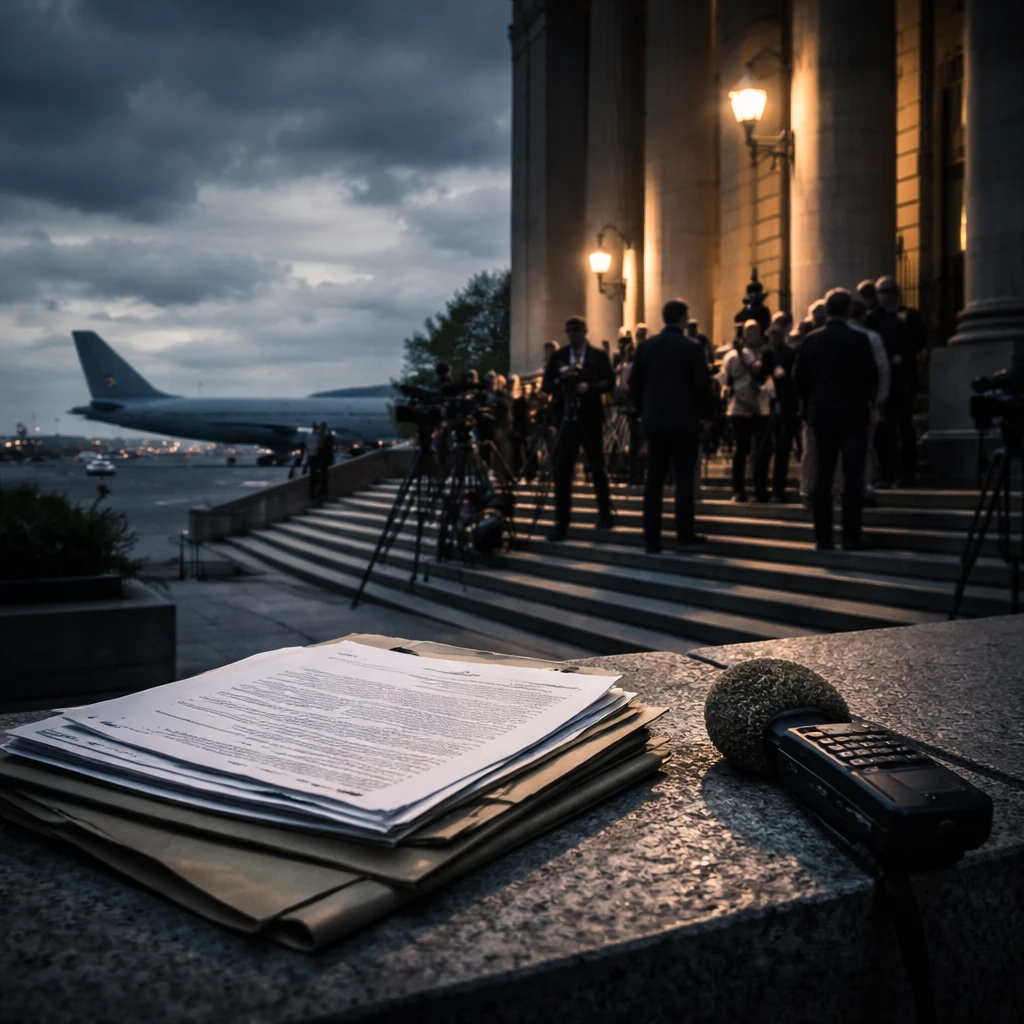
The Justice Department representing President Donald Trump will press a Manhattan federal judge to uphold subpoenas that seek testimony from journalists at the New York Times about their reporting on security concerns tied to a Qatari-donated presidential plane.
The subpoenas were issued on July 10 by Manhattan U.S. Attorney Jay Clayton. Enforcement was temporarily paused by U.S. District Judge Arun Subramanian, who has scheduled a hearing for Thursday at 2 p.m. ET (1800 GMT) in Manhattan federal court to consider the matter.
Prosecutors have asked the judge to maintain the stay on enforcement for two weeks, arguing that developments in the ongoing investigation could bear on the court's ultimate decision. The Times, for its part, has urged the court to quash the subpoenas.
The subpoenas followed Times reports that President Trump departed Turkey aboard the old Air Force One because a new plane donated by Qatar allegedly lacked antimissile and other defensive systems. The reporting relied on anonymous sources and was published as a ceasefire broke down in the U.S.-Israeli war on Iran, according to the filings.
In court papers, the Times Company characterized the subpoenas as attempts to harass and intimidate journalists, saying the actions violate protections guaranteed by the First Amendment. The company also accused the Justice Department of failing to adhere to its internal rules governing subpoenas targeting journalists, rules that the Times said require rare and high-level approval.
Prosecutors denied any improper conduct in issuing the subpoenas. In filings, the government argued that the First Amendment does not provide reporters with blanket protection from production of information deemed essential to criminal investigations.
The government further asserted that the Times' reporting created a "substantial national security concern" by potentially disclosing classified national defense information while the president was traveling amid hostilities with a foreign adversary that the government indicated might seek to harm him. The filings referenced those concerns in the context of hostilities involving Iran.
Advocacy groups for the press have noted that both Republican and Democratic administrations have previously sought to compel journalists to reveal sources in leak investigations. However, these groups contend that the current Republican administration has used subpoenas and search warrants too liberally, pointing to actions taken involving other news organizations. They also accuse the administration of wielding government authority and civil legal actions to pressure and intimidate the news media.
The Trump administration has responded by saying its focus is on pursuing criminal charges against leakers rather than targeting reporters themselves. Additionally, private lawyers for the president have stated they are pursuing legal remedies to hold media organizations accountable for what they assert are inaccurate reports.