
Overview
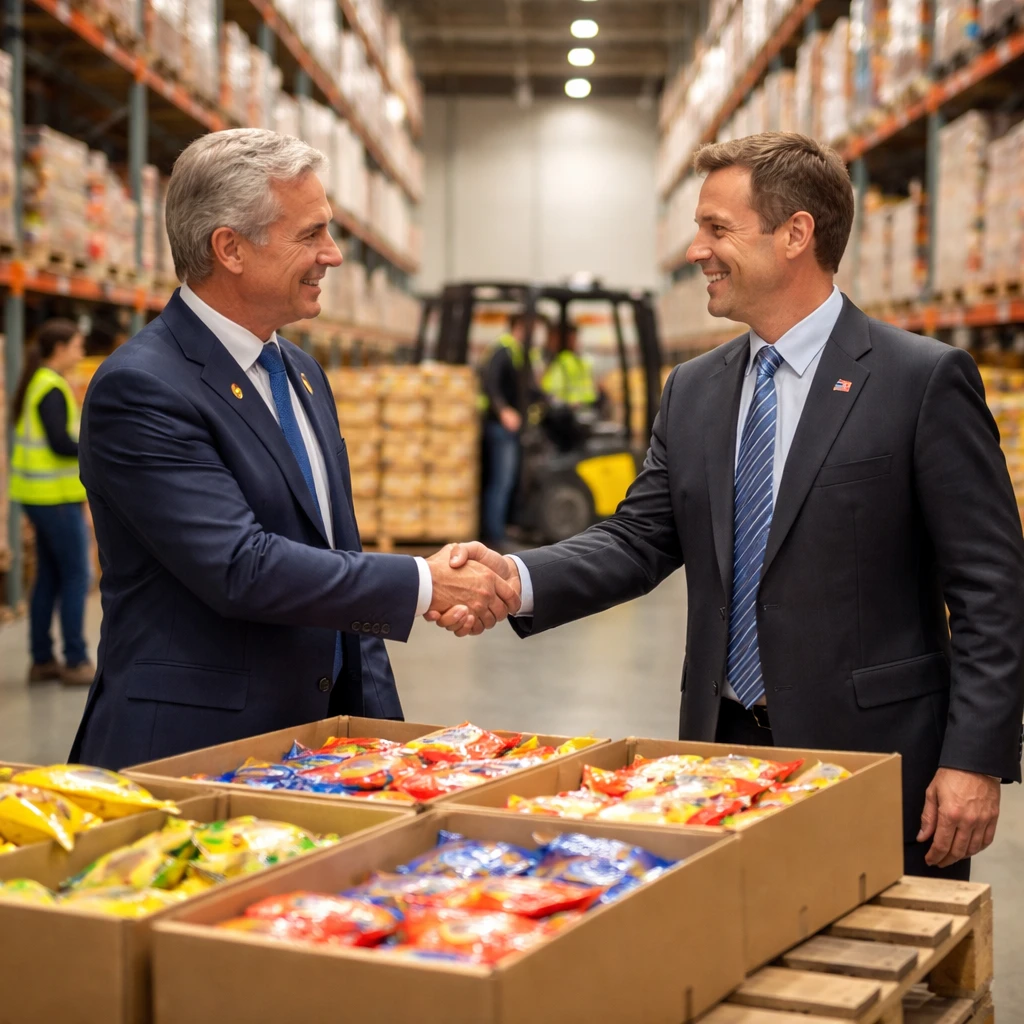
Family-controlled food companies are increasingly acquiring U.S. snack brands as public valuations cool, driven by investor concerns over weight-loss drugs, shifting consumer preferences and persistent inflation. Most recently, Utz, the Hanover, Pennsylvania-based potato chip maker, agreed to go private in a deal valued at nearly $3 billion with Germany’s Intersnack Group and Utz’s founding families.
Deal activity and major transactions
The Utz transaction marks Intersnack’s first acquisition in the United States. Intersnack is a unit of Pfeifer & Langen, a family-owned food conglomerate. The move follows a string of purchases by other family-owned food groups. Italy’s Ferrero acquired cereal maker WK Kellogg and protein snack brand Power Crunch. Earlier, Mars, which is controlled by the Mars family, completed a $36 billion take-private purchase of Kellanova, the maker of Pringles and Cheez-It.
These purchases come as several established food companies have seen their market capitalizations fall; some have even dropped out of the S&P 500 for that reason. Examples cited include Campbell’s and Lamb Weston.
Why family buyers are active
Advisors and bankers say family-owned buyers often have a longer investment horizon than private equity, making them more willing to hold businesses through cyclical or structural adjustments in the grocery aisle. "They want exposure to the U.S. market, and believe there’s some public market value dislocation, which in turn is being used as a buying opportunity," said Adam Taetle, Lazard’s global head of consumer and retail investment banking.
Sources tell analysts that family buyers can think generationally, giving them a different strategic perspective than investors focused on shorter-term exits. That patient approach is one reason these buyers have been able to step in to acquire companies that some public buyers or private equity firms find difficult to justify, particularly in categories that could provoke intense competition with dominant players.
Competitive dynamics and cautious buyers
Salty snacks present a particular competitive dynamic because of PepsiCo’s Frito-Lay scale. Several sources said private equity and public buyers are cautious about large moves into salty snacks given the potential to set up a direct contest with PepsiCo. The article notes PepsiCo’s most recent food acquisition was a $1.2 billion purchase of tortilla chip brand Siete Foods in 2025.
Public acquirers also face scrutiny if a deal underperforms. J.M. Smucker’s 2023 acquisition of Hostess for $5.6 billion was followed by $2.9 billion in impairment charges and an 18% decline in the company’s shares since that transaction, illustrating the risks for acquirers who cannot quickly deliver returns.
Valuation dislocations and market signals
Investment banks and research houses are watching whether family deals will help establish valuation floors for mid- and small-cap food and beverage names that have seen their multiples compress. A TD Cowen note on the Utz deal observed that private companies have repeatedly bought public food companies over the past two years and suggested that such activity could help set a valuation baseline for other "fallen stars" in the sector.
TD Cowen reported the Utz deal valued the company at roughly 12 times core earnings, a multiple that excludes interest, taxes, depreciation and amortization. The note highlighted other companies trading at lower multiples, such as BellRing Brands, which the research house reported as trading below eight times next year’s EBITDA, and Simply Good Foods, trading below six times that metric. For comparison, TD cited PepsiCo trading at around 12 times EBITDA.
Cross-border strategy and growth ambitions
Many of the recent transactions feature a cross-border element, as buyers seek to expand the global reach of acquired brands. The article points to Kellanova’s international expansion of Pringles before Mars purchased the business, and notes Maryland-based McCormick’s acquisition of Unilever’s food unit earlier in the year as evidence of this trend.
Intersnack, which makes brands such as Tyrrells, Pom-Bear and Hula Hoops, is aiming to build a larger global business in salty snacks and to better compete with established players such as PepsiCo. Founded in Germany in 1968, Intersnack operates in 31 countries and generated $5 billion of sales in 2025. When combined with Utz, the company’s sales could grow to $6.6 billion, according to the information provided.
Sources familiar with the Utz deal said they expect Intersnack to pursue additional U.S. acquisitions. Intersnack declined to participate in an interview for this analysis. In the official deal announcement, Intersnack’s executive chairman Johan van Winkel said, "We see a tremendous opportunity to partner and build on Utz’s strong foundation and help shape the future of snacking in North America."
Implications for markets and sectors
The current wave of family-owned bidders has implications for equity valuations in the packaged foods and snacks segments, for consolidation dynamics across borders, and for competitive strategy in categories dominated by large global players. Observers and market participants will be watching whether these buyers spur additional take-privates or reposition assets to drive global growth.
Source limitations
Where the article references market multiples, company sales figures, and analyst commentary, those data points are presented as they were provided. The article does not include projections beyond the cited figures and statements from named sources.