
Stock Markets July 28, 2026 01:42 PM

EssilorLuxottica Posts Strong H1 Operating Profit; AI Glasses and Myopia Products Lift Revenue

Tariff refunds and favorable price mix boost margins as sales of AI-enabled eyewear and myopia treatments accelerate

By Avery Klein
Share
Twitter Reddit Facebook LinkedIn

EssilorLuxottica reported a 15% increase in adjusted operating profit for the first half, driven by U.S. tariff refunds and a favorable price mix. Revenue growth in Q2 was supported by nearly doubled sales of AI smart glasses developed with Meta and robust demand for myopia products, though total revenue narrowly missed analyst expectations. The group reaffirmed its medium-term outlook.

EssilorLuxottica Posts Strong H1 Operating Profit; AI Glasses and Myopia Products Lift Revenue
Summarize with
ChatGPT Perplexity Claude Grok Gemini

Key Points

  • Adjusted operating profit rose 15% to €2.75 billion in H1, surpassing the Visible Alpha consensus of €2.46 billion.
  • Q2 revenue grew 8.7% at constant exchange rates, supported by nearly doubled sales of AI smart glasses and a 24% jump in myopia portfolio revenue; total revenue was €7.7 billion versus a €7.8 billion consensus.
  • Company confirmed its medium-term outlook; core eyewear and eyecare business delivered mid-single-digit growth.

MILAN, July 28 - EssilorLuxottica, the Franco-Italian maker of Ray-Ban eyewear, said adjusted operating profit for the six months to June 30 rose 15% to €2.75 billion, beating analyst expectations and benefiting from tariff refunds in the United States.

The company's reported adjusted operating profit of €2.75 billion exceeded the Visible Alpha consensus of €2.46 billion for the period. Executives said two principal factors underpinned gross profit accretion: a stronger price mix and a year-over-year net positive effect from U.S. tariff reimbursements.

"We had a strong price mix, for sure that was an important help, and we also had the net positive impact year-over-year from (refunds of) tariffs in the U.S. And those were really the two main drivers of the gross profit accretion," finance chief Stefano Grassi said on an analyst call.

EssilorLuxottica raised U.S. prices last year to partly offset the impact of import duties, with North America remaining the group's largest market. Some recent European corporate results have similarly shown margin upside partly tied to U.S. tariff-related reimbursements.

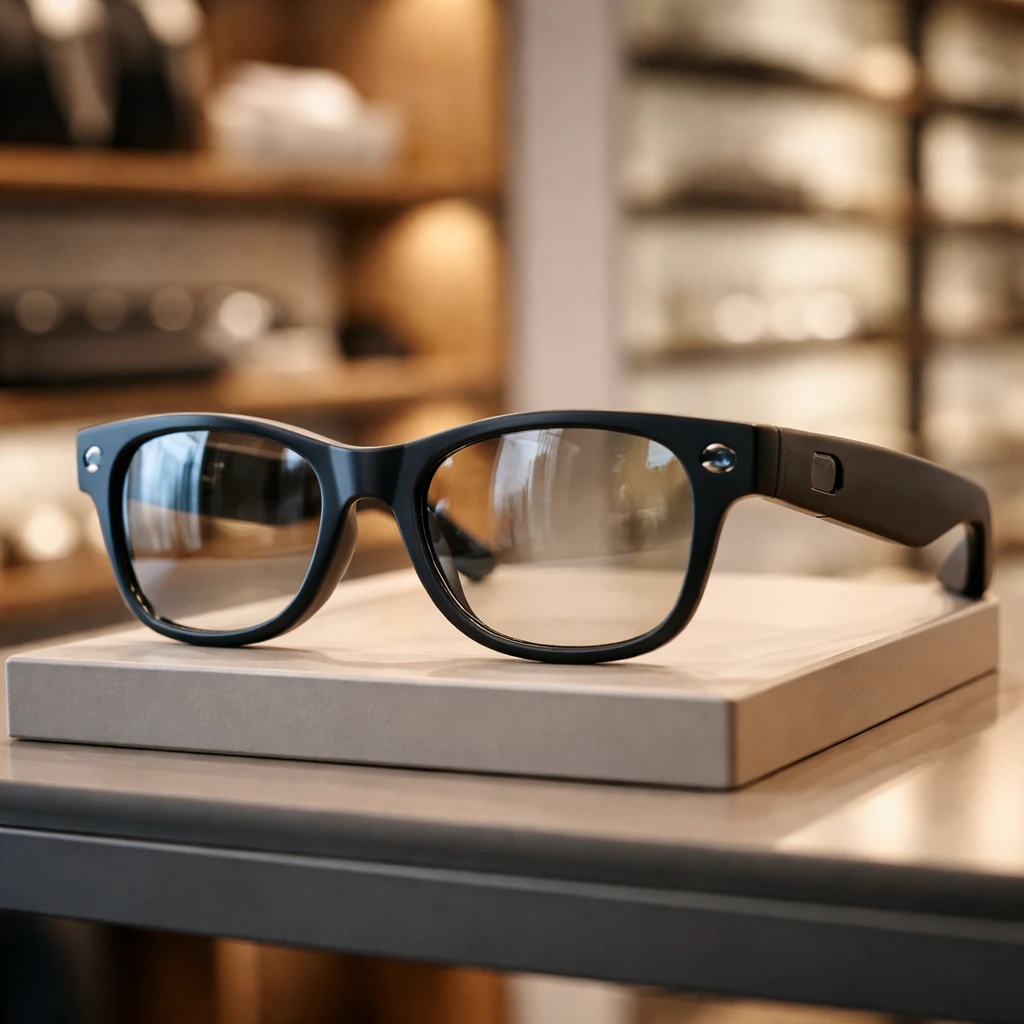
On the top line, second-quarter revenue climbed 8.7% at a constant exchange rate. That improvement reflected an almost doubling of sales for AI-enabled smart glasses developed in partnership with Meta and a 24% rise in revenue from the company's myopia portfolio over the same period.

The firm's core eyewear and eyecare business, which generates the bulk of its sales, produced mid-single-digit growth in the quarter. Total revenue was €7.7 billion, slightly under the Visible Alpha consensus of €7.8 billion.

Shares in the group have lost nearly half their value from a mid-November peak amid investor concerns about the outlook for smart glasses, questions about profitability, and uncertainty involving major shareholder Delfin.

In late June the company and its partner introduced a new line of lower-priced AI smart glasses with entry prices from $299. The company said these new models will be produced outside EssilorLuxottica's own manufacturing facilities.

Despite the mixed signals on revenue and investor sentiment, EssilorLuxottica reiterated the medium-term outlook it presented earlier in the year. The company cited the combination of product momentum in AI-enabled eyewear and myopia treatments, together with the recent tariff reimbursements and price mix, as central to the first-half profit performance.

($1 = 0.8774 euros)

Risks

  • Investor concerns about the smart glasses outlook and profitability have pressured the stock, with shares nearly halving from their mid-November peak - affecting equity market sentiment.
  • Some of the margin upside was linked to U.S. tariff refunds, a factor that may not be fully repeatable and could influence future margin comparisons - relevant to retail and manufacturing margins.
  • New lower-priced AI models will be manufactured outside the group's facilities, introducing potential operational and margin uncertainties around outsourcing decisions - impacting supply chain and production economics.

More from Stock Markets

X Challenges Australia's Teen Account Ban, Says Proposed Enforcement Powers Clash With International Law Jul 28, 2026 Wall Street Futures Slip Ahead of Fed Decision and Big Tech Earnings as Middle East Tensions Flare Jul 28, 2026 TSMC Gradually Restarts Japan Fab After Kumamoto Quake; Inspections Underway Jul 28, 2026 Takaichi Signals Temporary Cut to Japan's Reduced Food Consumption Tax, Yomiuri Reports Jul 28, 2026 Security Council to Begin Closed-Door Straw Polls on Thursday to Narrow UN Secretary-General Field Jul 28, 2026