
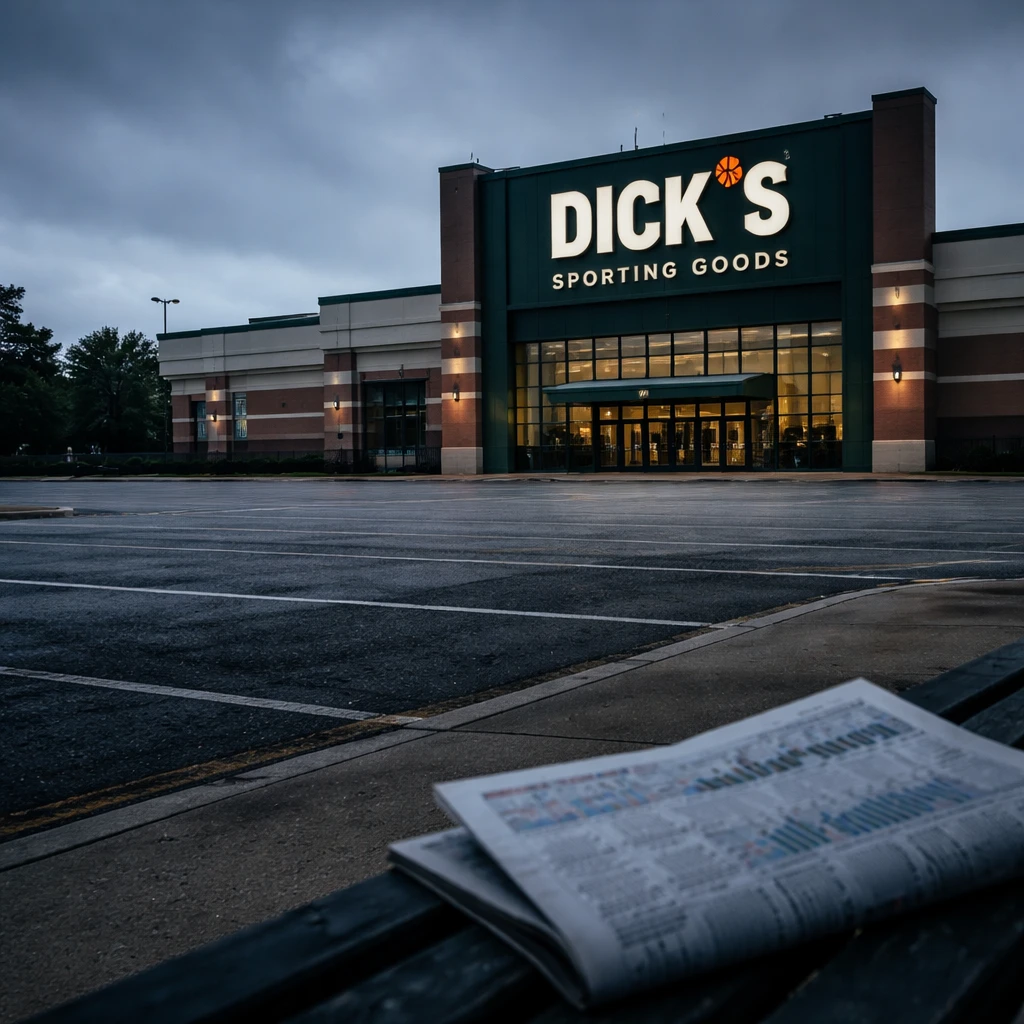
Shares of Dick's Sporting Goods fell 11.9% in pre-open trading after the company released fiscal second-quarter 2026 results, with earnings per share missing analyst expectations by roughly 15% even as revenue modestly exceeded the consensus estimate of about $5.64 billion. The shortfall in EPS was attributed principally to elevated costs associated with integrating Foot Locker, which Dick's acquired in September 2025 for $2.4 billion.
Management had previously cautioned that Q2 would be the period of the "most significant pressure," and selling, general and administrative expenses are expected to have risen sharply during the quarter as a result of the acquisition-related work. Those higher SG&A burdens translated into an earnings outcome that fell materially short of street forecasts despite revenue coming in slightly above the estimate.
Analysts were already cautious heading into the report. JPMorgan retained an Overweight rating but lowered its price target to $245 from $270. Morgan Stanley projected fiscal 2026 adjusted EPS of $13.81, a figure below the Street consensus of $14.35, while still keeping an Overweight recommendation. DA Davidson's Michael Baker had continued to carry a Buy rating with a $260 target as recently as August 17.
The stock had faced sustained selling pressure prior to the results, sliding for eight consecutive sessions through August 21 and erasing about $3.1 billion in market value before the company issued its quarterly report. That prior decline left the shares trading close to their then-52-week low of $175.65, providing limited buffer when the earnings release fell short.
In pre-market trading the share price sank to $157.99, establishing a new 52-week trough well below the prior low. The combination of a notable EPS miss, continued integration costs tied to Foot Locker, a lowered full-year EPS guidance range from the prior quarter, and an already weakened share price left investors with little room to absorb disappointing results.
The competitive environment has added to investor apprehension. Rival JD Sports reported a decline in comparable-store sales in its most recent quarter and trimmed its outlook, prompting a sympathy selloff in Dick's shares earlier in August and reinforcing concerns about demand within the sector. Tariff-related cost pressures and uncertainty around global trade have also been cited as headwinds for sporting goods retailers more broadly.
Notably, the broader U.S. equity market was modestly higher on the trading day, with the S&P 500 up 0.4% and the Nasdaq rising 0.8%, indicating that the sharp move in Dick's stock was driven by company-specific developments rather than market-wide weakness.
What this means
- Investors will be focused on how long elevated SG&A from the Foot Locker integration persists and whether management can realign costs with revenue over coming quarters.
- Analyst revisions and near-term guidance updates will be closely watched as the market digests the earnings miss and integration timeline.
- Sector peers and retailers sensitive to tariffs and global trade dynamics may face continued scrutiny from investors concerned about consumer demand and cost pressures.