
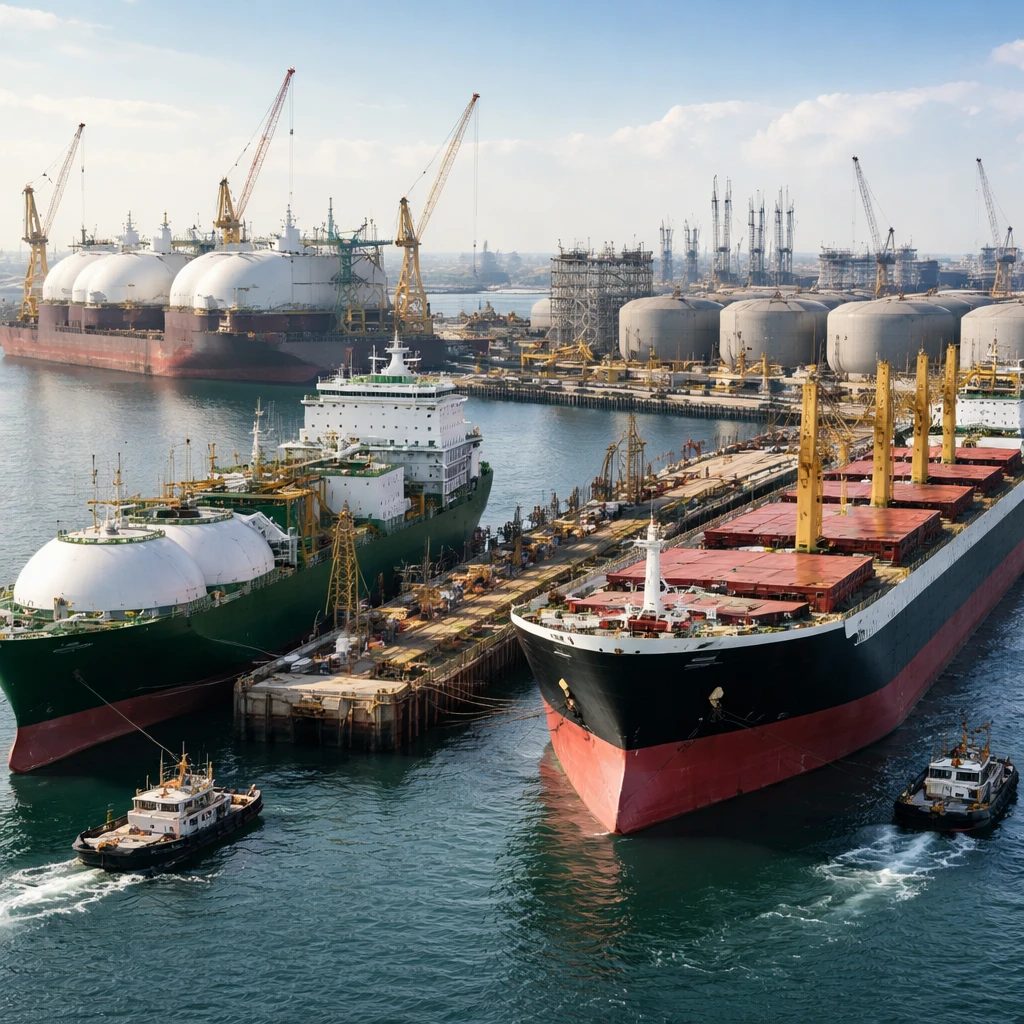
Deutsche Bank analyst Chris Robertson highlighted that shipping companies equipped with contemporary vessels and operational agility stand to gain from recent shifts in global trade patterns. The assessment follows Marine Money Week, a three-day shipping industry conference in New York where participants framed the market outlook in largely upbeat terms.
The bank noted that maritime trade is increasingly being driven by geopolitical forces, trade fragmentation, infrastructure constraints and heightened concerns about energy and supply-chain security. Those drivers, Deutsche Bank said, are changing the way shipping demand evolves - tilting the focus away from classic supply and demand dynamics and toward longer tonne-miles and greater utilization.
According to Deutsche Bank, the global economy is moving along a spectrum from globalization to deglobalization, regionalization and national self-sufficiency. While the bank observed that such trends are not necessarily beneficial for global stability, they tend to support higher tonne-mile demand, stronger fleet utilization and firmer shipping rates. In this environment, the firm singled out high-quality operators with modern, fuel-efficient ships, minimal reinvestment risk, flexible balance sheets and exposure to spot market operations as best positioned to capture upside.
Company snapshots
1) International Seaways (INSW) - Deutsche Bank keeps a Buy rating on the tanker operator, viewing it as well placed to benefit from structural shifts in trade flows. The company reported first-quarter 2026 adjusted earnings per share of $3.90, a figure that materially exceeded analyst expectations. After a recent shipping summit, Jefferies also retained its Buy rating on the company.
2) Scorpio Tankers (STNG) - Robertson also maintains a Buy on Scorpio Tankers in the tanker segment. Deutsche Bank expects the company to gain from increased tonne-mile demand as trade routes become less efficient. Scorpio disclosed its time charter equivalent rates for the second quarter of 2026 and announced the sale of four tankers to help accelerate debt repayment. Following those developments, Evercore ISI raised its price target on Scorpio Tankers while keeping an Outperform rating.
3) Genco (GNK) - In the dry bulk sector, Deutsche Bank assigns a Buy to Genco. The bank believes the firm is positioned to benefit from strategic stockpiling of certain commodities and from regional security concerns that can support demand for dry bulk shipping. Separately, Genco Shipping & Trading is evaluating a revised unsolicited takeover proposal from Diana Shipping Inc.; Genco’s board has indicated it views the offer as inadequate and below the company’s net asset value.
4) Star Bulk Carriers (SBLK) - Also rated Buy by Deutsche Bank in the dry bulk segment, Star Bulk is expected to gain from the same deglobalization-driven dynamics. The company reported first-quarter 2026 results that beat analyst forecasts for both earnings and revenue. Jefferies, citing strong rates, increased its price target on Star Bulk while maintaining a Buy rating.
5) Navigator Gas (NVGS) - In the LPG carrier segment, Deutsche Bank maintains a Buy rating on Navigator Gas. The analyst noted that the company should benefit from additional storage infrastructure build-out and elevated energy security concerns. Navigator Gas reported first-quarter 2026 earnings that exceeded analyst estimates and arranged roughly $206 million in financing for two new gas carriers currently under construction.
Analysis
Deutsche Bank’s recommendations reflect a view that the shape of global trade is changing in ways that favour particular fleet attributes and corporate financial profiles. Firms with modern, fuel-efficient tonnage limit reinvestment requirements and can capture margin benefits from stronger freight rates and longer voyage distances. Balance sheet flexibility and the ability to operate in spot markets are additional differentiators cited by the bank.
At industry gatherings such as Marine Money Week, market participants have increasingly emphasized non-traditional demand drivers - geopolitical fragmentation, constrained port and land infrastructure, and policy-driven moves toward self-reliance. Those factors are central to Deutsche Bank’s argument that tonne-mile demand and utilization may be supported even if the overall volume of global trade becomes less efficient.
Key points
- Deutsche Bank favors shipping companies with modern fleets, low reinvestment needs and flexible balance sheets as trade patterns shift toward regionalization and resilience.
- The bank maintains Buy ratings on five companies across tanker, dry bulk and LPG segments - International Seaways, Scorpio Tankers, Genco, Star Bulk and Navigator Gas - citing recent earnings beats and strategic actions.
- Sectors impacted include maritime transport, energy logistics and commodity movement, as longer tonne-miles and storage infrastructure demand can influence rates and utilization.
Risks and uncertainties
- Geopolitical and trade fragmentation risks could alter trade flows unpredictably, which may not uniformly benefit all shipping companies or segments.
- Infrastructure bottlenecks and changing energy security dynamics create uncertainty around future demand patterns and the pace of any structural shift in tonne-mile demand.
- Corporate-specific developments, such as takeover proposals or asset sales, carry execution and valuation risks; for example, Genco is reviewing an unsolicited offer it deems inadequate, and Scorpio Tankers has sold vessels to accelerate debt reduction.
Deutsche Bank’s note underscores a pragmatic view: as global trade evolves, winners are likely to be those operators that combine modern, efficient assets with financial flexibility and operational agility. The bank’s Buy calls across tanker, dry bulk and LPG carriers reflect that selective exposure to companies seen as best positioned to capture longer voyage distances, improved utilization and potentially stronger freight rates.