
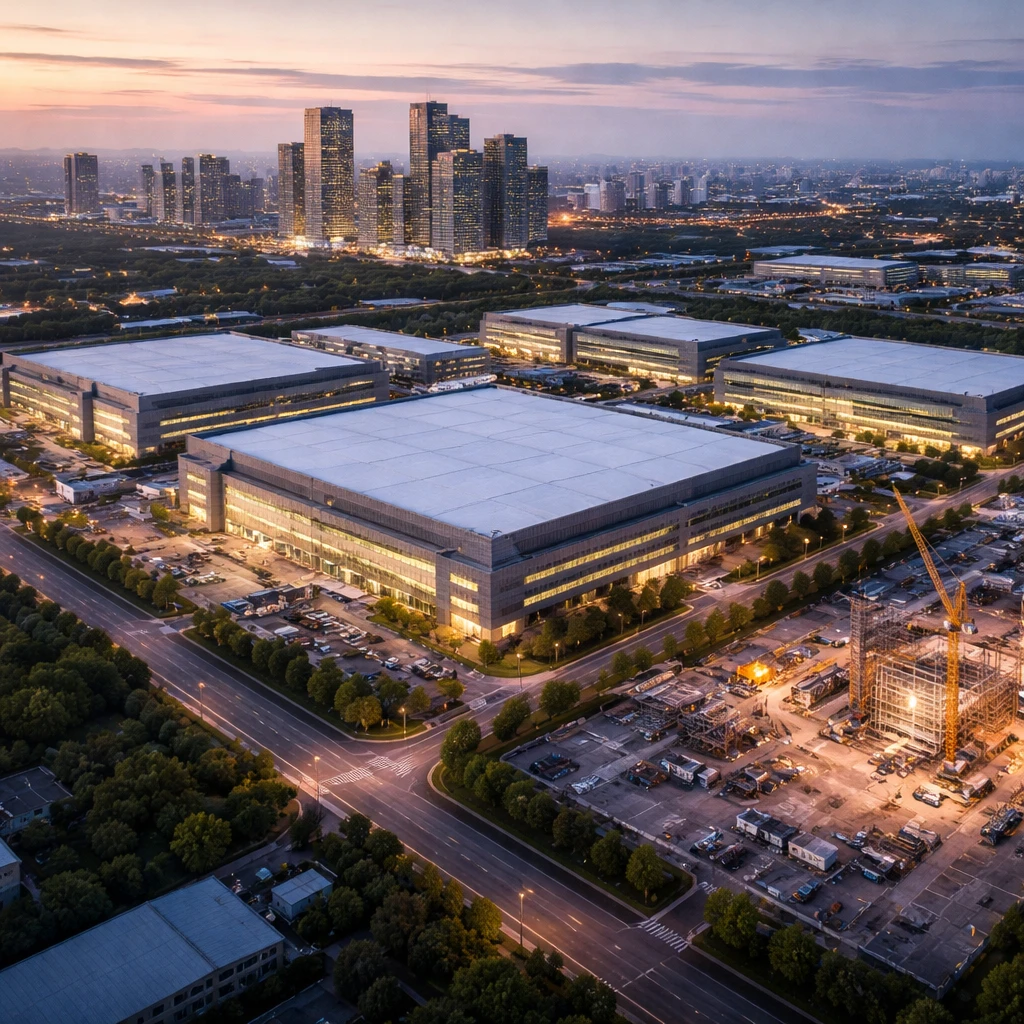
Aug 3 - CXMT, currently the largest chipmaker on the mainland by market value, is weighing construction of a second 12-inch dynamic random access memory (DRAM) fab in Beijing and has opened talks about financing the project with parties linked to the local government, two people with knowledge of the matter said. The conversations are at an early stage and the participants declined to be identified because the plans are not public.
Sources said the proposed facility would be located in Yizhuang, roughly 20 km southeast of central Beijing, where CXMT already runs a DRAM fab. The company is seeking at least 60 million yuan ($8.9 million) in support from the governing body of the Beijing Economic-Technological Development Area, the development zone that oversees the Yizhuang industrial cluster. Other state-owned technology companies have also signalled interest in joining the financing, according to the sources.
It is not yet clear whether any funding would be provided directly by the development zone’s administrative authority or routed through its investment vehicles, and the eventual size and structure of any package could change as negotiations progress, the people said. The planned capacity and the total investment for the proposed Beijing wafer fab were not immediately known.
CXMT completed an $8.6 billion initial public offering last month, the largest mainland Chinese semiconductor IPO on record, which has given the company fresh capital for an aggressive expansion plan. The listing came as demand for memory chips has been strengthened by increased infrastructure spending on artificial intelligence, along with steady needs from data centres and consumer electronics. Since the IPO, the company’s shares have risen about 13%.
The company is already expanding production elsewhere. CXMT is building new plants in Shanghai and Hefei and has been in discussions with authorities in other regions about additional facilities. When those projects reach full operational capacity, the combined throughput could more than double to exceed 600,000 wafers per month, according to people familiar with the plans.
Current operations include two 12-inch DRAM fabs in Hefei and one 12-inch fab in Beijing, each with an approximate capacity of 100,000 wafers per month, the sources said. By adding another 12-inch line in Yizhuang, CXMT would further enlarge its installed base of DRAM production in China.
Building a fabrication plant capable of producing cutting-edge DRAM typically requires very large capital outlays. Sources noted that such projects often involve total expenditures in excess of $10 billion, though they did not specify an investment figure for the proposed Beijing site.
Within China, CXMT has become an increasingly dominant domestic player in DRAM production and has been able to lift prices for some customers, according to reporting last month. On the global stage, CXMT is still smaller than several established competitors: Samsung Electronics, SK Hynix and Micron together accounted for a very high share of the global DRAM market in the first quarter, using market data cited by industry analysts.
The company’s growth has been associated with what has been described as the "Hefei model," under which the city of Hefei has used state funding to foster strategic technology enterprises. Provincial and municipal authorities in Anhui, Beijing and Shanghai have provided funding and other forms of support to CXMT as they seek to capture more of the strategic and economic benefits from the company’s expansion, according to a person with direct knowledge of the company’s funding arrangements.
CXMT’s Beijing fab operations are run by Changxin Jidian, which was established in 2020. That facility previously received funding from E-Town Capital and its affiliate Beijing E-Town Technology, both investment arms linked to the Yizhuang development zone, company records show.
The Beijing Economic-Technological Development Area is home to a cluster of technology and chip-related companies, including a contract semiconductor manufacturer, semiconductor equipment suppliers and consumer device makers. The zone is also positioning itself as a hub for robotics and embodied artificial intelligence testing and development, and last year hosted what organisers described as a humanoid robot half-marathon to showcase those capabilities.
CXMT and the Beijing municipal government did not reply to requests for comment on the potential Yizhuang project and the ongoing financing talks.
Context and analysis
For companies and investors tracking production rates, supply-chain conversion of backlog into revenue, and working-capital needs across the semiconductor supply chain, CXMT’s potential additional fab represents a significant capacity allocation decision. The financing structure - whether direct administrative support or investment-vehicle participation - will influence cash flow timing and local government exposure to semiconductor capital intensity.